

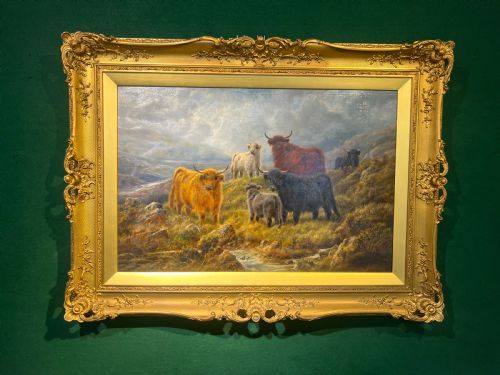


Scottish Highland Cattle
These pieces for scottish highland cattle bring the sweeping, mist-veiled glens and robust long-haired beasts of the north directly into the room through traditional canvas and porcelain.
Scottish Highland Cattle
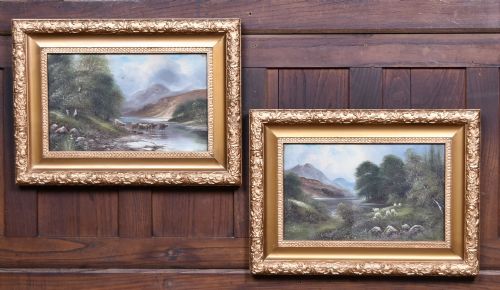
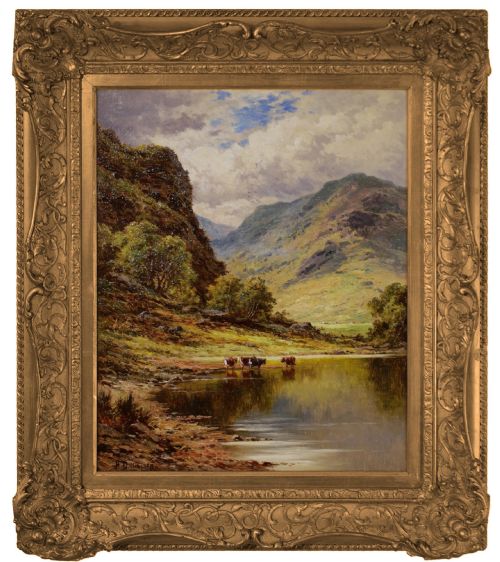
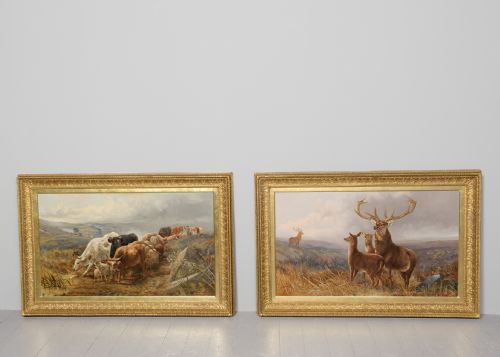
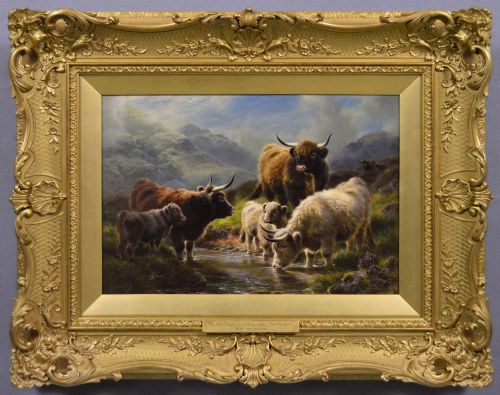
When buyers search for scottish highland cattle, they encounter nineteenth and early twentieth-century depictions that capture pastoral life in the Scottish landscape. These works predominantly take the form of framed oil paintings on canvas, alongside delicate porcelain spill vases and decorative vessels.
The subjects span misty lochs, mountainous river valleys, and snowy moors where longhorn cattle graze alongside sheep and herdsmen. Canvases dominate the selection, portraying serene scenes from Victorian and Edwardian periods by notable painters of the British and Scottish schools.
Porcelain pieces offer a different medium for the same enduring motif, rendered in painted ceramics. Across both canvases and ceramics, the focus remains squarely on the rugged topography and pastoral atmosphere of Scotland.
Materials and Technique
Painters applied oil paint onto stretched canvas, often building rich textures to represent the shaggy coats of the cattle and the rugged heather of the moors. Canvases are frequently housed in ornate frames constructed from wood, gesso, and gold leaf.
Porcelain items utilise fine ceramic bodies painted by hand with detailed pastoral vignettes, capturing the cattle in naturalistic settings. Gilding and decorative moulding complete the presentation of these ceramic spill vases and vases.
Scottish Highland Cattle Retail Price Guide 2026
Typical asking prices for scottish highland cattle among the pieces listed under this phrase on Sellingantiques today, from the lower quarter to the upper quarter. They describe what is for sale here now, not the wider market.
Charles Jones famously included steady sheep alongside the cattle even when painting deep winter snowstorms.
Evaluating Quality
Quality rests on the depth of the painting technique, the precision in capturing the anatomy and characteristic long coats of the cattle, and the handling of atmospheric light across loch and mountain. Master artists delineate the textures of landscape and beast with authority.
Framing forms another pillar of quality, where period giltwood and gesso surrounds enhance the canvas. In ceramics, the fineness of the porcelain body and the intricacy of the hand-painted cattle scene determine the standing of the piece.
Henry H. Parker·Robert Watson·William Watson Jnr·Robert Cleminson·Henry Robinson Hall·Sidney Yates Johnson·Charles Jones·George Turner·John W Morris·Daniel Sherrin·Alfred de Breanski Snr·Harry Stinton·Henry Birtles·Louis Bosworth Hurt·Aster Richard Chilton Corbould·Sidney Richard Percy·James Kay
The Scottish Highland Cattle Glossary
- Oil on Canvas
- Pigment mixed with drying oil applied to a stretched woven fabric support. This traditional medium allows for rich blending and deep tonal variations in landscape painting.
- Giltwood
- Wood carved and surfaced with a thin layer of gold leaf or metallic powder. It provides traditional reflective framing for Victorian and Edwardian canvases.
- Spill Vase
- A small ornamental container designed to hold wooden spills used for lighting candles or fires. These vessels often feature hand-painted pastoral motifs.
- Gesso
- A paint mixture consisting of a binder mixed with chalk, gypsum, or pigment. It serves as a smooth preparation layer for wood framing before gilding.
- Longhorn Cattle
- A characteristic cattle breed with prominent horns and shaggy coats frequently depicted in nineteenth-century pastoral art. They symbolise the rugged highland environment.
Scottish Highland Cattle: Frequently Asked Questions
What periods do these pieces come from?
The available works stem primarily from the Victorian and Edwardian eras, spanning the mid-nineteenth century through the early twentieth century. This period saw a surge in romantic landscape painting and naturalistic animal portraiture.
Creators from the Highland School and British Realism movements documented the Scottish terrain during these decades, producing both expansive canvases and decorated porcelain.
How should I display a landscape oil painting?
Canvases featuring highland scenes benefit from wall spaces with controlled natural light that highlights the oil paint textures without causing glare on the surface. Proper placement allows the giltwood frame to complement the room's proportions.
Keeping the paintings away from direct heat sources protects both the canvas fabric and the underlying gesso and wood framing from warping over time.
How do I identify porcelain pieces?
Ceramic items such as spill vases are typically attributed to factories like Royal Worcester, where skilled painters rendered detailed cattle scenes by hand. Makers' marks on the underside often confirm the period of manufacture.
These ceramic pieces translate the grandeur of oil paintings onto a domestic scale, featuring miniature portraits of longhorn cattle set against pastoral backdrops.
What subjects accompany the cattle?
Artists frequently integrated sheep, herdsmen, and figures into the compositions alongside the highland cattle to establish scale and narrative depth. Mountainous rivers, misty lochs, and snowy moors complete the scenery.
These elements reflect a nineteenth-century fascination with the wild, untamed beauty of the Scottish highlands under varying weather conditions and times of day.