




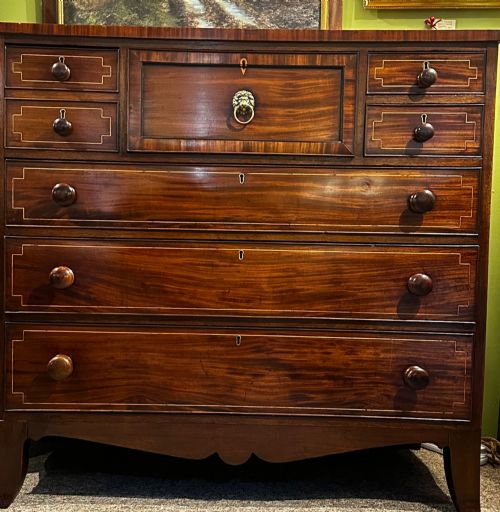

Scottish Dresser Chest
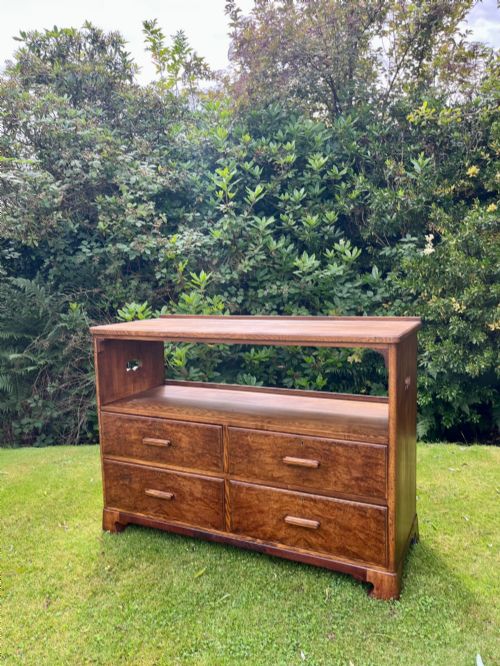
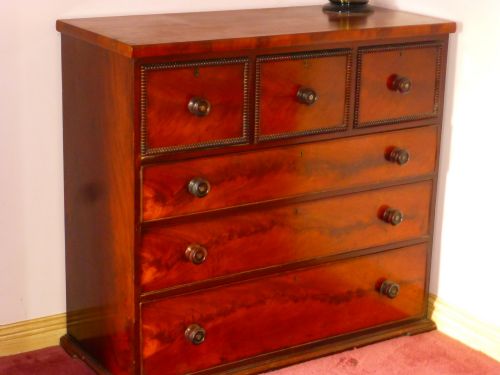
These scottish dresser chest pieces are substantial timber drawer units built with distinct regional proportions, offering serious storage capacity and bold mahogany grain patterns.
Scottish Dresser Chest
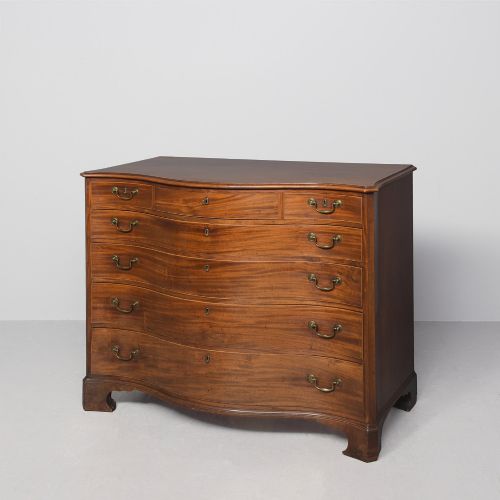
A scottish dresser chest brings together deep drawer configurations and generous proportions, often found in robust flame mahogany or pine. These pieces serve as commanding focal points in a bedroom or hallway while providing practical storage for bulky garments.
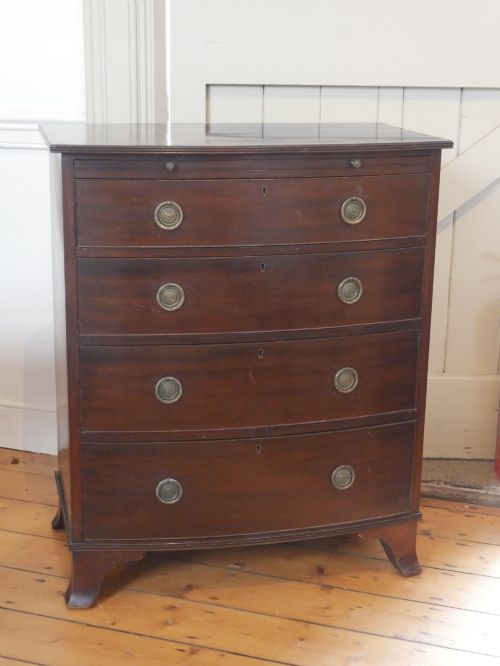
Most examples span the eighteenth and nineteenth centuries, reflecting Georgian, Regency, and Victorian design idioms. Buyers frequently encounter bow-fronted or straight profiles constructed with careful attention to timber selection.
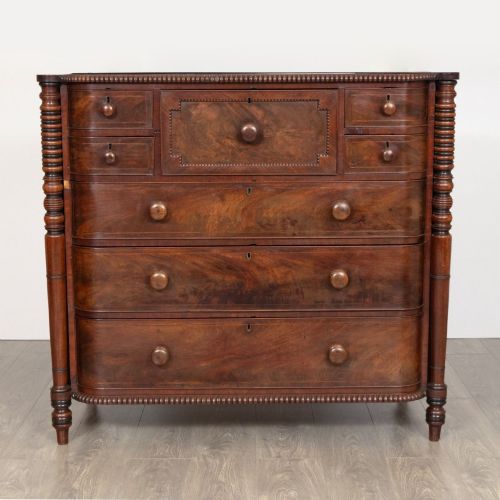
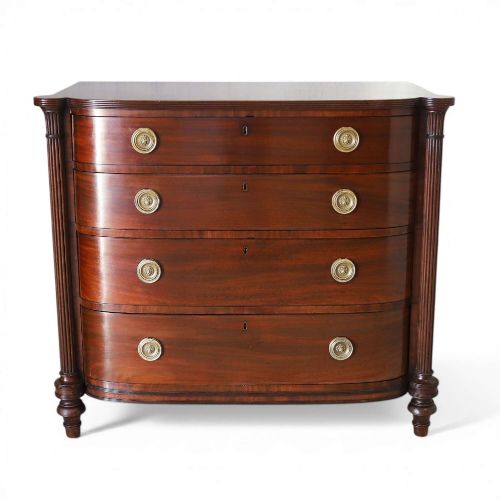
Regional craftsmanship often distinguishes these chests through concealed top drawers, secret compartments, or distinctive column details flanking the main drawer stack. Such touches mark them out from standard English equivalents of the same era.
How they were made
Cabinet makers relied primarily on solid mahogany and pine carcasses, applying figured flame mahogany veneers to drawer fronts for visual impact. Secondary timbers such as oak lined the interior drawers to ensure structural longevity.
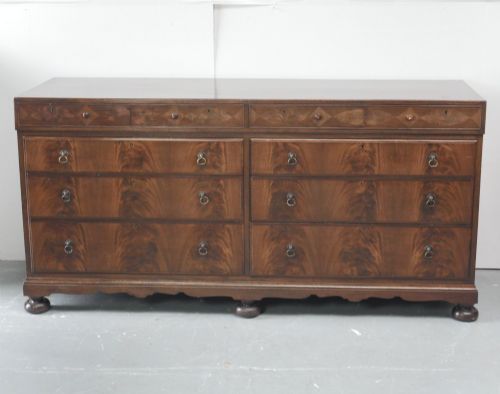
Brass handles and escutcheons punctuate the polished timber surfaces, fastened securely through deep drawer panels. Joinery techniques from the period involved hand-cut dovetailing on drawer boxes to withstand heavy daily use.
Scottish Dresser Chest Retail Price Guide 2026
Typical asking prices for scottish dresser chest among the pieces listed under this phrase on Sellingantiques today, from the lower quarter to the upper quarter. They describe what is for sale here now, not the wider market.
Listings span the eighteenth century through the nineteen-thirties, incorporating mahogany, pine, oak, and birch across George III, Regency, and Victorian styles.
What varies in quality
The choice and book-matching of timber veneers dictate the visual hierarchy among these chests. Superior pieces display symmetrical flame patterns across every drawer front rather than patchy or mismatched graining.
Construction depth and secondary wood selection also separate standard examples from finer commissions. Heavy oak linings and tight, hand-cut dovetails indicate a workshop that prioritised structural integrity alongside surface beauty.
Whytock & Reid·R H & J Simpson
The Scottish Dresser Chest Glossary
- Flame mahogany
- A veneer cut from the fork of the mahogany tree to create a rolling, flamelike pattern. This decorative surface defines the appearance of finer nineteenth-century chests.
- Bow front
- A convex, curved front profile popular during the Regency and Victorian eras. It softens the boxy geometry of a standard chest.
- Oak lined
- Refers to drawer boxes constructed using oak for the sides and bottoms. This denotes a higher grade of internal build quality.
- Serpentine front
- A shaped drawer front that curves inward centrally and outward at the ends. It requires advanced woodworking skill to execute correctly.
- Apprentice chest
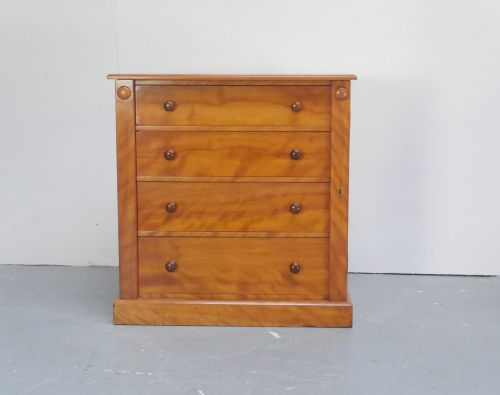
- A small-scale model built by a trainee to demonstrate proficiency. These miniature chests duplicate full-size construction methods.
Scottish Dresser Chest: Frequently Asked Questions
What is a scottish dresser chest?
A scottish dresser chest is a substantial timber storage unit featuring deep drawers and distinct regional joinery details. These pieces often incorporate flame mahogany veneers and robust proportions.
Originating across the eighteenth and nineteenth centuries, they provide practical bedroom storage while serving as strong decorative furniture.
How do I spot a scottish piece?
Scottish chests frequently display unique architectural details like cushion-moulded top drawers or concealed secret compartments. The overall scale tends to be deeper and heavier than contemporary English equivalents.
Look closely at the timber selection and drawer arrangement to identify these distinct regional characteristics.
Where should I place one?
These large chests anchor a bedroom or dressing room effectively, offering ample surface space for lamps or mirrors. Their strong timber grain adds warmth to period interiors.
Ensure you measure the floor space and clearance carefully, as these pieces often command a prominent position in a room.
How do I care for mahogany?
Maintain polished mahogany surfaces by dusting regularly with a soft, dry cloth. Avoid placing the timber in direct sunlight or near heat sources to prevent veneer lifting.
Applying a traditional beeswax polish periodically helps nourish the wood and preserves its deep lustre over time.