



Scottish Cattle Art
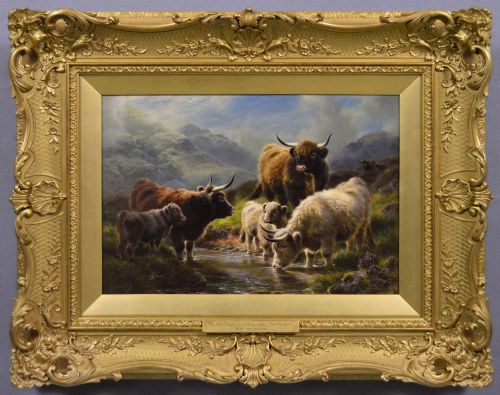
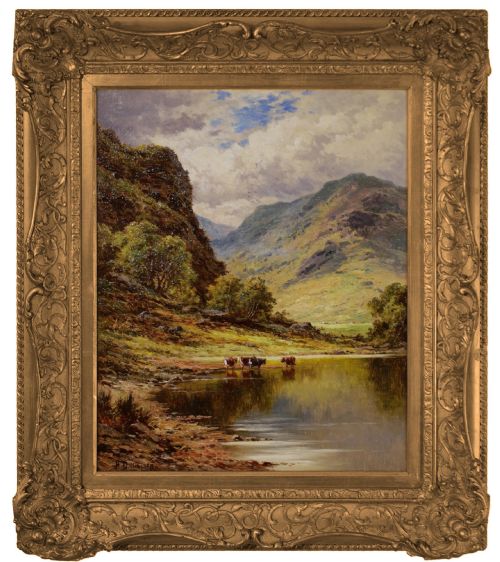
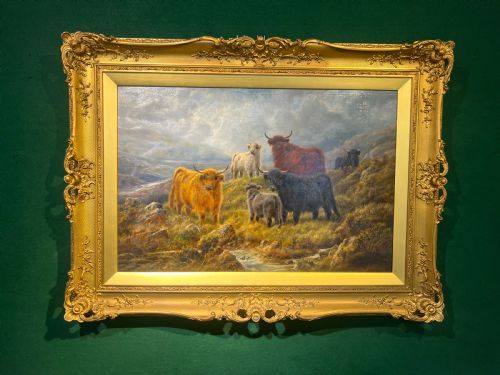
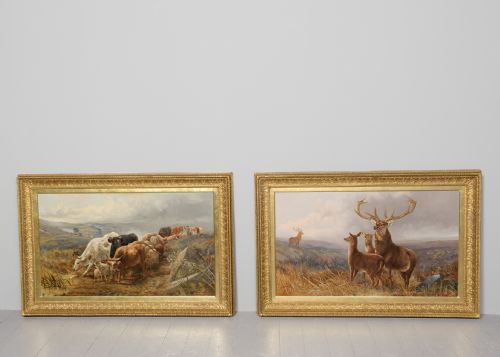
These pieces of scottish cattle art capture the rugged beauty of highland landscapes through traditional oil paintings.
Scottish Cattle Art
When buyers search for scottish cattle art, they encounter oil paintings depicting highland scenery, lochs, and cattle from the Victorian and Edwardian periods. These works capture pastoral life in rural Scotland through detailed landscape realism and impressionist techniques.
The most common examples on this page are oil paintings on canvas created by established nineteenth and early twentieth century artists. They often portray longhorn or highland cattle near streams, lochs, or mountainous terrain.
Alongside canvas works, the selection includes decorative ceramic pieces such as spill vases painted with cattle motifs. These varied objects reflect the Victorian fascination with highland pastoral subjects.
Materials and Techniques
These works rely on oil paint applied to canvas surfaces, capturing light and atmosphere across highland landscapes. Artists built texture through layered brushwork to render the shaggy coats of cattle and the mist over Scottish lochs.
Frames play a crucial structural and aesthetic role, frequently constructed from wood and finished with gesso, plaster, and gold leaf. Giltwood frames provide the traditional ornate border typical of Victorian and Edwardian fine art.
Scottish Cattle Art Retail Price Guide 2026
Typical asking prices for scottish cattle art among the pieces listed under this phrase on Sellingantiques today, from the lower quarter to the upper quarter. They describe what is for sale here now, not the wider market.
Listings feature oil paintings on canvas alongside ceramics from the Victorian and Edwardian periods.
Evaluating Quality
Quality in these paintings rests on the artist's ability to render anatomy and atmosphere convincingly. Superior works display confident brushwork and accurate proportions in both the cattle and the surrounding landscape.
The integration of the animals into the wider Scottish scenery distinguishes finer examples from simpler decorative pieces. The condition of the original canvas and the preservation of the giltwood frame also influence the overall standing of the work.
Henry H. Parker·Robert Watson·William Watson Jnr·Robert Cleminson·Henry Robinson Hall·Sidney Yates Johnson·Sidney Pike·Charles Jones·George Turner·John W Morris·Daniel Sherrin·Alfred de Breanski Snr·Gustave De Brianski·Henry Birtles·George Smith RSA·Louis Bosworth Hurt·Aster Richard Chilton Corbould·Sidney Richard Percy·James Kay
The Scottish Cattle Art Glossary
- Oil on Canvas
- A traditional painting medium where pigments suspended in oil are applied to a stretched canvas support. This technique allows for rich colour depth and blended tones.
- Giltwood
- Wood carved and coated with gold leaf or a gold-coloured finish. It provides the ornate framing seen on many nineteenth-century paintings.
- Gesso
- A plaster-like mixture applied to wooden frames as a base before gilding. It allows craftsmen to carve intricate decorative details.
- Highland School
- A nineteenth-century artistic movement focusing on the landscape and wildlife of the Scottish Highlands. Painters in this tradition emphasised romantic pastoral scenes.
- Spill Vase
- A small ceramic container used to hold wooden spills for lighting fires or candles. They were frequently painted with pastoral or animal subjects.
Scottish Cattle Art: Frequently Asked Questions
What periods do these paintings date from?
The pieces span the Victorian and Edwardian eras, with many dating from the nineteenth and early twentieth centuries.
Artists working during this time produced numerous landscape scenes featuring highland cattle against mountainous backdrops.
How should I frame an oil painting?
Original works often retain their period giltwood frames, which complement the traditional aesthetic of nineteenth-century art.
Ensure any framing materials used for preservation are museum-grade to protect the canvas over time.
Where were these Scottish scenes painted?
Many works depict specific Scottish locations such as Loch Tay, Loch Etive, and Ben Lawers.
Artists travelled into the Highlands to capture the authentic atmosphere and topography of these rural settings.
What subjects accompany the cattle?
Paintings frequently include sheep, herdsmen, or figures navigating paths alongside the cattle.
These additional elements provide a sense of scale and narrative to the expansive highland landscapes.