






Scottish Carver Chair
These scottish carver chair pieces offer robust proportions and vernacular timber work, bringing distinct regional character to a dining room or study.
Scottish Carver Chair
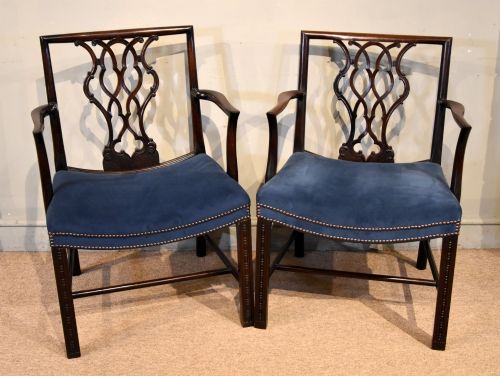
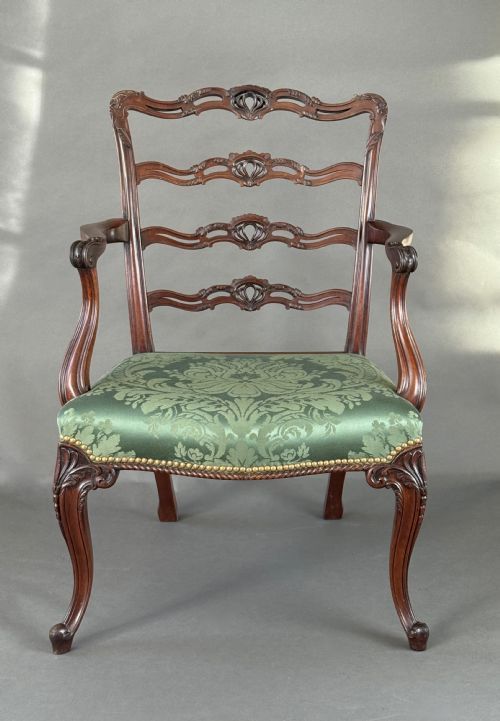
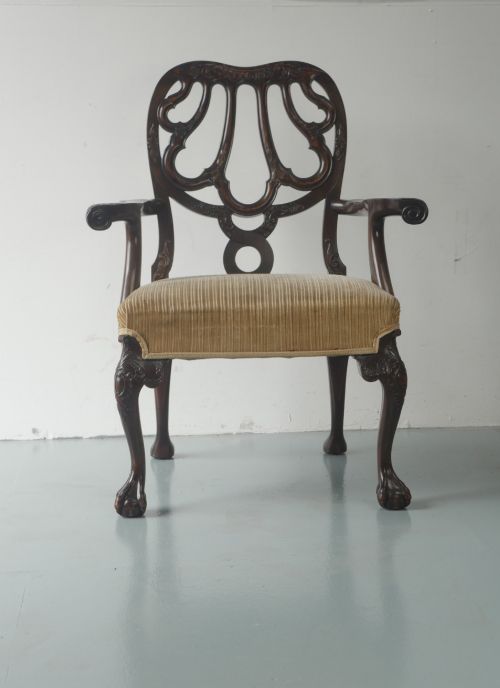
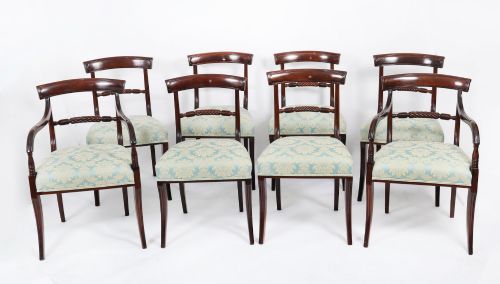
A scottish carver chair stands apart from standard dining seating through its wider proportions and integrated armrests, designed originally for the head of a table or a drawing room. The examples found here span the eighteenth century through to the Edwardian period, displaying both vernacular regional quirks and refined cabinet-making.
Regional variations often appear in the rake of the back, the timber selection, and the joinery methods used by northern makers. These armchairs reflect the changing domestic tastes of Scottish interiors across successive centuries.
Materials and Construction
Makers relied heavily on dense hardwoods such as mahogany and oak, chosen for their structural strength and ability to take fine carving. Workshops utilised traditional mortise and tenon joinery to ensure the arm supports and leg frames remained rigid under daily use.
Seating areas often received drop-in pads or upholstered frames covered in materials like velvet, leather, damask, or woven fabric. Brass details occasionally appeared as castors or decorative tacks on period examples.
Scottish Carver Chair Retail Price Guide 2026
Typical asking prices for scottish carver chair among the pieces listed under this phrase on Sellingantiques today, from the lower quarter to the upper quarter. They describe what is for sale here now, not the wider market.
Certain rural chairs retain subtle tool marks from remote Scottish workshops where makers relied on hand-turned spindles to secure the backrest.
Assessing Quality and Execution
Quality rests in the crispness of the timber carving and the integrity of the frame construction, where finer pieces maintain tight joints without excessive reinforcement. The choice of primary timber influences the overall weight and presence of the chair.
Proportion and comfort distinguish superior examples, particularly in the curve of the armrests and the rake of the backrest. Original upholstery foundations and untouched timber surfaces contribute significantly to the standing of a piece.
J. & T. Scott, Edinburgh·Wheelers of Arncroach
The Scottish Carver Chair Glossary
- Carver chair
- An armchair, typically designed to match a set of single dining chairs and placed at the head of the table. These pieces feature substantial armrests to accommodate heavier garments.
- Cockpen chair
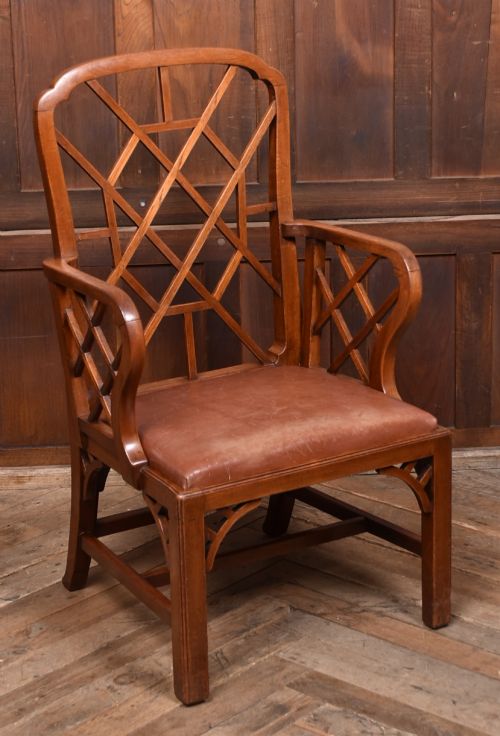
- A specific Chinese Chippendale style chair characterised by an open lattice back and straight legs. These forms became popular in Scottish country houses during the eighteenth century.
- Crofter chair
- A traditional vernacular seating form originating in rural Scotland, often constructed from local oak with rustic timber framing. They represent simpler, utilitarian domestic craftsmanship.
- Elbow chair
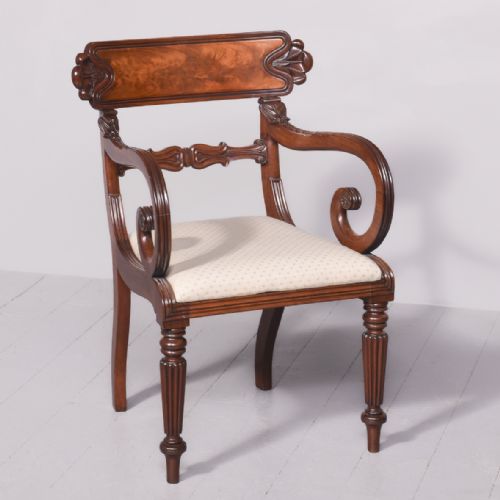
- An alternative term for an armchair, frequently used in nineteenth-century inventories to describe seating with low or scroll-ended armrests for a morning room.
- Mortise and tenon
- A fundamental woodworking joint where a projecting tongue fits snugly into a corresponding cavity. This method provides the rigid frame strength essential for dining armchairs.
Scottish Carver Chair: Frequently Asked Questions
What is a scottish carver chair?
A scottish carver chair is an armchair featuring integrated armrests, traditionally placed at the head of a dining table or used in a study. These pieces reflect regional cabinet-making traditions and stylistic shifts from the Georgian era onwards.
They range from formal mahogany Chippendale designs to vernacular oak crofter seating, offering robust construction and distinct local character.
How do I date a scottish carver chair?
Dating relies on examining the timber species, joinery techniques, and stylistic vocabulary present in the frame. Georgian pieces often display classical carved details, while Victorian and Edwardian examples incorporate revival motifs.
Secondary woods and structural fastenings also provide clues regarding the period of manufacture and regional workshop origins.
Were these chairs used only for dining?
While many served at the dining table, heavier armchairs often functioned as elbow chairs in morning rooms or libraries. Their wider proportions made them suitable for general sitting and reading.
Vernacular versions like crofter chairs were built for everyday domestic utility beside hearths in rural homes.
How do I care for antique upholstery?
Maintenance depends on whether the fabric is historic or a modern replacement. Gentle vacuuming with a soft attachment helps remove surface dust from velvet, damask, or leather.
Direct sunlight should be avoided to prevent the fading of both timber finishes and delicate textile coverings.