

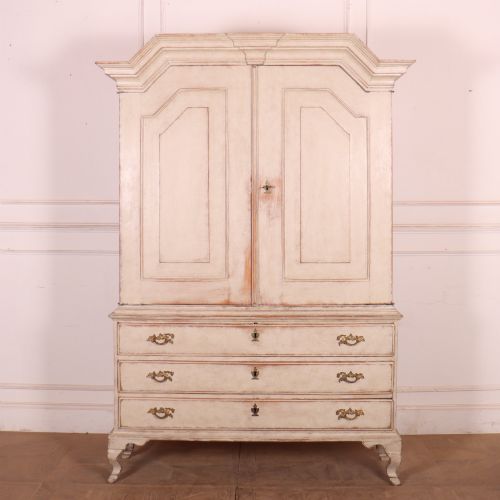


Scandinavian Wardrobe
A scandinavian wardrobe brings architectural presence and generous storage to a room, uniting functional utility with centuries of northern European craftsmanship.
Scandinavian Wardrobe
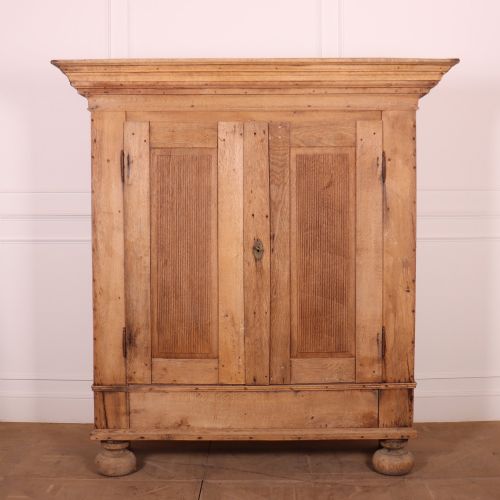
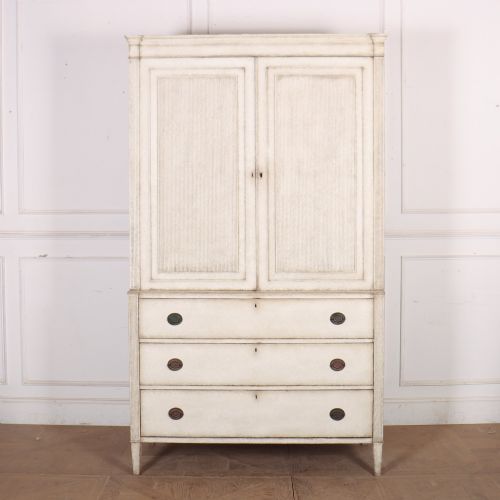
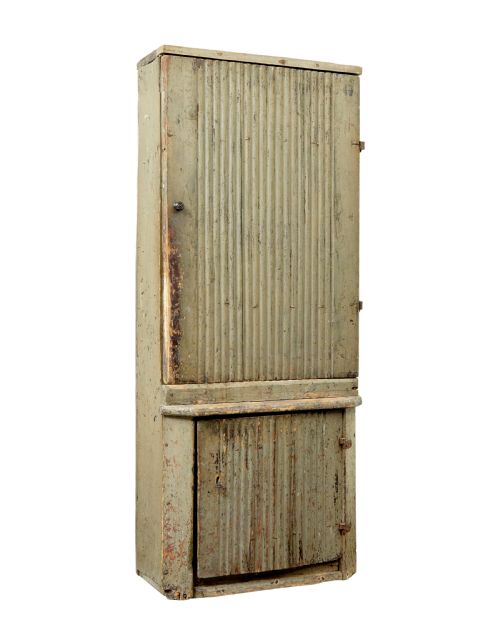
When you search for a scandinavian wardrobe, you encounter substantial storage furniture primarily taking the form of tall cupboards, linen presses, and armoires. These pieces originate from periods spanning the eighteenth century through to the early twentieth century, reflecting the domestic needs of northern European households.
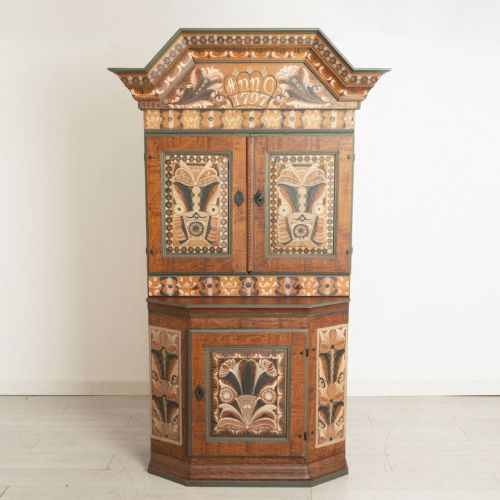
The version you are most likely to meet on this page is constructed from pine, often finished with paint or traditional ragwork decoration. Alongside these painted pine examples, pieces emerge in birch, satin birch, and mahogany, reflecting regional preferences and changing interior tastes.
Stylistic influences range from folk art and rustic country designs to refined Gustavian, Baroque, and Swedish Empire Revival expressions. These forms served to store linens, garments, and household goods, functioning as architectural anchors within traditional interiors.
How they were made
Makers relied heavily on solid pine, birch, and painted wood, constructing carcases with pegged joints and hand-planed panels. Iron and brass hardware, including traditional hinges and lockplates, secure the doors of these substantial storage pieces.
Surface decoration defines many examples, employing hand-mixed paints, ragwork techniques, and intricate folk art motifs over the primary wood. Bleached birch and bird's-eye maple veneers appear in later revival pieces, showcasing refined cabinetmaking skills alongside country traditions.
Scandinavian Wardrobe Retail Price Guide 2026
Typical asking prices for scandinavian wardrobe among the pieces listed under this phrase on Sellingantiques today, from the lower quarter to the upper quarter. They describe what is for sale here now, not the wider market.
A good ragwork cupboard wears its patterned paint like a Sunday apron, stubbornly refusing to blend into the wallpaper.
What varies in quality
The distinction between standard domestic items and superior examples lies in the integrity of the original surfaces and the subtlety of the hand-painted decoration. Retaining untouched historical paint layers or authentic patinated wood grain elevates a piece far above later refinished iterations.
Structural joinery and hardware integration also mark the upper tier of production, where heavy doors hang true on original iron hinges and internal fittings remain intact. Proportion and carving detail, particularly on serpentine-shaped fronts or Baroque cornices, indicate the hand of a skilled regional workshop.
The Scandinavian Wardrobe Glossary
- Ragwork
- A decorative paint technique where rags or cloths create mottled, textured patterns on the wood surface. This finish protects the timber while adding visual depth to country furniture.
- Gustavian
- The Swedish interpretation of neoclassical style, characterised by restrained ornamentation, symmetry, and pale painted finishes. It emerged during the late eighteenth century under King Gustav III.
- Birch
- A dense, pale hardwood favoured in Scandinavian cabinetmaking for its fine grain and durability. It takes a smooth finish and serves as both solid timber and decorative veneer.
- Serpentine
- A gently undulating curved shape featuring a convex centre flanked by concave sides. This profile demands advanced woodworking skill to execute cleanly on cabinet doors and cornices.
Scandinavian Wardrobe: Frequently Asked Questions
What is a scandinavian wardrobe used for?
These pieces provide substantial upright storage for clothing, linens, and household items behind panelled doors. Historically, they served as the primary wardrobe solution in European homes before fitted closets became common.
Today, they function effectively in modern bedrooms and hallways, offering deep internal capacity while acting as sculptural focal points in a room.
How do I identify different periods?
Early pieces from the eighteenth century often display Baroque proportions, heavy cornice mouldings, and hand-painted folk art surfaces. Nineteenth-century examples frequently utilise softer pine constructions, simple linear panels, and traditional ragwork finishes.
Twentieth-century revival pieces, such as those from the 1920s and 1930s, incorporate blonde woods like birch and bird's-eye maple with neoclassical revival details.
Are these pieces painted or natural wood?
Scandinavian furniture traditions embrace both painted surfaces and exposed natural timbers. Many pieces feature historic hand-painted finishes in muted greens or earth tones, applied to protect and decorate soft pine.
Alternative examples showcase the natural grain of blond woods such as birch and satin birch, or employ polished mahogany for a more formal appearance.
How do I care for antique pine furniture?
Maintain painted or waxed surfaces by dusting gently with a dry, soft cloth and avoiding harsh chemical cleaners. Keep these wooden pieces away from direct heat sources and severe humidity fluctuations to prevent timber movement.
Applying a traditional beeswax periodically helps nourish unpainted wooden surfaces and preserves the natural patina built up over centuries.