



Scandinavian Bedside Table
A scandinavian bedside table brings understated northern craftsmanship and clean proportion to the bedroom.
Scandinavian Bedside Table
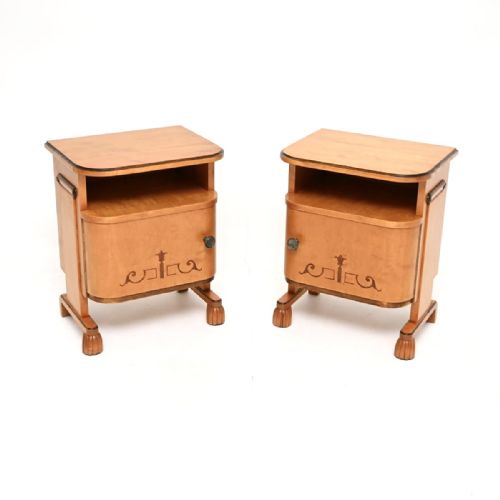
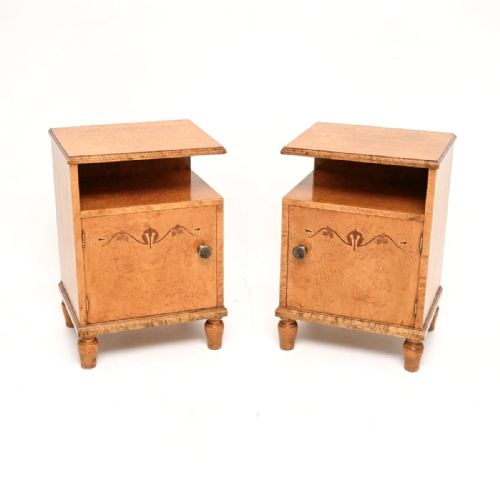
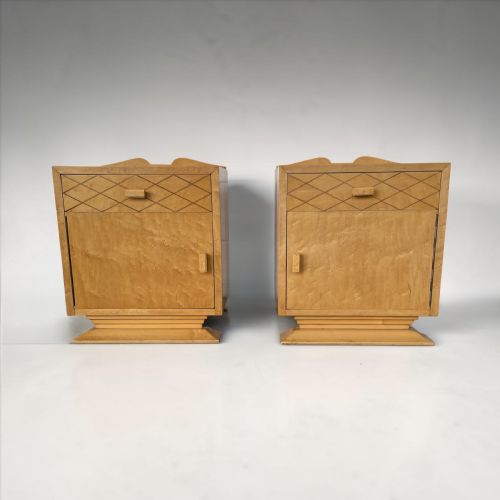
A scandinavian bedside table encompasses practical chests of drawers, cupboards, and side tables originating from northern Europe during the nineteenth and early twentieth centuries. Buyers searching this phrase will most frequently encounter painted softwood items and satin birch examples dating from the 1890s through to 1930.
The selection ranges from traditional painted country pieces to refined Swedish Art Deco and Gustavian influenced forms. Many are found in pairs, offering symmetrical utility for either side of a bed.
How they were made
Cabinet makers utilised local timbers such as pine and softwood, frequently applying layered paint finishes or covering surfaces with figured satin birch veneer. Brass fittings appear regularly as handles and key escutcheons, adding subtle metallic contrast to timber and painted bodies.
Construction methods rely on traditional joinery suited to regional woods, while select pieces incorporate marble tops for durable elegance. Inlaid veneer work and hand painted decoration demonstrate the diverse skill levels applied across different workshops and periods.
Scandinavian Bedside Table Retail Price Guide 2026
Typical asking prices for scandinavian bedside table among the pieces listed under this phrase on Sellingantiques today, from the lower quarter to the upper quarter. They describe what is for sale here now, not the wider market.
Listings span the nineteenth century, 1890, 1920, and 1930, uniting Gustavian styles with Swedish Art Deco.
What varies in quality
The distinction between standard examples and finer items rests in the selection of timber veneers and the crispness of painted surfaces. Satin birch grain patterns and intact marble slabs elevate certain pieces above simple softwood utility furniture.
Proportion and stylistic coherence also determine distinction, particularly in how faithfully a piece adheres to Gustavian restraint or Art Deco geometry. Original hardware and careful hand finishing separate superior examples from more utilitarian production.
The Scandinavian Bedside Table Glossary
- Gustavian
- A Swedish neoclassical style popularised during the reign of King Gustav III, characterised by restrained carving and pale painted finishes. This aesthetic influences much of the lighter nineteenth century furniture seen in northern European design.
- Satin Birch
- A dense timber with a lustrous, light golden grain utilised extensively in high grade Scandinavian cabinet making. It provides a striking visual texture when laid as a veneer.
- Swedish Grace
- A sophisticated architectural and design movement bridging neoclassical tradition and early twentieth century modernism. Pieces from this era often display sleek geometric lines alongside luxurious materials.
- Softwood
- Coniferous timber such as pine used widely for the structural carcase of painted furniture. It offers a stable base for decorative paint layers.
- Biedermeier
- A central and northern European style prioritising utility and comfort over excessive ornamentation. It informs the clean forms of various nineteenth century bedside cabinets.
Scandinavian Bedside Table: Frequently Asked Questions
What defines a scandinavian bedside table?
These tables are practical bedside storage units originating from northern Europe, typically taking the form of small cupboards, chests of drawers, or open side tables.
They reflect regional design movements spanning the nineteenth century up to the 1930 Art Deco period.
Are these tables usually sold in pairs?
Many listings feature matching pairs, reflecting the traditional requirement for symmetrical bedside placement.
Single cupboards and side tables also appear frequently for more compact bedroom layouts.
What materials were used?
Cabinets and tables are constructed from regional timbers like pine and softwood, often finished with hand painted surfaces or decorative satin birch veneers.
Selected pieces incorporate marble tops and brass hardware for added durability and contrast.
How do I date a piece?
Dating relies on stylistic clues, ranging from nineteenth century Gustavian painted influence to the distinct geometric styling of 1930 Swedish Art Deco.
Materials like satin birch veneer and construction techniques help establish the manufacturing era.