



Scalloped Silver Plate
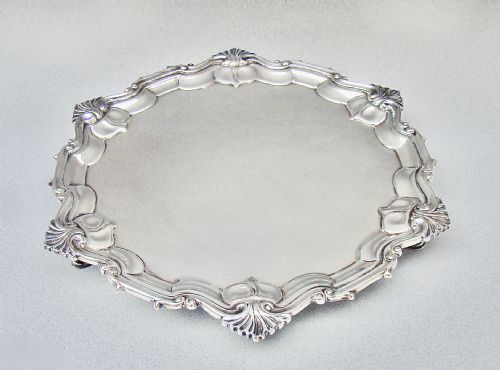
Scalloped silver plate comprises serving pieces, trays and decorative wares shaped with curved, indented borders.
Scalloped Silver Plate
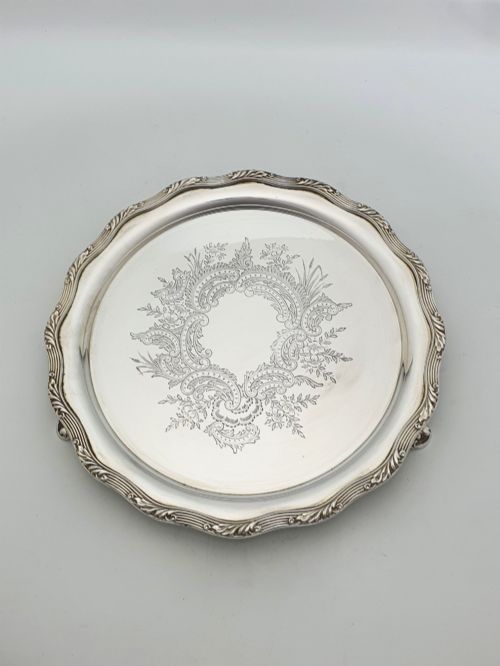
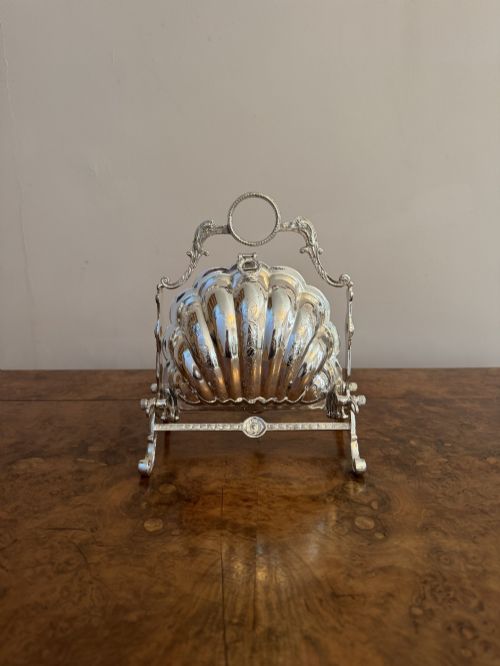
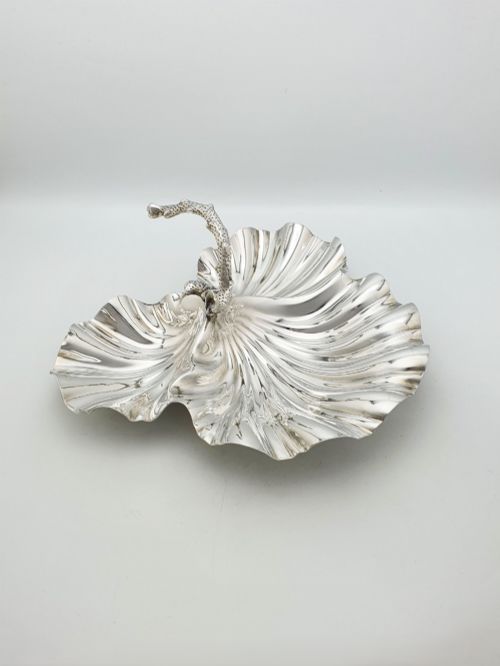
When you search for scalloped silver plate, you encounter items designed for entertaining and display across the nineteenth and twentieth centuries. These objects include salvers, trays, cake baskets, strawberry dishes and fruit bowls featuring characteristic curved edges. Victorian naturalism and Rococo revival styles bring organic, flowing forms to the metalwork.
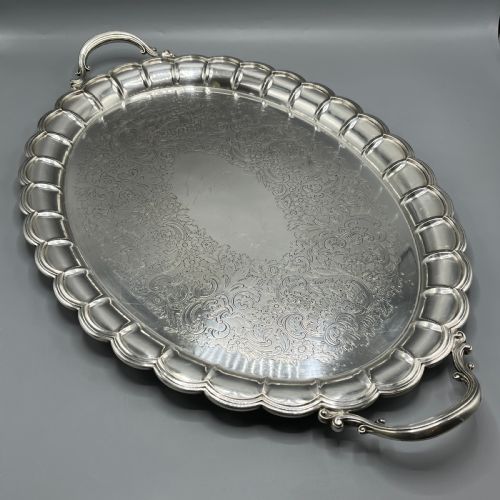
The version you are most likely to meet on this page is the silver plated serving tray or salver from the late nineteenth or early twentieth century. Art Deco examples also appear alongside Edwardian pieces and earlier Victorian designs. Many incorporate engraved surfaces, raised rims and decorative handles shaped like shells or coral.
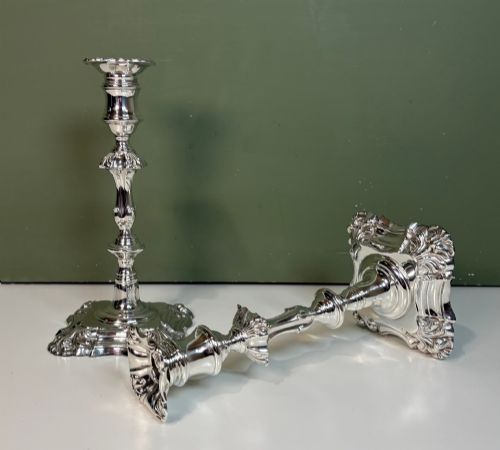
Makers such as William Hutton & Sons, Mappin & Webb, Walker & Hall, and James Dixon & Sons feature among the listings. Other examples include pieces by Elkington, James Deakin and WMF, spanning periods from the nineteenth century through to the Art Deco era of the 1920s and 1930s.
Materials and methods of construction
The majority of these pieces utilise silver plate or electroplated nickel silver over a base metal foundation. Earlier items employ Old Sheffield plate techniques where a thin sheet of silver is fused to a copper base. Some specialised forms incorporate patinated copper, glass inserts, mirrors or fabric.
Forming the scalloped edge requires careful hammering, pressing or casting to achieve the characteristic curved perimeter. Artisans often combine this shaping with surface engraving, chased ornamentation and applied cast mounts for handles and feet.
Scalloped Silver Plate Retail Price Guide 2026
Typical asking prices for scalloped silver plate among the pieces listed under this phrase on Sellingantiques today, from the lower quarter to the upper quarter. They describe what is for sale here now, not the wider market.
Materials recorded across the inventory include silver plate, electroplated nickel silver, glass, fabric and patinated copper.
Assessing quality in plated wares
Quality rests upon the weight of the underlying metal and the thickness of the silver plating. Heavier gauge metal provides structural rigidity, preventing warping and ensuring the tray or dish maintains its balance during use.
The crispness of the chased or engraved detail and the fidelity of cast mounts like handles and borders indicate the standard of craftsmanship. Better pieces display sharp lines, well-defined scalloped profiles and clean integration between the plated surface and applied decorative elements.
William Hutton & Sons·Mappin & Webb·Walker & Hall·James Dixon & Sons·James Deakin·Elkington·Tiffany & Co·WMF
The Scalloped Silver Plate Glossary
- Silver Plate
- A base metal object coated with a thin layer of silver. This technique allowed manufacturers to produce domestic wares that achieved the appearance of solid silver at a lower cost.
- Electroplated Nickel Silver
- Commonly abbreviated as EPNS, this material uses a nickel silver alloy as the foundation for the electrochemically applied silver coating. It became widely utilised by British makers from the mid-nineteenth century onwards.
- Salver
- A flat tray used for serving drinks or presenting visiting cards. They often feature footed bases and decorative raised rims with scalloped or shaped edges.
- Old Sheffield Plate
- An early method of fusing a sheet of silver to a copper core before rolling them into sheets. This technique predates electroplating and is identified by the thin line of exposed copper visible at the cut edges.
- Gallery Tray
- A tray featuring a pierced or solid upright gallery surrounding the flat base. These walls prevent items from sliding off during service.
Scalloped Silver Plate: Frequently Asked Questions
What is scalloped silver plate?
Scalloped silver plate refers to trays, dishes and serving vessels shaped with a decorative curved edge resembling a scallop shell. These objects date primarily from the Victorian, Edwardian and Art Deco periods.
They were produced by British and European manufacturers using silver plating techniques over base metals like nickel silver or copper.
How were these trays used?
These pieces served practical functions in the dining room and drawing room for presenting food and beverages. Salvers and cocktail trays held glasses and decanters, while strawberry dishes and baskets presented fruit.
Many items also functioned purely as decorative centrepieces or decorative dishes displayed on sideboards.
How do I date an item?
Dating relies upon stylistic markers such as Victorian naturalism, Edwardian elegance or the geometric lines of Art Deco. Maker marks stamped on the underside provide additional chronological reference points.
Materials also help establish age, with older pieces sometimes employing Old Sheffield plate methods rather than later electroplating.
How should I clean silver plate?
Cleaning requires a soft cloth and a gentle silver polish formulated specifically for plated items. Abrasive cleaners must be avoided to prevent wearing away the thin silver layer.
Regular dusting and careful hand washing preserve the patination and finish of the metal.