
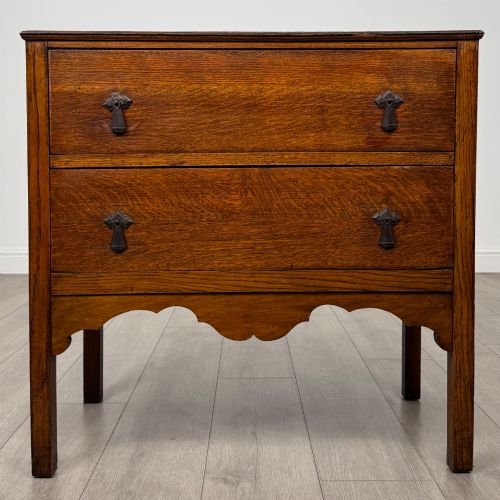
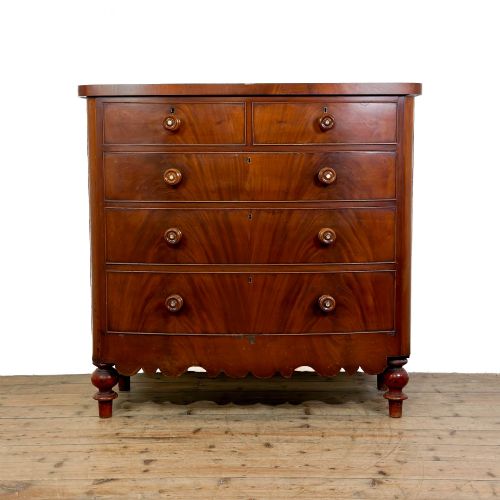
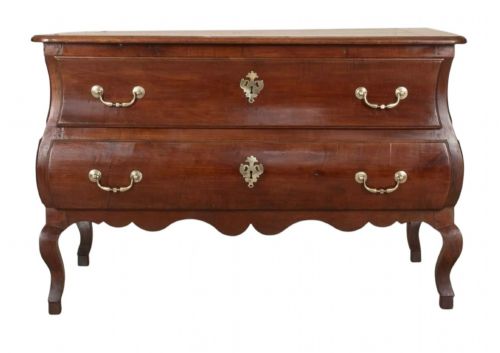


Scalloped Apron Chest Drawers
These scalloped apron chest drawers bring immediate character to a room, offering practical storage grounded in centuries of cabinet-making.
Scalloped Apron Chest Drawers
When you search for scalloped apron chest drawers, you are looking at timber storage furniture characterised by shaped lower rails beneath the main carcass. The examples available span several distinct periods including the eighteenth century, Victorian era, and Edwardian period.
The forms on this page range from full-size commodes and dressers to miniature furniture and side tables. You will encounter regional European pieces alongside British pieces, reflecting diverse domestic storage traditions.
Woods such as oak, mahogany, walnut, cherrywood, and yew wood define the primary structures, occasionally finished with paint or liming. These chests combine utility with decorative lower aprons that distinguish them from standard rectilinear forms.
How they were made
Cabinet-makers constructed these chests using solid hardwoods like oak, mahogany, walnut, and cherrywood, joined with traditional framing techniques. The distinct aprons were hand-sawn into curves and contours beneath the lowest drawer tier.
Surface finishes include French polishing, painted treatments, and liming on oak, depending on the period and regional workshop. Hardware typically incorporates brass handles and escutcheons secured to the drawer fronts.
Materials documented across the inventory include oak, mahogany, walnut, cherrywood, yew wood, brass, and mother of pearl.
What varies in quality
Quality rests in the precision of the timber selection and the fluency of the hand-cut apron shaping. Crisp lines in the carving and well-figured grain elevate an ordinary storage piece into a finer example of period joinery.
The integrity of the original construction, from drawer linings to the retention of period brassware, marks the difference between standard utilitarian examples and superior cabinet-work.
The Scalloped Apron Chest Drawers Glossary
- Commode
- A European term for a chest of drawers or low cabinet. French examples often display serpentine fronts and rich timber patination.
- Yew wood
- A dense, highly figured softwood alternative used in traditional cabinet-making. It yields rich grain patterns across smaller furniture forms.
- Serpentine
- A front contour that curves inward centrally and outward at the sides. This fluid shape appears on eighteenth and nineteenth-century commodes.
Scalloped Apron Chest Drawers: Frequently Asked Questions
What is a scalloped apron?
A scalloped apron is the shaped wooden skirt running along the bottom base of the chest beneath the drawers. It introduces decorative curves to an otherwise utilitarian furniture form.
Cabinet-makers shaped these lower rails by hand to soften the heavy block of the chest, creating a more elegant silhouette against the floor.
Where were these chests used?
These chests served primarily as bedroom or parlour storage for clothing, linens, and personal valuables. Their decorative aprons suited them for prominent placement in principal rooms.
Smaller versions functioned as miniature display items or bedside pieces, while larger commodes anchored formal living spaces.
How do I date an oak chest?
Dating relies on examining the construction methods, tool marks, and timber preparation visible inside the drawers and carcass. Earlier eighteenth-century pieces display hand-riven boards and simpler joinery.
Later Victorian and Edwardian examples utilise more uniform machine-sawn timber and standardised internal fittings.
Are painted finishes original?
Painted finishes on period commodes can be contemporary to the manufacture or applied during subsequent redecoration campaigns. Regional European furniture frequently employed painted surfaces to finish cheaper or mixed timbers.
Evaluating the wear patterns and underlying paint layers helps determine the age of the surface coating.