

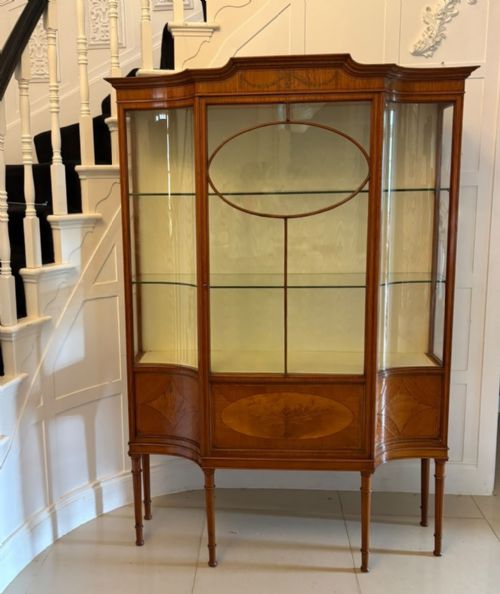
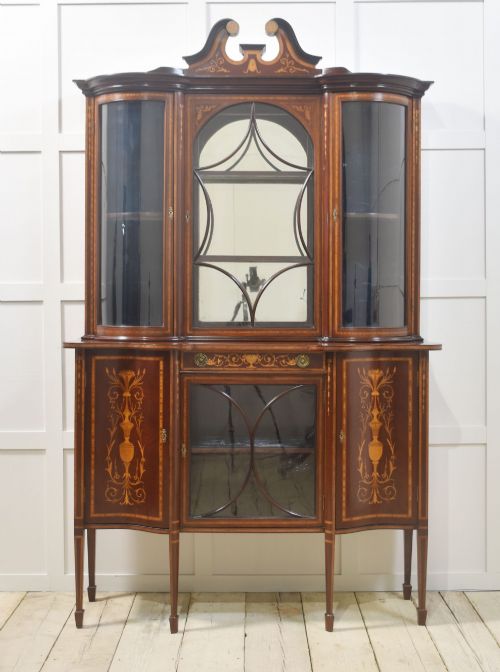
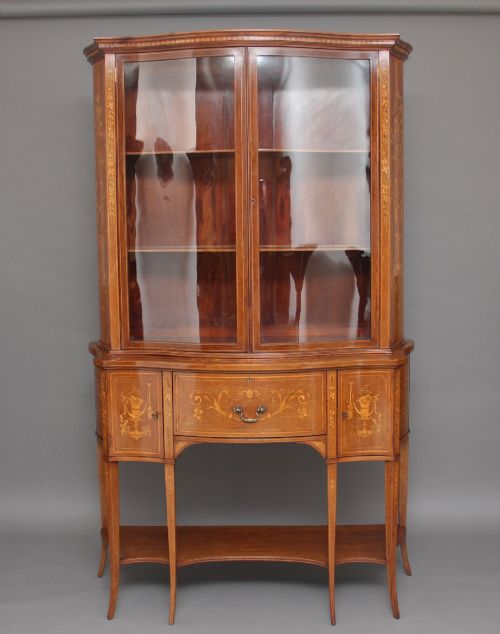
Satinwood Inlay Vitrine
These satinwood inlay vitrine pieces combine figured timber and glass to display cherished possessions, emerging chiefly from Victorian and Edwardian workshops.
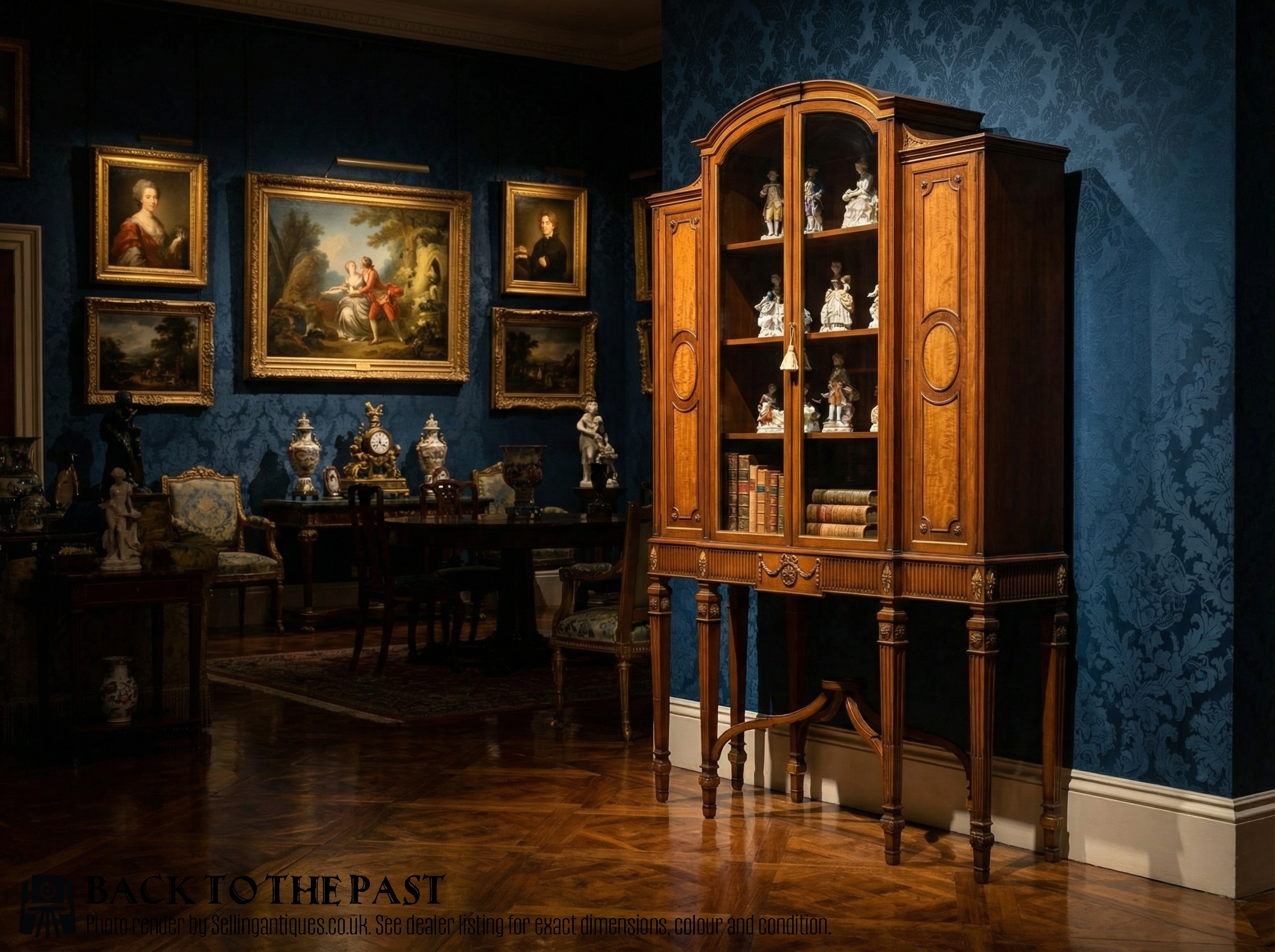
Satinwood Inlay Vitrine
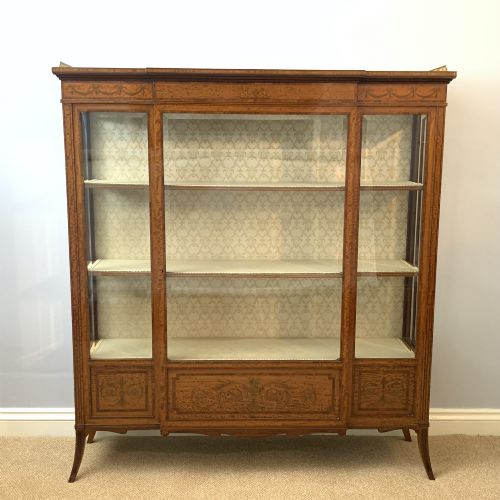
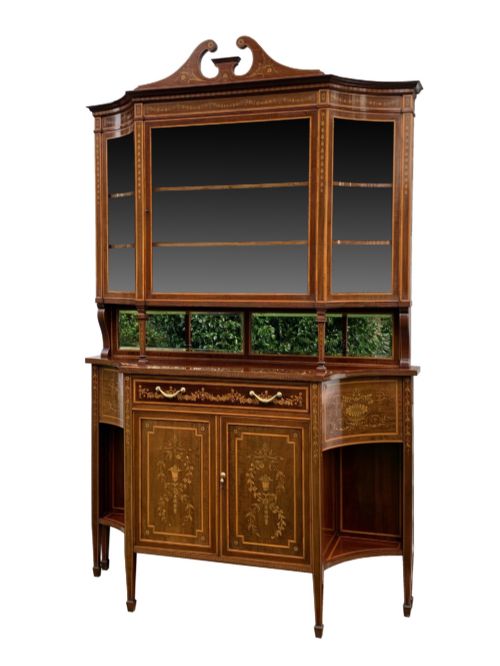
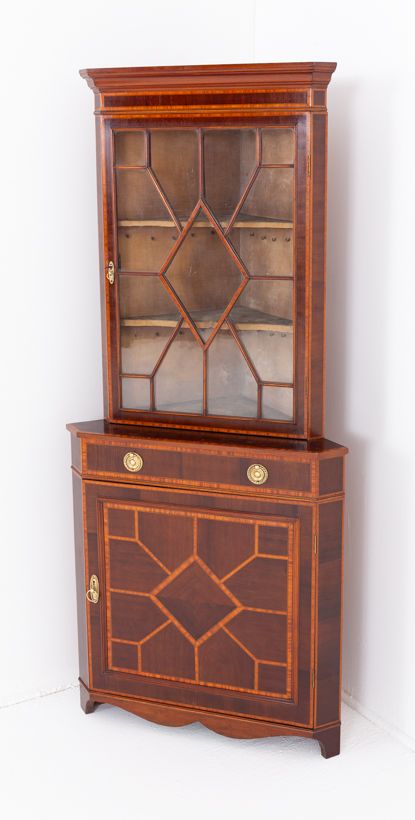
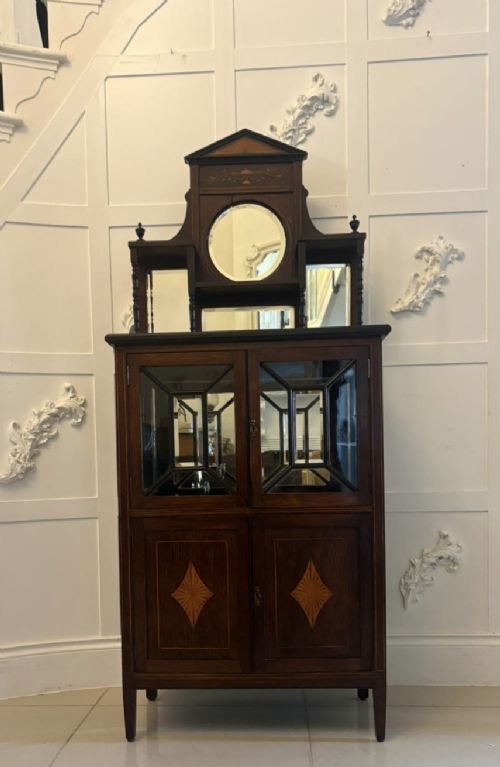
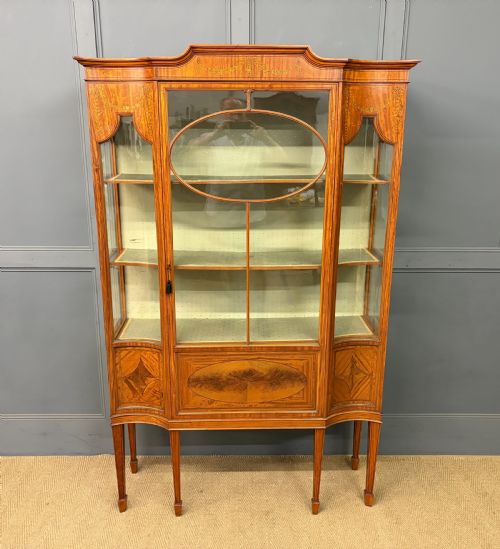
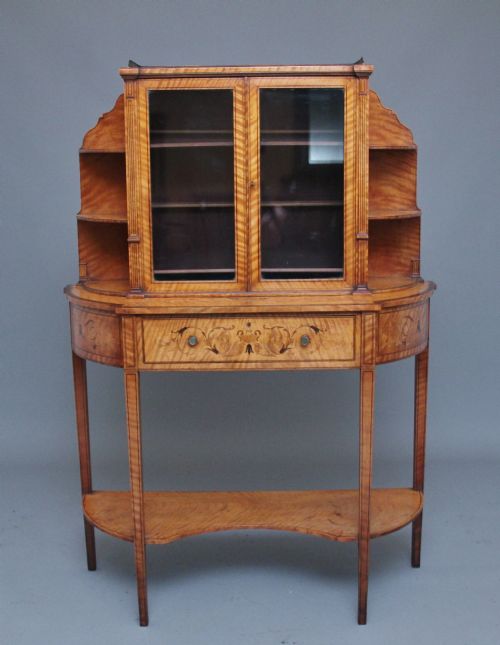
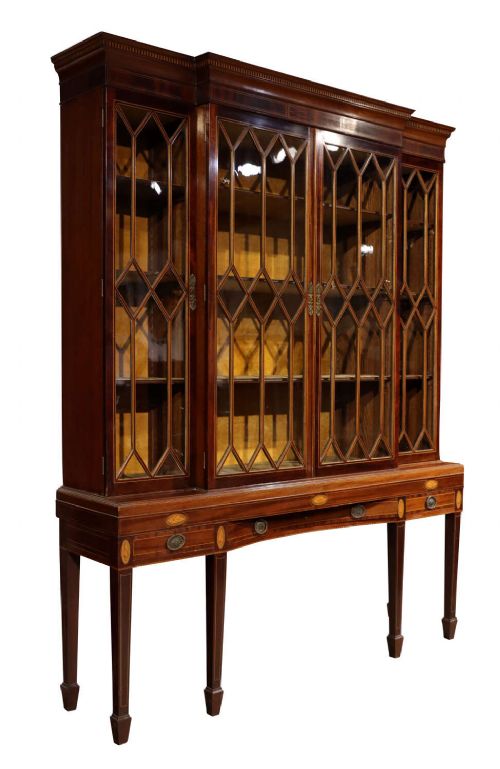
A satinwood inlay vitrine functions primarily to display and protect small objects, ceramics, and books behind glass doors or panels. These cabinets take many forms, including corner cabinets, pier cabinets, breakfront bookcases, and freestanding display cabinets.
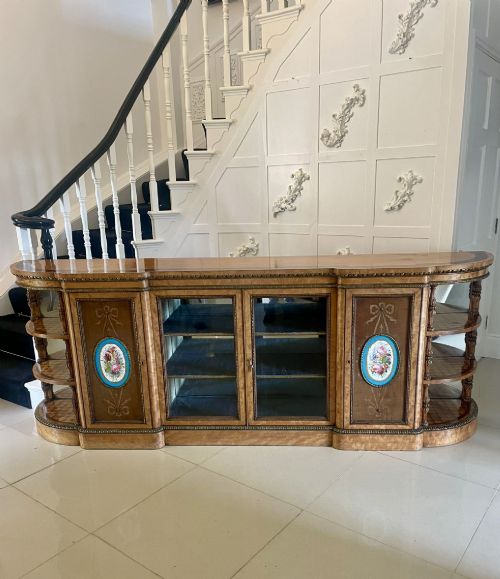
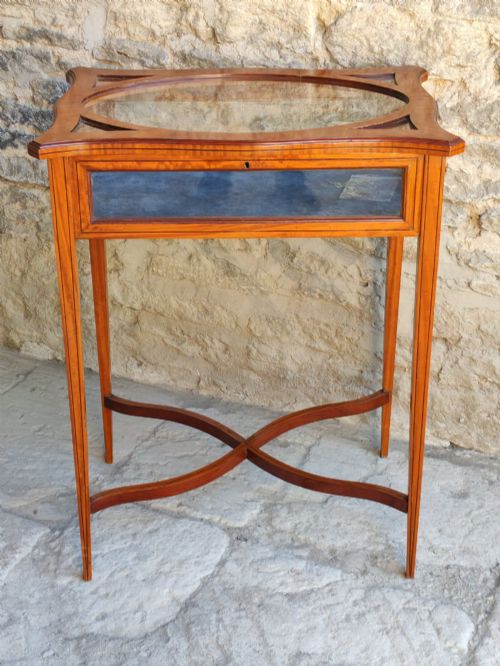
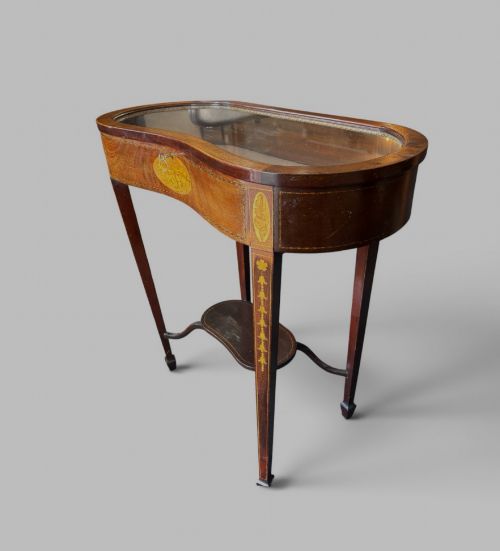
Buyers seeking a satinwood inlay vitrine most frequently encounter Edwardian and late Victorian examples that utilise Sheraton Revival or Neoclassical motifs. Forms range from kidney-shaped and octagonal bijouterie tables to tall pedestal cabinets and credenzas with mirror backs.
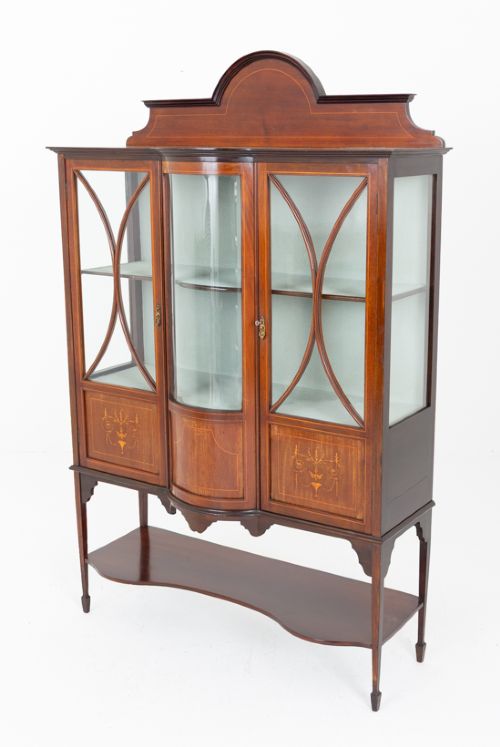
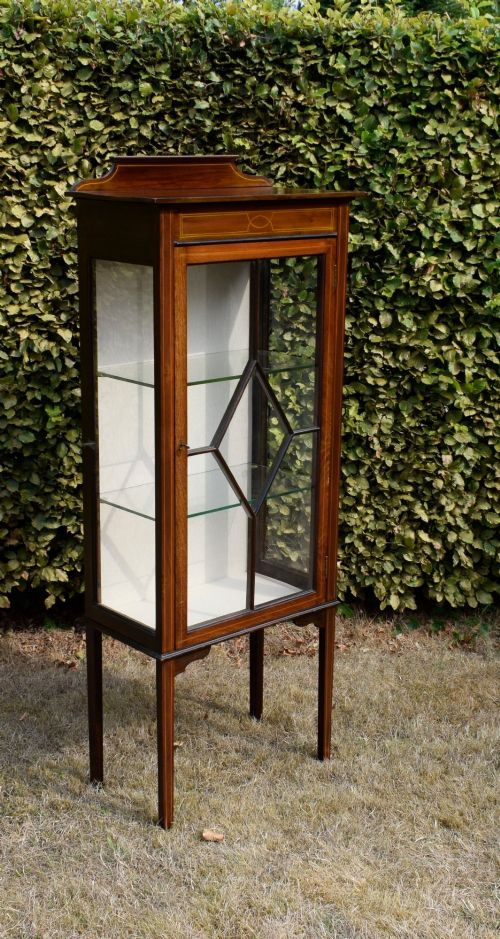
The aesthetic leans heavily on the lightness of satinwood and mahogany contrasted with delicate marquetry and fruitwood inlay. Many pieces incorporate glazed doors, glass sides, and fabric-lined interiors to highlight the items placed within.
Materials and construction methods
Cabinet makers constructed these pieces using solid and veneered timbers, predominantly satinwood and mahogany, often enriched with intricate wood inlay and marquetry. Brass mounts, ormolu, and porcelain plaques occasionally accent the primary wooden structure.
Glazing is central to the construction, utilising fitted glass panes within timber frames to enclose the display space. Interiors frequently incorporate mirror backs and velvet or fabric linings to reflect light and cushion delicate objects.
Some bijouterie tables feature glass tops just deep enough to display a gentleman's pocket watch collection alongside visiting cards.
Assessing quality and execution
Quality rests upon the precision of the timber selection, the crispness of the marquetry and inlay work, and the structural integrity of the glazing bars. Higher-grade examples display carefully matched grain patterns and harmonious proportions across curved or serpentine fronts.
The distinction between standard production and superior cabinet making involves the execution of auxiliary details such as interior mirror work, brass hardware, and the refinement of revival styles like Sheraton Revival or Louis XVI Revival.
Edwards & Roberts·Maple & Co.·James Hicks·Waring & Gillow
The Satinwood Inlay Vitrine Glossary
- Satinwood
- A durable, lustrous timber with a characteristic golden-yellow sheen used extensively for cabinet veneers and banding.
- Vitrine
- A glass-fronted cabinet or display case designed specifically for showing porcelain, curiosities, and small decorative objects.
- Bijouterie
- A low display table or cabinet with a glass top, originally intended for showcasing jewellery and small trinkets.
- Marquetry
- Decorative veneer work arranged in pictorial or geometric patterns using various coloured woods, fruitwoods, and shells.
- Sheraton Revival
- A late nineteenth and early twentieth century design movement replicating the lighter, neoclassical furniture forms associated with Thomas Sheraton.
Satinwood Inlay Vitrine: Frequently Asked Questions
What is a vitrine?
A vitrine is an enclosed glass cabinet designed for exhibiting delicate items while protecting them from dust. These cases rely on transparent panels on the sides and doors to maximise light exposure.
In period interiors, they served as focal points in drawing rooms and parlours for displaying collections of porcelain, silver, and curiosities.
How do I distinguish Edwardian from Victorian cabinets?
Edwardian cabinets generally exhibit lighter proportions and paler satinwood veneers, often drawing heavily on Sheraton Revival aesthetics. Victorian pieces tend to be heavier, employing deeper mahogany tones alongside more robust ormolu and marquetry decoration.
Examining the interior linings, secondary woods, and hardware styles helps clarify the manufacturing era.
Were these cabinets used for books?
Certain larger formats, such as breakfront bookcases and tall display cabinets, accommodated both leather-bound volumes and decorative objects. The inclusion of adjustable shelving allowed owners to customise the interior space for mixed collections.
Most vitrines, however, prioritised glass panels specifically for the unimpeded viewing of ornaments and porcelain rather than library storage.
What is a bijouterie table?
A bijouterie table is a specialised display piece featuring a glazed top and often a hinged or lifting lid. They were placed in entertaining rooms so guests could inspect small treasures, medals, and jewellery at close range.
These tables frequently incorporate fabric-lined interiors and slender legs, reflecting the refined tastes of the late nineteenth century.