


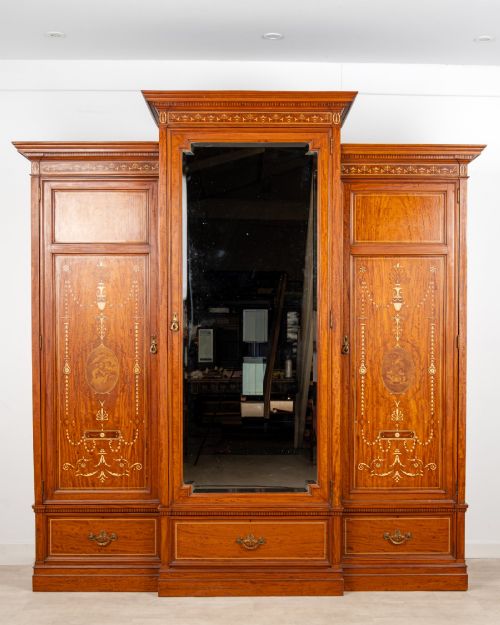
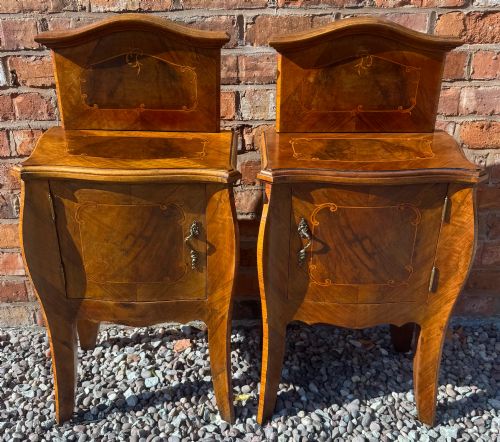
Satinwood Inlay Cupboard
A satinwood inlay cupboard brings polished light and detailed marquetry into a room, offering refined storage through display cabinets, bedside pieces and corner units.
Satinwood Inlay Cupboard
A satinwood inlay cupboard sits within a lineage of cabinet making spanning from the eighteenth century into the Edwardian era. These pieces manifest primarily as display cabinets, bedside cupboards, and corner units shaped by Sheraton Revival and Georgian tastes.
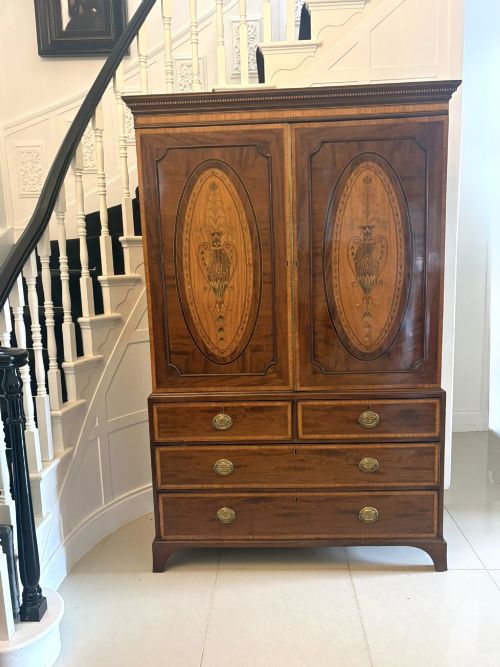
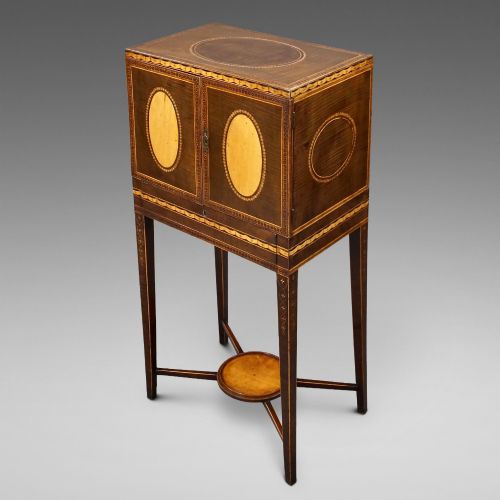
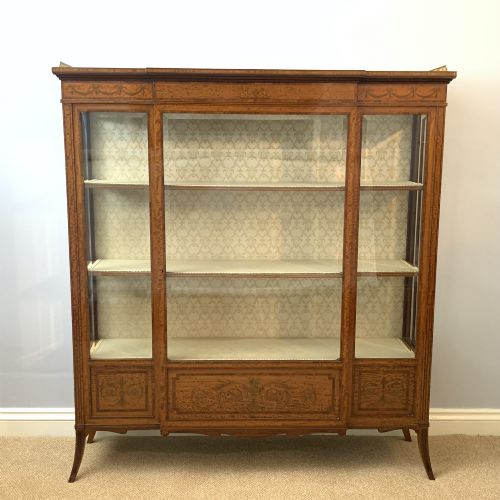
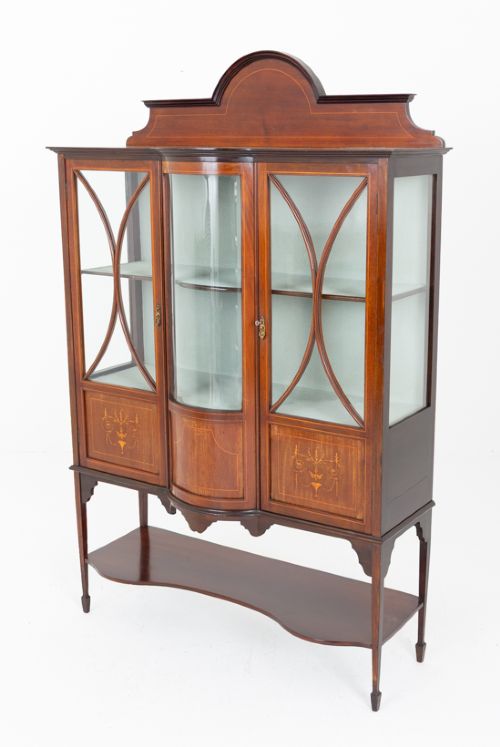
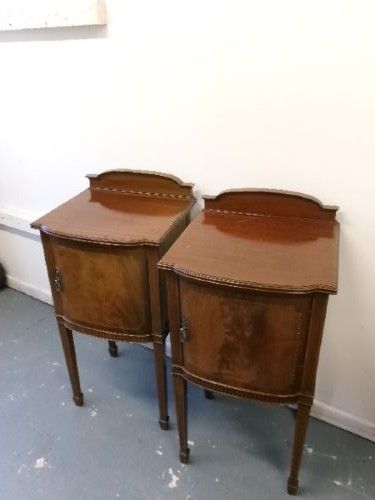
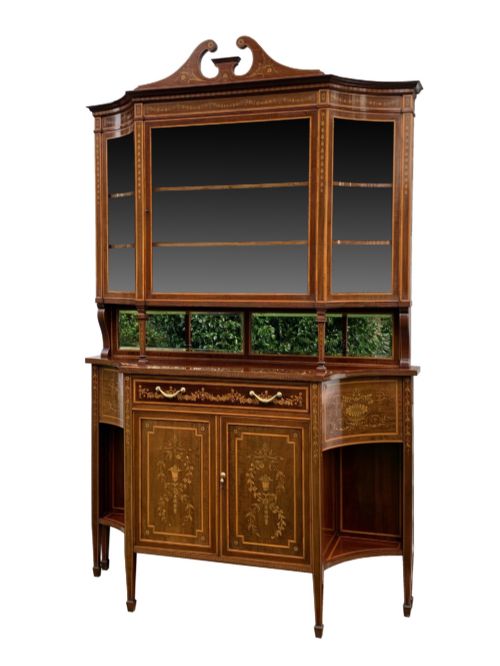
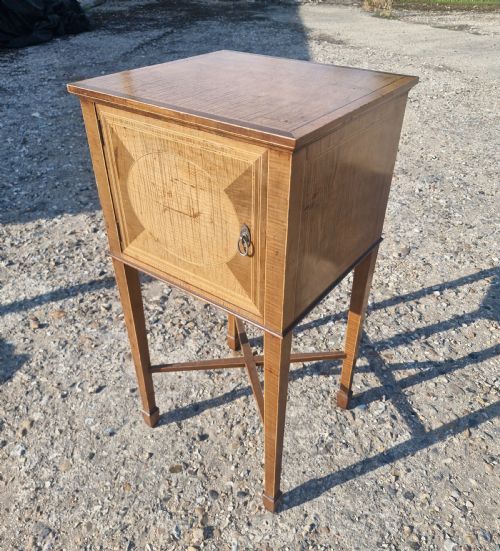
The version most commonly encountered on this page is the Edwardian or Sheraton Revival display cabinet, constructed with glazed doors, mirror backs, and delicate wood inlays. Alongside these, buyers find bedside cabinets and linen presses that combine structural mahogany or satinwood carcasses with contrasting decorative details.
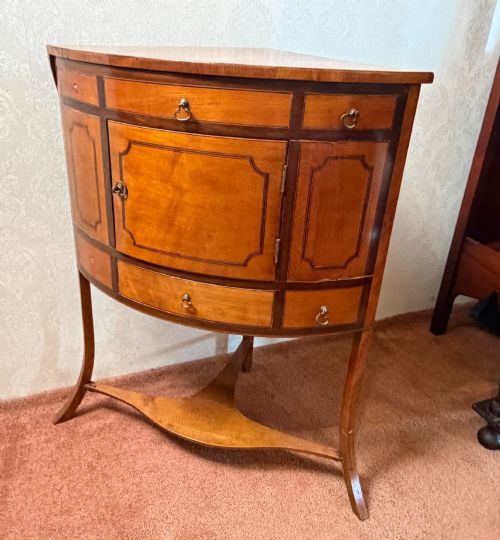
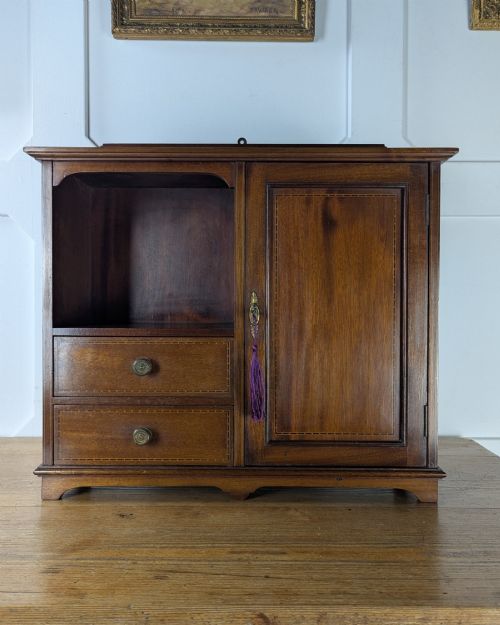
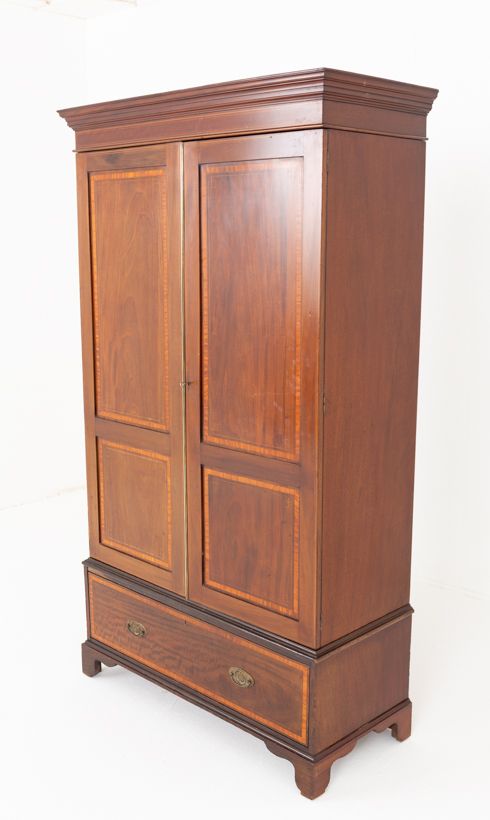
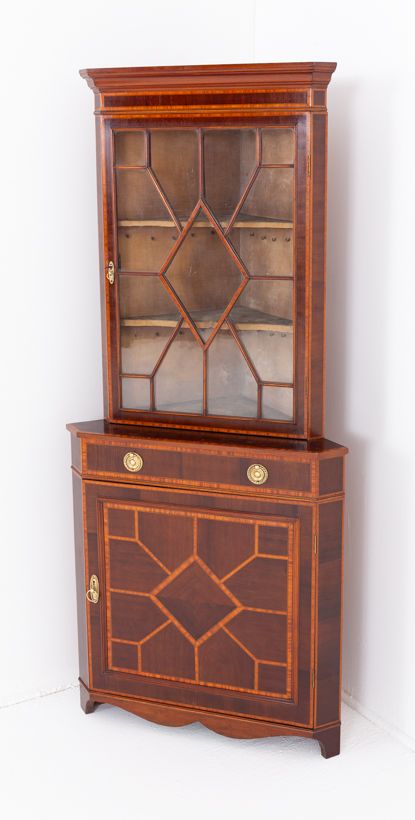
Forms range from compact corner cabinets designed to utilise awkward spaces to large triple wardrobes and side cabinets. Each iteration relies on the visual warmth of satinwood surfaces paired with precise geometric or floral stringing.
Materials and construction
Makers built the primary carcasses of these cupboards using mahogany, harewood, or solid satinwood, often applying fine veneers over stable secondary timbers. Satinwood supplies a pale, lustrous ground that accepts contrasting stringing and marquetry.
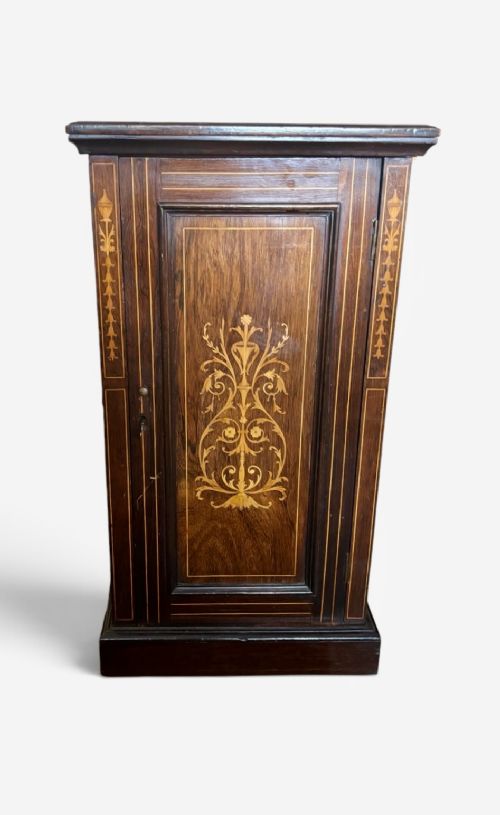
Inlay work incorporates boxwood and rosewood to create sharp borders, geometric banding, and pictorial motifs. Brass hardware, mirrored glass panels, and fabric linings complete the construction of the display and bedside variants.
Materials paired with satinwood across the inventory include mahogany, rosewood, boxwood, and mirrored glass.
Distinctions in quality
Quality rests upon the crispness of the marquetry and the tightness of the timber joints, distinguishing workshop output from mass production. Superior pieces exhibit seamless veneer matching and precisely fitted doors that hang true without sag.
The refinement of the secondary woods and the depth of the hand-applied polish separate standard utilitarian cupboards from exhibition pieces. Maker attribution through stamps or plaques further marks the upper tier of surviving examples.
Edwards and Roberts·Morant and Co London·Maple and Co·Druce and Co
The Satinwood Inlay Cupboard Glossary
- Satinwood
- A dense, yellow-toned timber harvested from tropical trees, prized for its high natural sheen and smooth grain. It forms the primary visual surface on many neoclassical and revival cabinets.
- Marquetry
- The art of arranging thin slices of coloured wood veneers onto a structural panel to form decorative pictures or patterns. It differs from simple inlay by covering the entire surface in a mosaic design.
- Sheraton Revival
- A late nineteenth and early twentieth century design movement that reinterpreted the light, neoclassical furniture forms of the eighteenth century. Cabinets from this period frequently feature delicate satinwood banding and painted motifs.
- Stringing
- Narrow strips of contrasting timber embedded into grooves on furniture surfaces to create fine border lines. Boxwood and ebony are typical choices for this linear detail.
- Linen Press
- A tall double-door cupboard containing sliding trays or shelves originally intended for storing household textiles. Lower sections often incorporate drawer chests.
Satinwood Inlay Cupboard: Frequently Asked Questions
What is a satinwood inlay cupboard?
A satinwood inlay cupboard is a storage piece featuring pale, lustrous satinwood surfaces decorated with contrasting wood marquetry or stringing. These pieces include display cabinets, bedside units, and corner cupboards.
Most examples date from the Georgian, Victorian, or Edwardian periods, reflecting neoclassical design revivals. They combine functional shelving or hanging space with ornamental woodwork.
How do I date a satinwood cupboard?
Dating relies on examining the construction methods, secondary timbers, and stylistic markers present in the piece. Georgian and eighteenth-century examples display hand-cut dovetails and heavy timber framing, while Edwardian pieces often utilise lighter machine-sawn elements.
Revival pieces from the late nineteenth and early twentieth centuries frequently imitate earlier Sheraton styles. Maker stamps, lock types, and brass hardware provide additional chronological clues.
Where should I place a bedside cabinet?
Bedside cabinets suit bedrooms where their compact proportions provide surface space and enclosed storage next to a bed. Their inlaid doors and polished timber finishes complement traditional or eclectic interiors.
Care should be taken to place them away from direct heat sources and strong sunlight to protect the delicate satinwood veneers and polish.
How do I care for satinwood furniture?
Caring for satinwood requires keeping the timber away from extreme temperature shifts and direct sunlight, which can fade the yellow grain. Dusting with a soft, dry cloth preserves the polished finish without building up residue.
Occasional applications of appropriate wax maintain the moisture balance of the veneer. Avoid using silicone sprays or harsh chemical cleaners.