
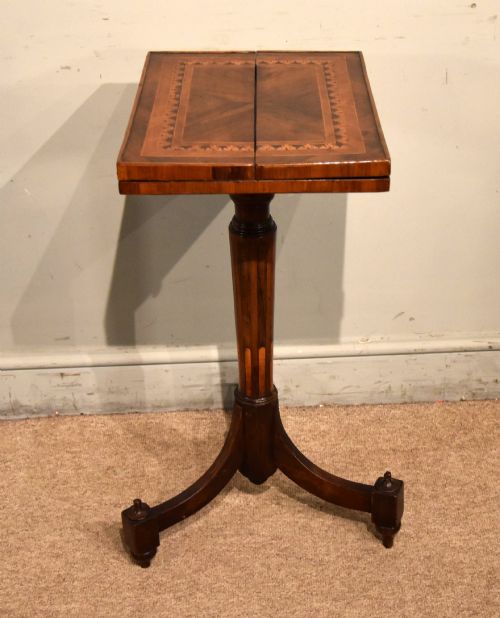
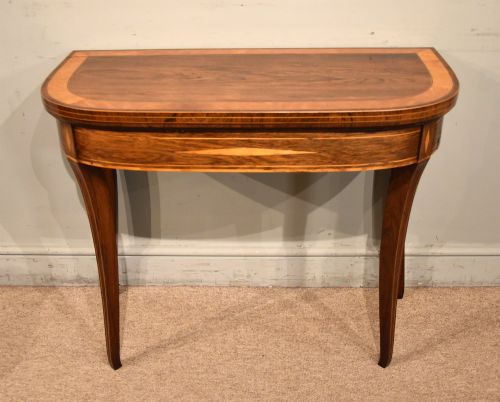
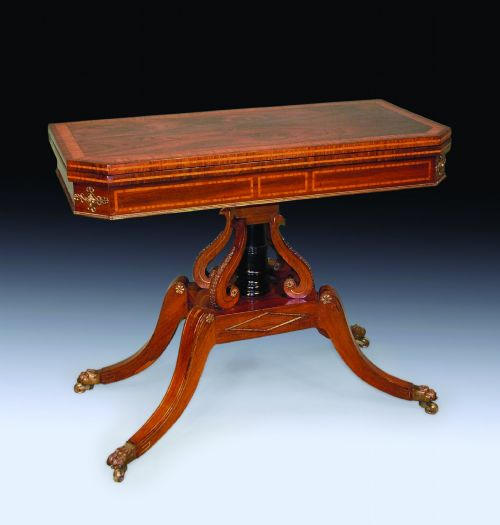
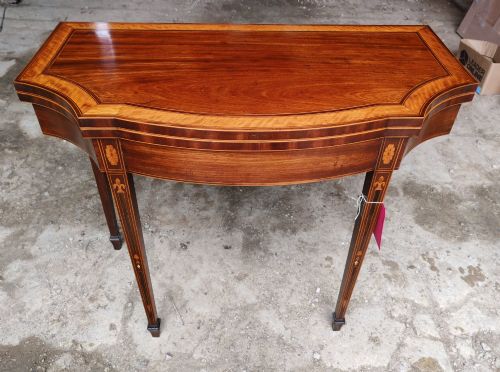
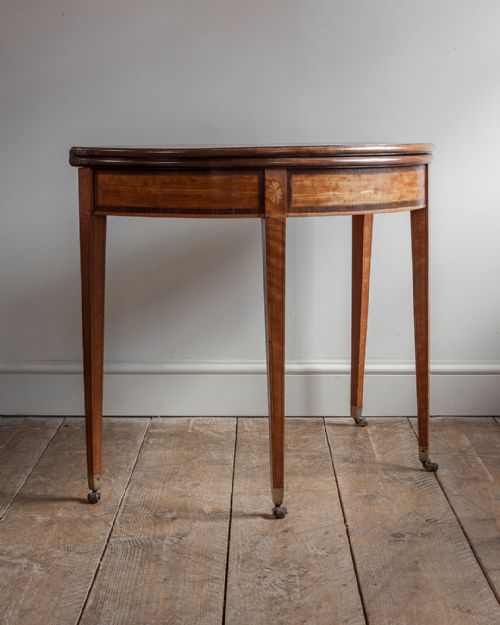


Satinwood Inlaid Gaming Table
A satinwood inlaid gaming table brings the refined geometry of the eighteenth and nineteenth centuries into a room.
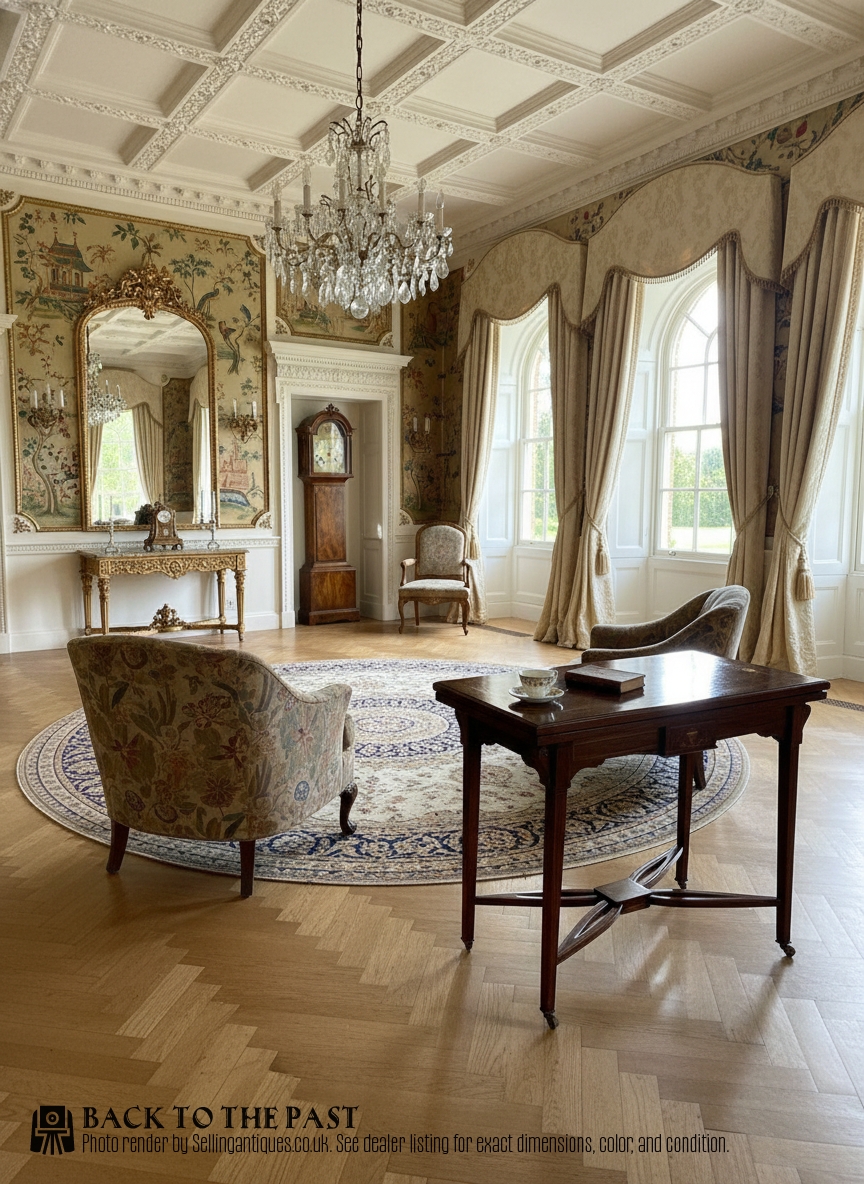
Satinwood Inlaid Gaming Table
A satinwood inlaid gaming table is a piece designed for card playing and board games, appearing across the Georgian, Regency, Victorian, and Edwardian periods.
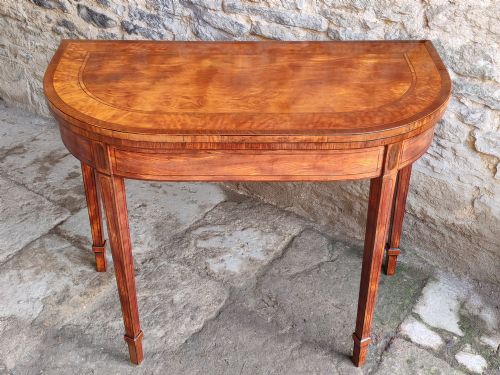
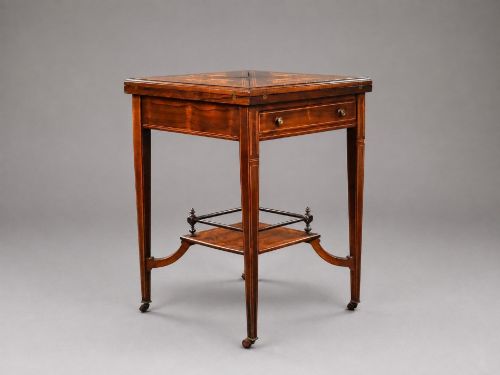
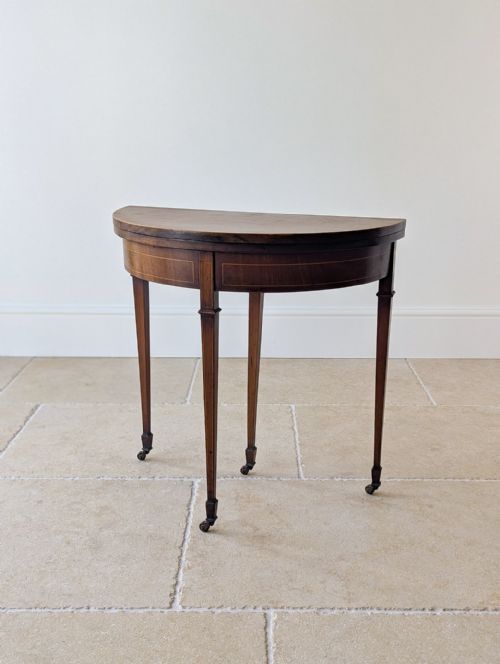
The version most commonly met on this page is the fold-over card table or the envelope table, often taking a demi-lune or square form.
Originating in walnut, mahogany, and rosewood frameworks, these tables utilise blonde satinwood veneers and contrasting stringing to define the playing surface.
How they were made
Cabinetmakers constructed these pieces using dense carcases of mahogany or rosewood, onto which fine sheets of satinwood veneer were applied.
Detailed marquetry and parquetry utilise boxwood, ebony, and brass to create geometric borders, scrolling foliage, and classical motifs.
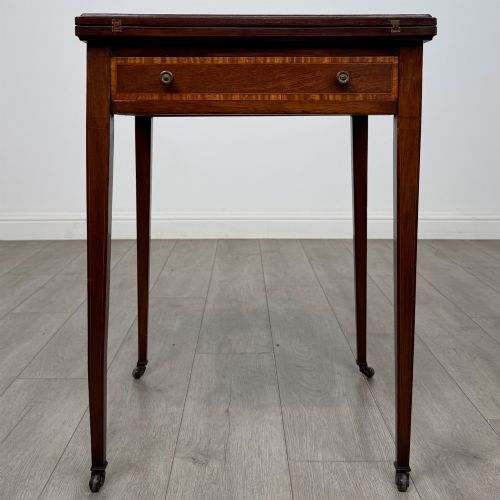
Hinged leaves, swivel tops, and folding envelope mechanisms required precise carpentry to ensure the surface remained level when open.
Listings span the Georgian, Regency, Victorian, and Edwardian eras, uniting mahogany, rosewood, and satinwood forms.
What varies in quality
The distinction between tiers rests upon the crispness of the inlay work and the selection of the satinwood timber, where rich figure and even grain denote higher craftsmanship.
Structural integrity in the pivoting mechanisms and the stability of the legs, whether tapered spade feet or scroll pedestals, dictate the grade of the piece.
Subtlety in proportion and restraint in decoration separate workshops of high merit from later revival pieces.
Howard and Son's·Maples of London
The Satinwood Inlaid Gaming Table Glossary
- Satinwood
- A hard, dense timber with a lustrous, golden sheen that takes a fine polish. It serves as the primary veneer for late eighteenth and nineteenth-century decorative surfaces.
- Demilune
- A half-moon shape characteristic of card and console tables designed to sit flush against a wall when closed. This form allowed furniture to occupy minimal space until needed for play.
- Marquetry
- The art of forming decorative patterns by fitting together small pieces of coloured wood veneers. It differs from inlay by assembling the entire design before fixing it to the carcase.
- Envelope table
- A square table with four triangular flaps that rotate and fold open to reveal a baize-lined interior. This clever mechanism became popular during the Edwardian period.
Satinwood Inlaid Gaming Table: Frequently Asked Questions
What were satinwood inlaid gaming tables used for?
These tables served as versatile furniture for card games, chess, and social gatherings in domestic drawing rooms. When closed, they functioned as side or console tables.
Opening the fold-over top or rotating the envelope leaves revealed a baize or leather playing surface equipped with corners for counters and coins.
How do I date a gaming table?
Dating relies on observing the timber choice, leg shape, and framing structure alongside the prevailing style. Georgian examples often feature tapered spade legs and delicate stringing, while Edwardian pieces display lighter, revivalist proportions.
Looking beneath the top and examining the hinges and secondary timbers provides further chronological clues.
How should I care for satinwood?
Satinwood requires stable indoor humidity away from direct sunlight and heat sources to prevent the veneers from lifting. Regular dusting with a soft, dry cloth preserves the polished finish.
Wax polishing should be applied sparingly, using formulations suitable for antique furniture to maintain the natural lustre of the golden grain.