

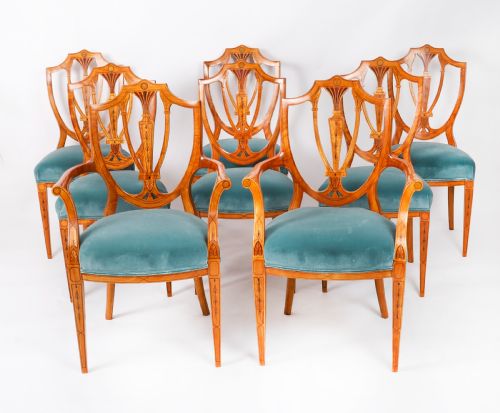


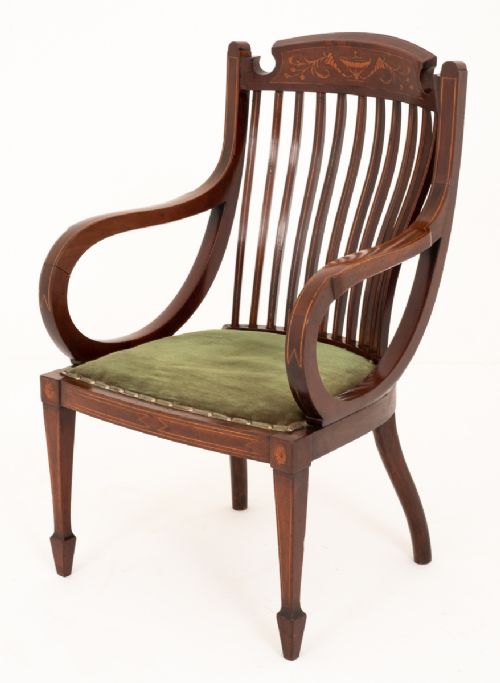
Satinwood Inlaid Carver
These satinwood inlaid carver chairs offer refined woodwork and classic proportions, bringing understated elegance and comfortable seating to a traditional room.
Satinwood Inlaid Carver
A satinwood inlaid carver functions as an armchair or elbow chair, often paired with matching dining or salon seating. These pieces combine structural hardwoods with lighter decorative timbers.
Most examples appearing here date from the Edwardian period and the nineteenth century, reflecting revival tastes such as Sheraton and Hepplewhite designs. Buyers frequently encounter armchairs and elbow chairs featuring string inlay and contrasting wood details.
Makers utilised various primary timbers alongside satinwood veneers to create balanced seating forms for morning rooms, salons, and dining spaces. The resulting chairs bridge practical seating needs with formal decorative display.
How they were made
Cabinetmakers constructed the main framework from mahogany or walnut, applying satinwood veneers to prominent surfaces like splats, crest rails, and arm terminals. Craftsmen incorporated string inlay using contrasting woods to accentuate the structural lines.
Upholstery techniques varied from drop-in seats to fixed padding covered in fabric, velvet, or modern replacement textiles. Brass hardware occasionally appeared in construction details, while wood inlays required precise hand-cutting and fitting into recessed channels.
Satinwood Inlaid Carver Retail Price Guide 2026
Typical asking prices for satinwood inlaid carver among the pieces listed under this phrase on Sellingantiques today, from the lower quarter to the upper quarter. They describe what is for sale here now, not the wider market.
The listings combine Edwardian and nineteenth-century pieces, featuring mahogany structures embellished with satinwood and intricate string inlay.
What varies in quality
The sophistication of the wood inlay dictates much of the visual distinction across these pieces, with crisp geometric stringing and balanced floral motifs marking finer production. Simpler chairs rely on plain mahogany frames with minimal satinwood banding.
Proportion and original structural integrity separate standard workshop output from exceptional examples. Chairs retaining their original timber surfaces, firm joinery, and well-proportioned arms command greater interest among collectors of period seating.
Cowtan & Sons·Shoolbred
The Satinwood Inlaid Carver Glossary
- Carver
- An armchair designed with open elbows, traditionally placed at the head of a dining table or used as a desk seat. These chairs feature supportive armrests integrated into the upper frame.
- Satinwood
- A durable, lustrous timber native to the tropics, prized for its golden yellow sheen and smooth grain. Cabinetmakers used veneers of this wood to create striking contrast against darker structural timbers.
- String inlay
- A narrow, linear band of contrasting wood set flush into the surface of a furniture piece. This technique outlines panels and legs to add subtle definition.
- Sheraton Revival
- A late nineteenth and early twentieth century design movement that reinterpreted the light, neoclassical forms of eighteenth-century designer Thomas Sheraton. Pieces from this era often feature delicate inlays and tapered legs.
- Elbow chair
- An alternative term for an armchair, denoting a seat fitted with short armrests intended for relaxed posture. These chairs frequently served in bedrooms, morning rooms, and writing studies.
Satinwood Inlaid Carver: Frequently Asked Questions
What is a carver chair?
A carver chair is an armchair featuring open wooden elbows, traditionally positioned at the head and foot of a dining table. These seats offer additional upper body support compared to standard side chairs.
Beyond the dining room, such chairs frequently served as desk seats or occasional seating in parlours and morning rooms.
How do I identify Sheraton Revival pieces?
Sheraton Revival furniture typically exhibits straight, tapered legs, light timber veneers, and delicate geometric inlays. These pieces draw inspiration from late eighteenth-century neoclassical design.
They often utilise mahogany frames enhanced with satinwood banding and stringing to achieve a refined, slender silhouette.
Where were these chairs used?
These armchairs found placement in formal dining rooms, drawing rooms, and private studies. Their decorative inlay made them suitable for reception spaces where appearance mattered.
They functioned as primary desk seating or as paired armchairs flanking a fireplace or window.
How should I care for satinwood?
Satinwood benefits from minimal exposure to direct sunlight and fluctuating humidity to protect the delicate veneers. Regular dusting with a soft, dry cloth preserves the polished surface.
Avoid chemical polishes and excess moisture, which can damage the fine grain and loosen the inlaid stringing over time.