

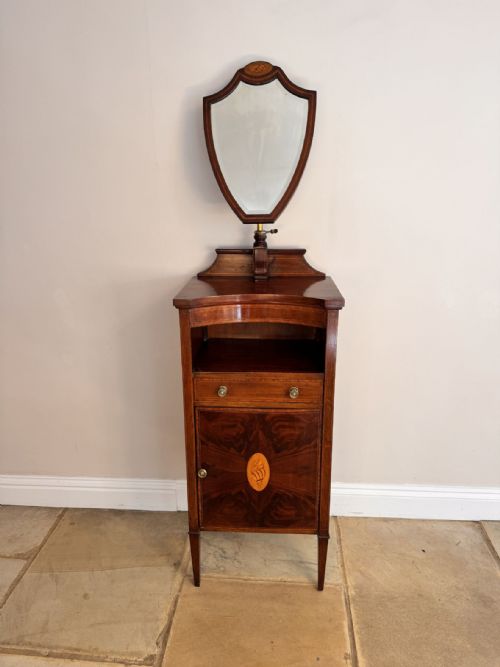
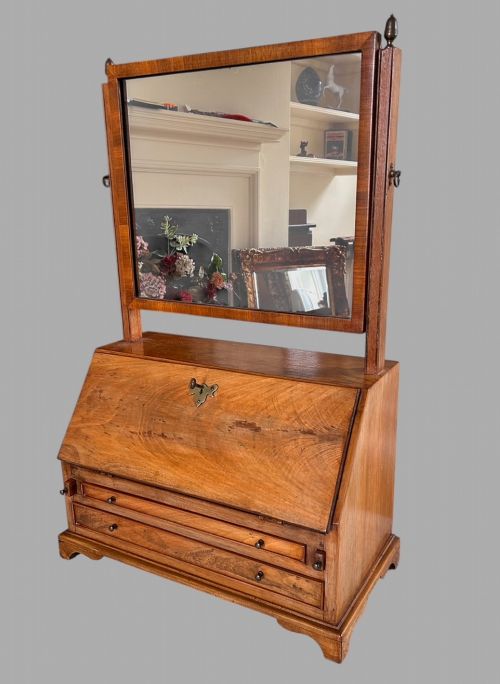


Satinwood Dressing Table Mirror
A satinwood dressing table mirror brings a pale, luminous warmth to a bedroom, offering a polished glass surface framed in finely figured timber.
Satinwood Dressing Table Mirror
A satinwood dressing table mirror sits on a tabletop or forms part of a larger dressing piece, designed to reflect light and assist with morning toilette. The pieces available span compact Georgian toilet mirrors with box bases up to elaborate Edwardian and Victorian versions incorporating satinwood inlay.
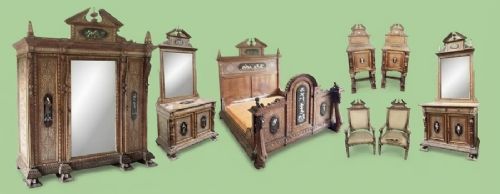
Most examples date from the nineteenth and early twentieth centuries, reflecting periods when dressing furniture evolved from simple swing glasses on bureau desks to substantial bedroom suites. Buyers typically encounter tabletop toilet mirrors alongside larger dressing tables featuring integrated mirrors and inlaid satinwood veneers.
How they were made
Cabinetmakers constructed these mirrors using solid and veneered timbers, pairing satinwood with mahogany, walnut, and satin birch to create contrasting borders and panels. Inlaid decoration often incorporates geometric or floral motifs set into the timber surface.
The mirror plates themselves use traditional glass held within pivoting frames supported by upright arms, allowing the angle of the glass to be adjusted by the user. Brass fittings and hinges provide the mechanical movement for both the mirror frame and any underlying small drawers.
Satinwood Dressing Table Mirror Retail Price Guide 2026
Typical asking prices for satinwood dressing table mirror among the pieces listed under this phrase on Sellingantiques today, from the lower quarter to the upper quarter. They describe what is for sale here now, not the wider market.
Some nineteenth-century tables hide secret rising compartments beneath the timber surface.
What varies in quality
The standard of timber selection and the precision of the veneer work distinguish finer examples from standard production pieces. Figured satinwood with careful grain matching demands higher craftsmanship than plain or heavily stencilled alternatives.
Originality of the glass plate and the integrity of the structural joints dictate the historical value of the piece. Well-preserved brass hardware and intact secondary woods indicate careful workshop production.
Flashman & Co·Waring & Gillows·Gillows·Harry and Lou Epstein·John Taylor of Edinburgh
The Satinwood Dressing Table Mirror Glossary
- Satinwood
- A dense, lustrous timber with a golden sheen used extensively for fine cabinetmaking and decorative veneers. It forms the primary visual surface on many Georgian and Edwardian dressing pieces.
- Toilet mirror
- A smaller mirror designed to sit atop a chest of drawers, table, or washstand rather than standing independently on the floor. These often incorporate small drawers in the base.
- Cheval mirror
- A full-length dressing glass suspended in a standing frame that allows it to tilt freely. The evidence shows these in Victorian and early nineteenth-century forms.
- Sheraton Revival
- A late nineteenth and early twentieth-century design style drawing inspiration from the lightness and neoclassical inlay of George III furniture. Pieces in this style frequently employ satinwood and delicate stringing.
Satinwood Dressing Table Mirror: Frequently Asked Questions
How do I date a satinwood mirror?
Dating relies on timber choice, construction methods, and the style of the inlay. Georgian pieces tend to feature simpler proportions, while Edwardian examples often show Sheraton Revival influences.
Secondary woods inside drawers and the type of fixings used provide further clues to the exact manufacturing period.
Were these mirrors part of larger sets?
Many dressing mirrors originally accompanied matching dressing tables or washstands as part of larger bedroom suites. Over time, mirrors and their underlying tables frequently became separated.
Some tabletop versions were also designed to function independently on top of existing chests of drawers.
How do I care for satinwood surfaces?
Satinwood requires gentle dusting with a dry, soft cloth to protect the polished finish and delicate veneer. Avoid placing the mirror in direct sunlight to prevent the timber from darkening or fading unevenly.
Regular application of suitable wax helps maintain the lustre of the wood without building up a heavy residue.
What is a box base mirror?
A box base mirror incorporates small storage drawers directly beneath the pivoting glass frame. These compartments were used for holding small personal items during the daily toilette.
This form was particularly popular during the Georgian period and continued into the nineteenth century.