

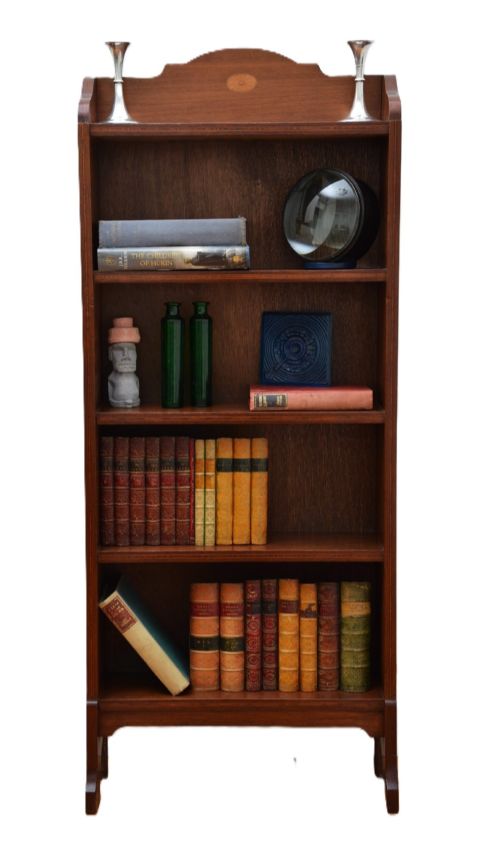


Satinwood Book Stand
A satinwood book stand is a timber library piece built to hold volumes near at hand, chosen for warm grain and compact display.
Satinwood Book Stand
A satinwood book stand brings together compact library furnishings and the smooth, light tones of ornamental timber. When you search for a satinwood book stand, you encounter items designed for desktop use, table placement, or rotation within a study.
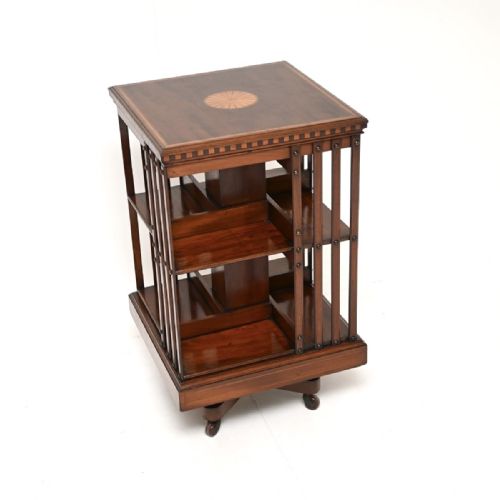
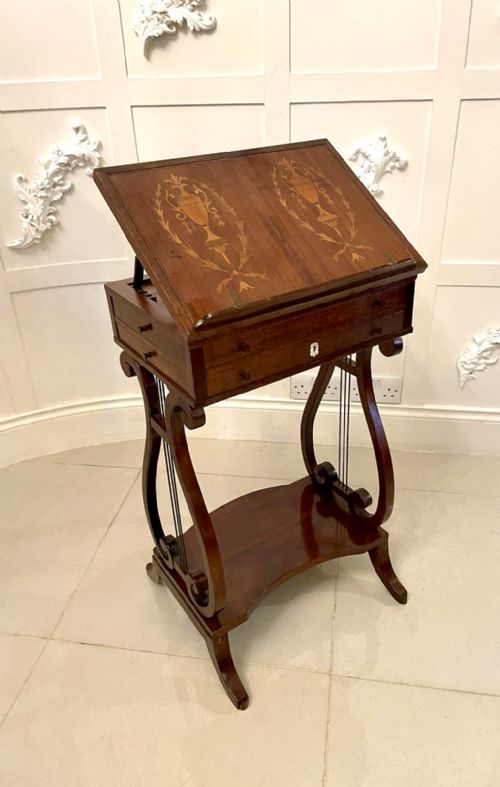
The pieces appearing in this category span revolving designs, small stands, and reading tables from the late nineteenth century and the Edwardian era. Edwardian Sheraton Revival examples dominate the selection, often featuring contrasting crossbanding and inlaid details.
Makers utilised mahogany as a primary carcase material alongside satinwood, mounting mechanisms in brass and iron where rotation or adjustment was required. Formats range from table top troughs to freestanding revolving bookcases.
How they were made
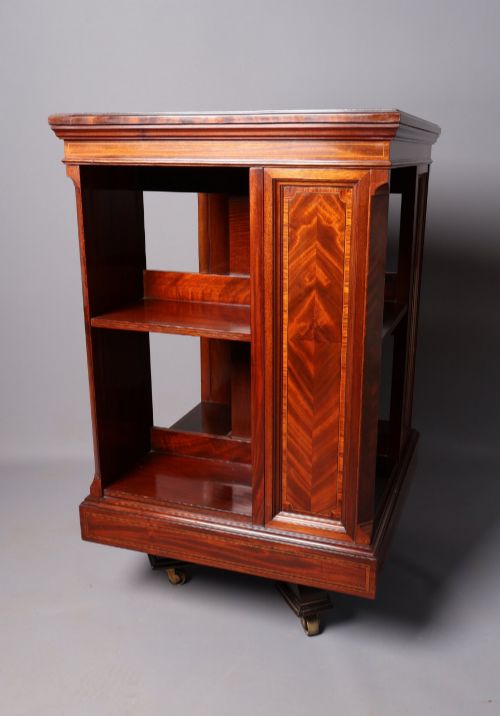
Cabinetmakers constructed these stands using solid mahogany and walnut frames finished with satinwood veneers and intricate inlay. Flame mahogany and satinwood veneers were sliced thin and applied to primary carcases to create contrasting geometric borders and decorative panels.
Revolving mechanisms integrate timber slats, brass spindles, and iron pivots beneath the platform to allow smooth rotation under weight. Glazed doors on cabinet variants utilise timber glazing bars, while smaller desk stands employ dovetailed joinery and applied mouldings.
Satinwood Book Stand Retail Price Guide 2026
Typical asking prices for satinwood book stand among the pieces listed under this phrase on Sellingantiques today, from the lower quarter to the upper quarter. They describe what is for sale here now, not the wider market.
Listings feature Edwardian, Late Victorian, and Art Deco periods, spanning from the nineteenth century into the nineteen-thirties.
What varies in quality
Quality in these pieces rests upon the crispness of the inlay and the selection of the timber veneers. Finer items display meticulously matched flame mahogany and delicate satinwood stringing that remains flush with the surrounding surface.
The mechanical action of a revolving stand separates standard productions from superior work. A well-built pivot system turns silently and evenly without listing to one side, maintaining balance even when loaded unevenly with heavy volumes.
Gillows
The Satinwood Book Stand Glossary
- Satinwood
- A hard, yellow timber known for its lustrous sheen and smooth texture, used extensively for veneers and decorative stringing. It forms the visual highlight of many Edwardian and Late Victorian library pieces.
- Revolving Bookcase
- A freestanding or table top stand fitted with a central pivot that allows the tiers to spin for easy volume selection. These items often feature slatted sides to keep books secure during rotation.
- Sheraton Revival
- A late nineteenth and early twentieth century design style drawing on the neoclassical furniture of George Sheraton. It relies on symmetrical forms, delicate inlay, and light timber contrasts.
- Marquetry
- The art of forming decorative patterns by fitting together thin veneers of different coloured woods and materials. This technique defines the panels on many fine cabinets and book stands.
- Crossbanding
- A narrow strip of veneer laid around the border of a panel with the grain running perpendicular to the centre. It provides a neat framing edge on table tops and shelves.
Satinwood Book Stand: Frequently Asked Questions
What is a revolving book stand?
A revolving book stand is a compact library piece mounted on a hidden internal pivot, allowing the user to spin the tiers and access multiple volumes from a single seated position. These items sit either directly on a desk or stand on the floor beside an armchair.
Most examples seen in this category date from the Edwardian period or the late nineteenth century, combining mahogany frames with satinwood inlay and brass mechanism components.
How do I date a satinwood book stand?
Dating relies on observing the combination of timber types, construction methods, and stylistic revival markers. Pieces exhibiting Edwardian Sheraton Revival characteristics typically date from around eighteen-ninety to nineteen-ten, utilising machine-sawn veneers alongside hand-cut dovetails.
Earlier nineteenth century examples display heavier proportions and distinct neoclassical decoration, while later pieces from the nineteen-thirties adopt stripped-back Art Deco lines without stringing or inlay.
Where were these stands used?
These pieces were designed for studies, libraries, drawing rooms, and offices where quick access to reference books or favourite volumes was needed. Desk top versions kept dictionaries and journals at hand, while larger floor-standing revolving bookcases sat beside reading chairs.
Their compact footprints made them suited to the domestic spaces of the late Victorian and Edwardian eras, offering storage without dominating the room.
How should I care for satinwood furniture?
Satinwood and veneered mahogany surfaces require protection from direct sunlight and dramatic humidity changes to prevent timber movement and fading. Dusting regularly with a dry, soft cloth maintains the natural lustre of the finish.
Avoid using silicone-based polishes or harsh chemical cleaners, as these can penetrate old finishes and degrade the delicate veneer joints over time.