


Sapphire and Pearl Necklace
A sapphire and pearl necklace pairs luminous pearls with rich blue stones, offering timeless elegance for everyday wear and formal occasions alike.
Sapphire and Pearl Necklace
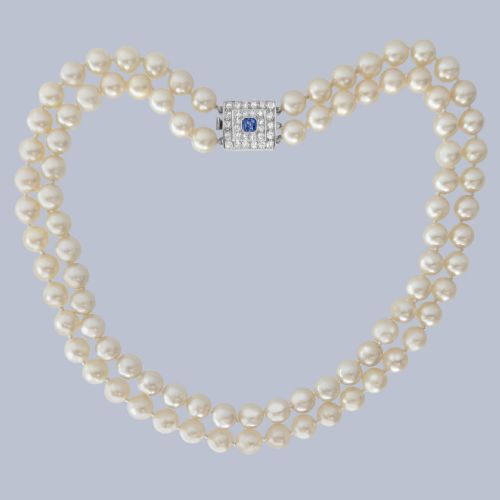
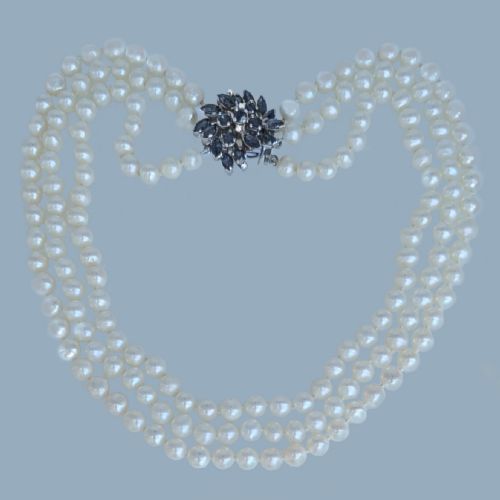
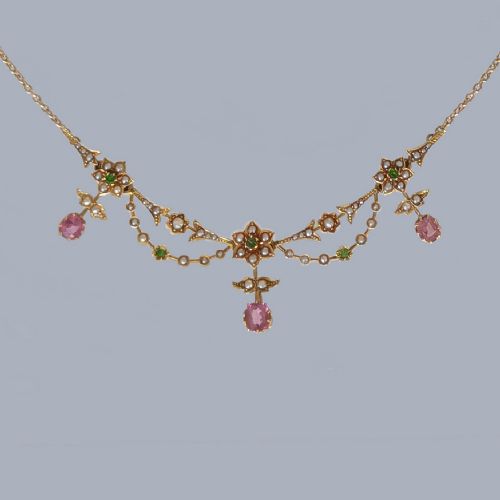
A sapphire and pearl necklace brings together saltwater or freshwater pearls with deep blue corundum, taking several distinct historical forms across the periods. Buyers encounter multi-strand pearl necklaces secured with gemstone-set clasps alongside delicate gold drop pendants set with seed pearls and sapphires.
The pieces on this page span the Victorian, Edwardian, Art Deco, and Mid-Century eras, showing how jewellers reinterpreted these materials over decades. Edwardian designs often feature intricate gold work with seed pearls and pink sapphires, whereas later mid-century pieces favour multi-strand pearls anchored by diamond and sapphire floral clasps.
Pendant variations range from crescent and witch's heart motifs to geometric Art Deco clasps designed to be worn at the nape or pulled to the front. Single, double, and triple strand configurations appear frequently, pairing uniform cultured pearls with cabochon or faceted sapphires.
Materials and Technique
Goldsmiths constructed these pieces using yellow gold, white gold, and silver settings, frequently working in 9ct, 15ct, and 18ct purities. Seed pearls and larger cultured or natural pearls are strung securely, often complemented by supporting diamonds, rubies, or tourmalines.
Drop pendants utilise delicate claw and bezel settings to secure pink and blue sapphires alongside cascading seed pearls. Clasps on multi-strand necklaces employ intricate floral and geometric frameworks, integrating faceted sapphires and diamonds into platinum or white and yellow gold mounts.
Period examples range from Victorian 15ct gold crescent drops to mid-century multi-strand necklaces with diamond and sapphire floral clasps.
Judging Quality
Quality rests in the uniformity, lustre, and origin of the pearls, alongside the depth of colour and clarity in the sapphires. Natural pearls and certified stones command greater interest, while uniform cultured pearls with thick nacre represent superior standard work.
The construction of the setting dictates the grade of the piece, distinguishing mass-produced items from finely pierced Edwardian gold work or articulated Art Deco clasps. Secure re-stringing and robust metalwork ensure longevity in multi-strand configurations.
The Sapphire and Pearl Necklace Glossary
- Seed Pearl
- Tiny, naturally small pearls often pierced and strung closely together in clusters or delicate fringes. They are characteristic of Victorian and Edwardian fine jewellery.
- Cabochon
- A gemstone shaped and polished with a smooth, rounded surface rather than faceted. This cut highlights the deep inner colour of the sapphire.
- Cultured Pearl
- A pearl formed by the introduction of an irritant into an oyster by human intervention, resulting in pearls with consistent lustre and shape. Most mid-century necklaces utilise these.
- Clasp
- The fastening mechanism of a necklace, which in better pieces is designed as an ornamental focal point set with diamonds and sapphires. Wearers often rotate these decorative clasps to the front.
- Fringe Necklace
- A necklace style featuring hanging drops suspended along the lower edge of the chain. Edwardian makers favoured this layout for seed pearls and coloured stones.
Sapphire and Pearl Necklace: Frequently Asked Questions
How do I wear a multi strand pearl necklace?
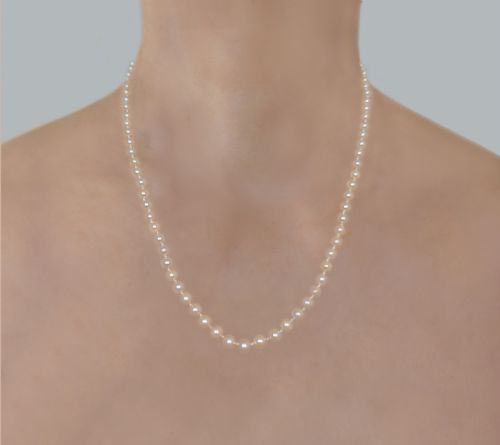
Multi-strand pearls sit flat against the collarbone and suit open necklines or high-collared dresses alike. Many owners position the decorative sapphire and diamond clasp at the front as a feature pendant.
Ensure the strands are properly aligned and twist them gently if necessary so they drape evenly across the chest.
Are these pearls natural or cultured?
The pieces span eras before and after the widespread availability of cultured pearls, featuring both natural saltwater specimens and cultured varieties. Gemological certificates often accompany older strands to confirm their origin.
Examination under magnification reveals the surface structure that distinguishes natural growth from farmed pearls.
How do I care for antique pearls and sapphires?
Pearls are organic and vulnerable to acids, perfumes, and cosmetics, so put your necklace on after applying makeup. Wipe them gently with a soft cloth after wearing to preserve their lustre.
Sapphires are hard stones, but the silk or thread holding seed pearls and multi-strand necklaces weakens over time and benefits from professional re-stringing.
What is an Edwardian seed pearl pendant?
Edwardian pendants utilise yellow or rose gold frames, often 15ct, shaped into floral, crescent, or heart motifs. Tiny seed pearls are meticulously wired or glued into position alongside pink and blue sapphires.
These lightweight drops hang from fine gold chains, representing the delicate aesthetic of the early twentieth century.