





Sapphire and Diamond Pendant
A sapphire and diamond pendant brings together vibrant blue stones and sparkling gems, offering classic elegance for daily wear or evening events.
Sapphire and Diamond Pendant
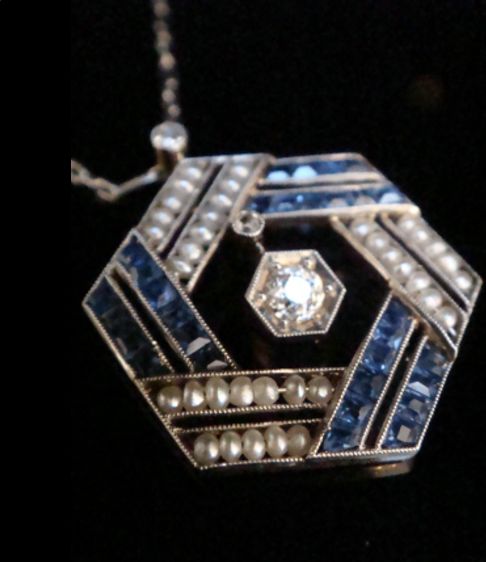
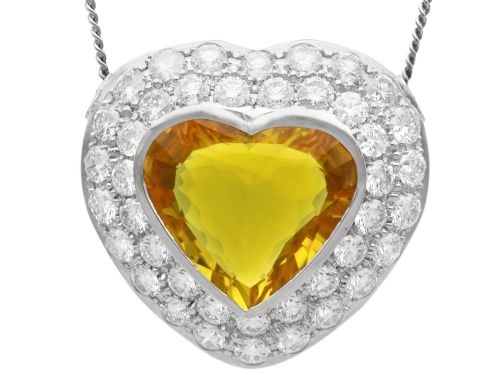
A sapphire and diamond pendant is a jewel designed to suspend from a neck chain, combining precious blue corundum with sparkling diamonds. These pieces appear across Victorian, Edwardian, and mid-century periods, capturing shifting tastes in jewellery design over more than a century.
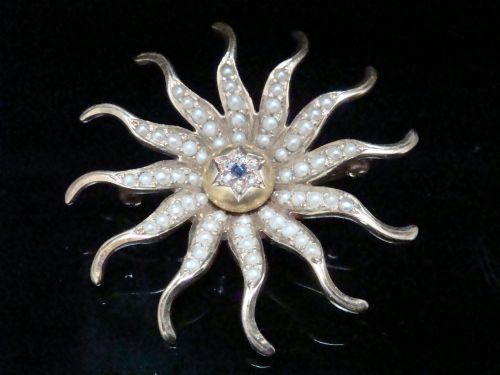
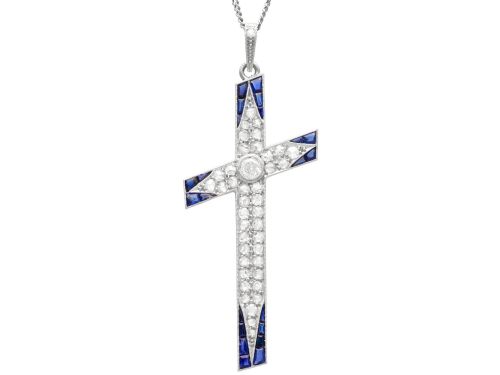
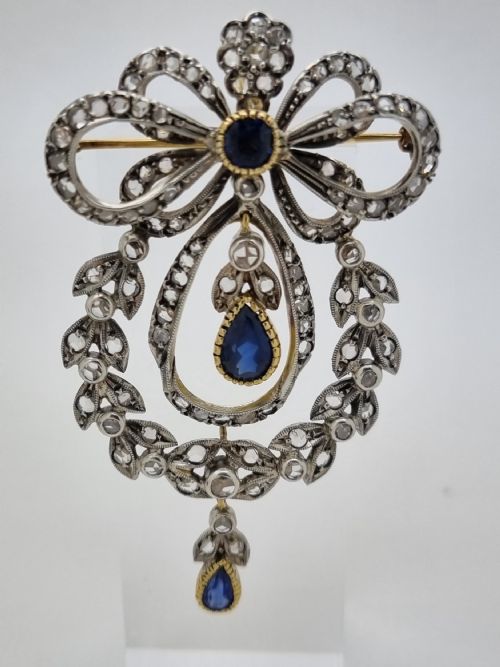
The selections on this page range from cluster configurations and delicate drop styles to convertible brooch pendants and locket forms. Buyers frequently encounter Edwardian filigree work alongside Victorian yellow gold settings and later platinum or white gold mounts.
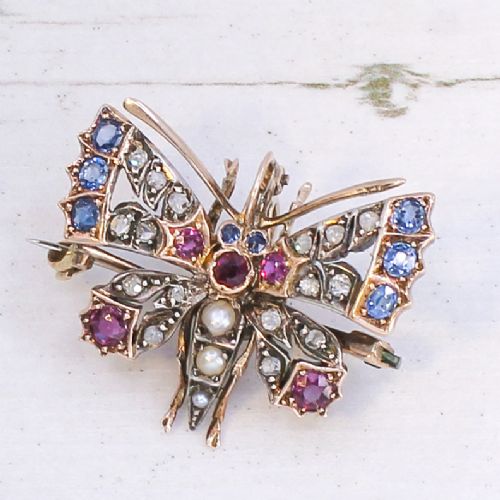
Makers often integrated mixed gemstones or multi-stone arrangements, incorporating emeralds or pink sapphires alongside the primary blue stones. These pendants reflect diverse historical craftsmanship, from early handmade yellow gold mounts to mid-century white metal settings.
Materials and construction
Goldsmiths utilised a variety of precious metals to anchor these stones, employing platinum, 18ct gold, 15ct yellow gold, 14ct white gold, 9ct gold, and silver. Early pieces often combined silver-topped gold settings to enhance the brilliance of old cut diamonds.
Stones were secured using traditional techniques suited to the period, such as delicate claw settings, grain settings, and calibre cutting for fitted geometric patterns. Jewellers shaped mounts into bows, crosses, fans, and naturalistic motifs like butterflies or elephants.
Sapphire and Diamond Pendant Retail Price Guide 2026
Typical asking prices for sapphire and diamond pendant among the pieces listed under this phrase on Sellingantiques today, from the lower quarter to the upper quarter. They describe what is for sale here now, not the wider market.
Assessing quality in pendants
The distinction between tiers rests upon stone provenance, such as natural unheated sapphires or Ceylon origins, paired with the clarity and cut of the accompanying diamonds. Older pieces feature hand-cut old cut, rose cut, or oval cut stones that display distinct optical characteristics compared to later uniform machine cutting.
Structural integrity and metal choice also define the tier, where substantial platinum or high-carat gold mounts demonstrate superior longevity over lighter 9ct gold iterations. The complexity of the metalwork, particularly in Edwardian platinum scrollwork or French lockets, marks the difference between standard production and fine craftsmanship.
The Sapphire and Diamond Pendant Glossary
- Negligee pendant necklace
- A drop necklace style featuring two unequal lengths suspended from a central motif, popular during the Edwardian era. This design creates a distinctive asymmetric movement when worn.
- Old cut diamond
- A hand-faceted diamond cut popular before modern brilliant cutting standards emerged, featuring a smaller table and higher crown. These stones exhibit a soft, candlelit sparkle.
- Rose cut diamond
- A vintage diamond cut with a flat base and a domed, faceted top resembling an unopened rosebud. This cut was favoured in historic pieces for its subtle, translucent lustre.
- Calibre cut
- Gemstones specifically shaped and cut to fit tightly together in a geometric channel without visible metal partitions. This technique is characteristic of Art Deco design.
- Cluster pendant
- A central gemstone surrounded by a ring of smaller accent stones, typically diamonds framing a sapphire. This arrangement maximises visual impact and light reflection.
Sapphire and Diamond Pendant: Frequently Asked Questions
How do I wear a convertible brooch pendant?
Many historic pieces feature a fold-down bail alongside a pin fastening on the reverse, allowing the item to function as both a neck ornament and a lapel brooch. You simply thread a chain through the concealed loop or secure the pin firmly through heavy fabric.
This dual functionality reflects Victorian and Edwardian versatility, where owners adapted a single high-value jewel for different social occasions. Ensure the safety catch is secure when wearing the piece as a brooch.
What is an Edwardian negligee pendant?
An Edwardian negligee pendant consists of a central decorative drop from which two unequal lengths of chain or gemstone lines dangle. This asymmetric silhouette was highly fashionable during the early twentieth century.
Such pieces usually incorporate platinum or white gold paired with delicate openwork filigree to achieve a light, lace-like appearance. They pair well with fine antique chains.
How can I date my sapphire and diamond pendant?
Dating relies on examining the metal alloys, stone cuts, and manufacturing techniques used in the mount. Victorian pieces often utilise yellow gold or silver-topped gold, while Edwardian examples frequently showcase platinum and delicate pierced motifs.
Later mid-century items display heavier white gold settings and standard oval cut stones. Hallmarks, where present, provide additional verification of the assay office and year of creation.
Are unheated sapphires more desirable?
Unheated sapphires have not undergone thermal enhancement to improve their natural colour or clarity, making them scarcer in the antique market. Collectors prize these stones for their untouched geological origin.
Certification or specialist gemological reports typically confirm whether a sapphire retains its natural properties. This factor influences the standing of the pendant among serious collectors.