




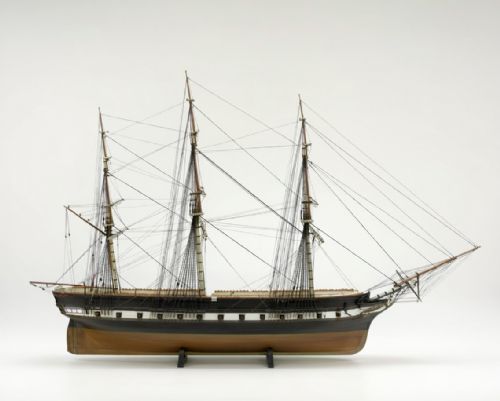


Sailing Vessel Model
A sailing vessel model captures the intricacy of maritime heritage through carved wood, detailed rigging, and glass-cased ocean scenes.
Sailing Vessel Model
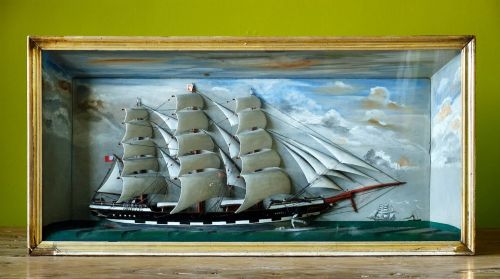
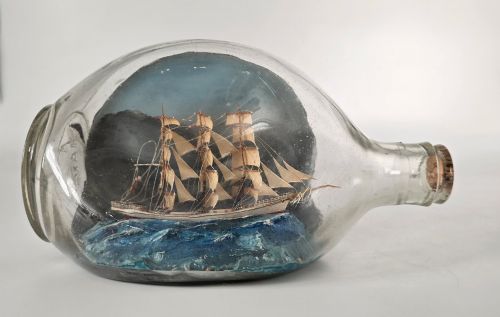
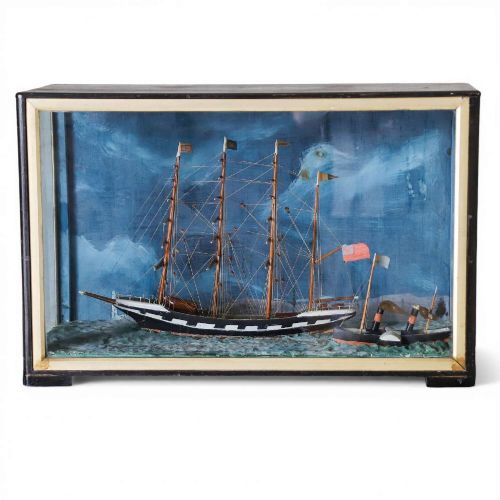
Every sailing vessel model encountered on this page represents a tangible piece of maritime history, ranging from shadow box dioramas to intricate ships housed within glass bottles. These decorative objects primarily date from the nineteenth and early twentieth centuries, capturing the enduring appeal of traditional seafaring craft through folk art interpretations.
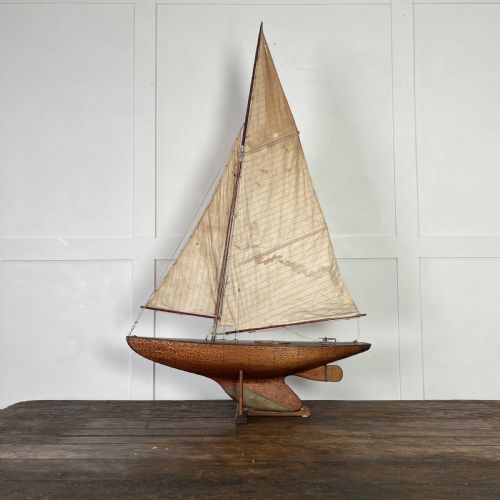
The selections span various forms including cased racing scenes, scratch-built vessels, and named pieces such as the Cornish diorama of Queen Anne and training models like HMS Daedalus. Buyers will frequently find nineteenth-century examples alongside Edwardian pond yachts and later interpretations from the nineteen-twenties and thirties.
Rooted in Victorian and Edwardian maritime folk art traditions, these models serve as distinct records of nautical enterprise and domestic craftsmanship. The physical manifestations vary from simple carved sailing boats to complex multi-masted barques and schooners set against painted backdrops.
Materials and construction methods
Makers utilised wood as the primary structural element for hulls and decks, shaping the timber by hand to mirror actual vessels. Metal, brass, thread, and fabric were then integrated to create authentic rigging, anchors, and tiny deck fittings.
Paint and plaster provided the texture for seascapes within cased dioramas, often combined with straw work or glass to enclose and protect the delicate interior. Scratch-built examples demonstrate individual ingenuity, relying on simple workshop tools rather than standardised shipyard kits.
Sailing Vessel Model Retail Price Guide 2026
Typical asking prices for sailing vessel model among the pieces listed under this phrase on Sellingantiques today, from the lower quarter to the upper quarter. They describe what is for sale here now, not the wider market.
Listings demonstrate materials including wood, glass, paint, thread, metal, brass, plaster, and fabric across nineteenth and early twentieth-century pieces.
Distinctions in standard and execution
The sophistication of the rigging and the precision of the hull carving separate basic folk art pieces from highly detailed scale representations. Finer examples maintain accurate proportions and incorporate nuanced painted backdrops that create a genuine sense of depth and motion.
The preservation of original materials, particularly fragile thread work, glass bell jars, and wooden plinths, influences the overall integrity of the piece. Superior craftsmanship is evident in the neatness of the knotwork, the stability of the housing, and the clarity of any accompanying inscriptions or titles.
The Sailing Vessel Model Glossary
- Diorama
- A three-dimensional scene depicting ships at sea, typically enclosed within a wooden and glass case for protection and display. These enclosures often feature painted plaster or fabric backgrounds to simulate waves and sky.
- Scratch-built
- A model constructed entirely from raw materials by the maker rather than assembled from a commercial kit. This method highlights the individual creator's skill and resourcefulness.
- Barque
- A sailing vessel with three or more masts having the fore-and-aft sails set only on the mizzenmast. This rig configuration appears frequently in Edwardian interpretations.
- Schooner
- A type of sailing vessel characterised by fore-and-aft rigs on two or more masts. Scottish two-masted schooners are notable examples seen within these maritime collections.
- Folk art
- Artistic work produced from an indigenous culture or peasant society, relying on traditional methods rather than professional academic training. Maritime folk art encompasses sailor-made models created during long voyages or retirement.
Sailing Vessel Model: Frequently Asked Questions
How do I display a glass-cased diorama?
Place the cased diorama on a stable surface away from direct sunlight and fluctuating temperatures to protect the internal paint, wood, and thread rigging from degradation.
Ensure the mounting plinth supports the weight evenly and avoid attempting to open sealed glass cases, as the internal environment helps preserve the fragile components.
What is the difference between a pond yacht and a diorama?
A pond yacht is a functional model boat designed to be sailed on water, featuring a sturdy hull and adjustable rigging suited for outdoor use. In contrast, a diorama is a stationary display piece created exclusively for interior observation.
Dioramas enclose the vessel within a frame or bottle alongside simulated water, whereas pond yachts are meant to handle actual aquatic conditions.
How can I tell a nineteenth-century model from a later one?
Nineteenth-century models often display traditional folk art characteristics with hand-carved hulls and simplified thread rigging reflecting active commercial sailing eras. Later examples from the nineteen-twenties and thirties frequently incorporate refined scale measurements and documentation such as bottle inscriptions.
Material analysis of the paints, adhesives, and woods utilised also provides reliable indicators of the period of construction.
Are ship in a bottle models fragile?
The glass bottle itself provides robust protection for the miniature vessel contained inside, shielding the delicate folding masts and paper sails from dust and physical contact. However, sudden impacts or vibrations can cause internal rigging to dislodge.
Handling these pieces requires steady care, keeping the bottle horizontal or resting securely on its wooden plinth.