


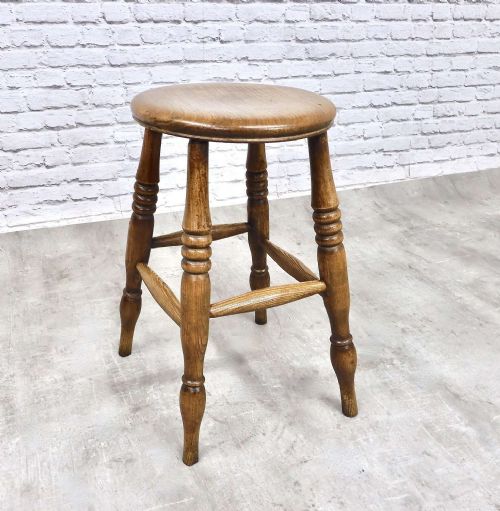


Rustic Workshop Stool
A rustic workshop stool is a sturdy seating form built for trade and manufacture, prized today for its honest utility and rich, time-worn timber.
Rustic Workshop Stool
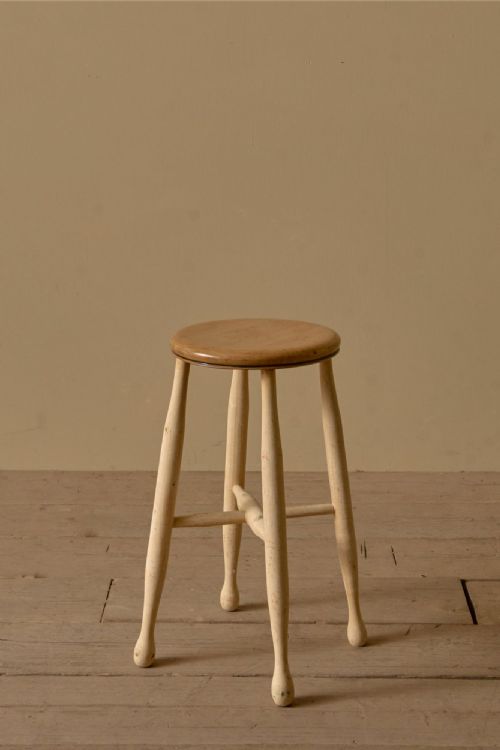
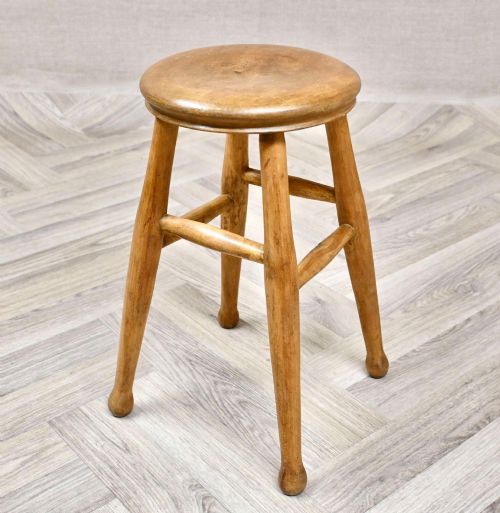
A rustic workshop stool encompasses heavy-duty seating designed for 19th-century and early 20th-century trades, from cutlers and jewellers to machinists and mill workers. These pieces emerge directly from utilitarian environments where durability mattered far more than ornament, resulting in robust forms built to withstand daily factory or workshop toil.
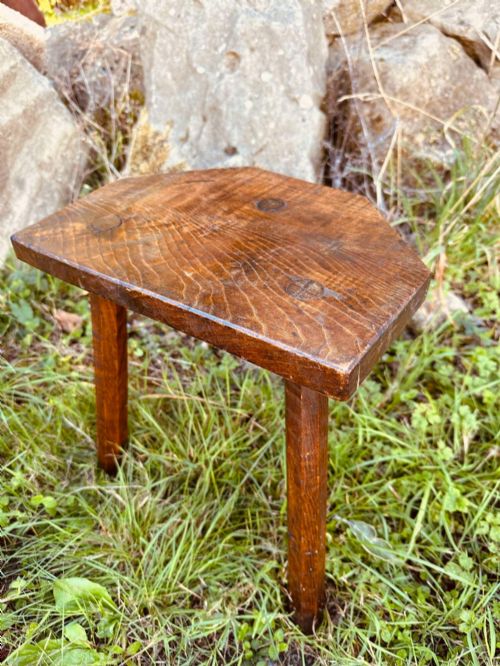
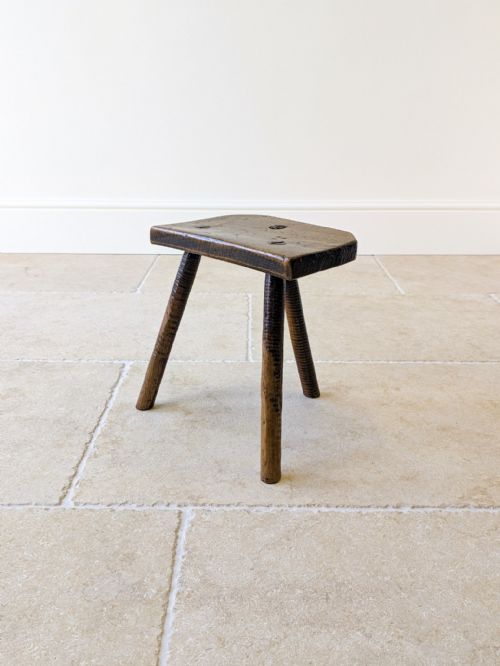
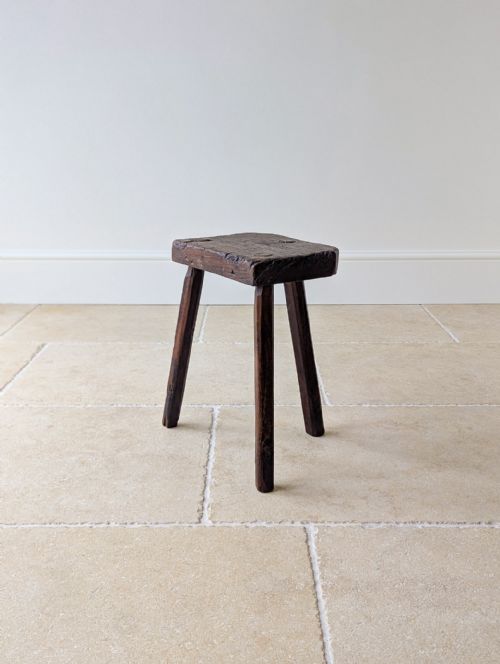
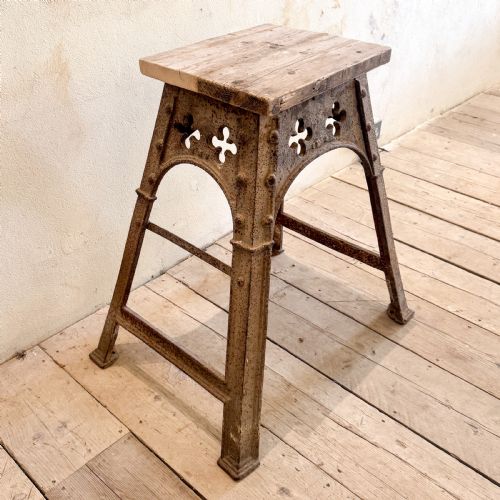
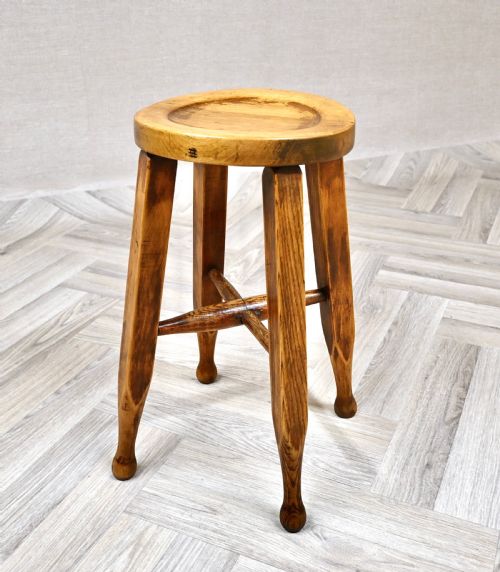
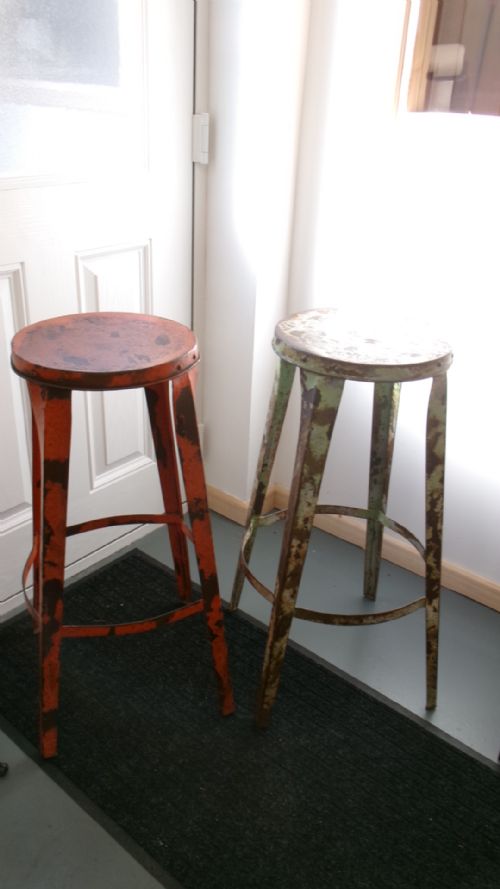
The versions most commonly met on this page are nineteenth-century elven and ash cutler's stools, alongside industrial metal-framed lab and bar stools from the 1920s and 1930s. Such examples bridge vernacular country traditions and industrial utility, often pairing turned wooden seats with rigid iron or steel supports.
Forms span low artisan seating with saddle-shaped timber tops and high adjustable bar stools designed for standing workers. Whether originating from Birmingham workshops or textile mills, each piece carries distinct marks of its trade origin.
How they were made
Makers constructed these stools using a combination of dense native hardwoods like elm, ash, beech, and oak for seats, paired with cast iron and steel for legs and height adjustment mechanisms. Timber tops were frequently hollowed into saddle shapes for comfort, utilising traditional wedged tenon joints or heavy-duty riveting to secure the frame.
Industrial variants integrated riveted metal stands and screw-threaded height controls, reflecting the growing mechanisation of early twentieth-century workplaces. These materials were selected purely for strength and longevity, creating resilient structures that survive decades of heavy use.
Rustic Workshop Stool Retail Price Guide 2026
Typical asking prices for rustic workshop stool among the pieces listed under this phrase on Sellingantiques today, from the lower quarter to the upper quarter. They describe what is for sale here now, not the wider market.
Many a Victorian cutler's stool bears the subtle hip-polish of a craftsman who sat in the exact same spot for forty years.
What varies in quality
Quality in a rustic workshop stool rests in the depth of the timber patination, the integrity of the original joints, and the authenticity of the trade wear. Superior examples retain their original surface finish and uncompromised structural alignment, showing natural softening of edges from generations of use rather than artificial distress.
Construction details distinguish workshop-made seating, such as the thickness of the turned elm seat and the precision of the iron riveting on metal stands. Pieces that maintain their working mechanical adjustments and unaltered timber surfaces stand clearly apart from heavily restored or reconstructed alternatives.
The Rustic Workshop Stool Glossary
- Cutler's stool
- A specialised low workshop seat, typically featuring an elm top and ash legs, designed for metalworkers sitting at grinding troughs.
- Vernacular country
- A style arising from local building traditions and available regional materials, prioritising function over academic design.
- Industrial utility
- A design approach from the early twentieth century focusing on stark efficiency, metal frameworks, and unadorned workshop function.
- Patina
- The surface sheen and colour developed by timber and metal over decades of handling, cleaning, and exposure to light.
- Saddle seat
- A wooden seat base scooped and contoured to fit the body of a seated worker during long hours at the bench.
Rustic Workshop Stool: Frequently Asked Questions
What is a rustic workshop stool?
A rustic workshop stool is a utilitarian seat created for nineteenth and early twentieth-century trades, including cutlers, jewellers, and machinists. These pieces were constructed to endure heavy daily use in demanding industrial environments.
Today, they are valued for their robust construction, honest materials, and the distinct character left by decades of trade work.
How were these stools used?
Tradespeople used these stools for long hours at benches, machinery, or cutting troughs, where stability and correct working height were essential. Different trades required specific designs, from low seating for cutlers to adjustable high stools for mill workers.
Their form was entirely dictated by the physical demands of the workshop rather than decorative interior fashion.
How do I live with a workshop stool?
These stools fit easily into contemporary spaces as occasional seating, kitchen breakfast bar stools, or small side tables. Their compact footprints and durable materials make them practical for everyday use in kitchens or studies.
Placing them in a home simply requires appreciating their raw timber surfaces and industrial metal framing as focal points.
How do I tell periods apart?
Nineteenth-century examples typically feature turned wooden legs wedged into solid elm or ash seats, reflecting traditional vernacular carpentry. Twentieth-century pieces frequently introduce industrial iron stands, riveted joints, and screw-threaded height adjustment mechanisms.
Observing the shift from purely wooden vernacular construction to metal-framed industrial utility helps date an individual piece.