

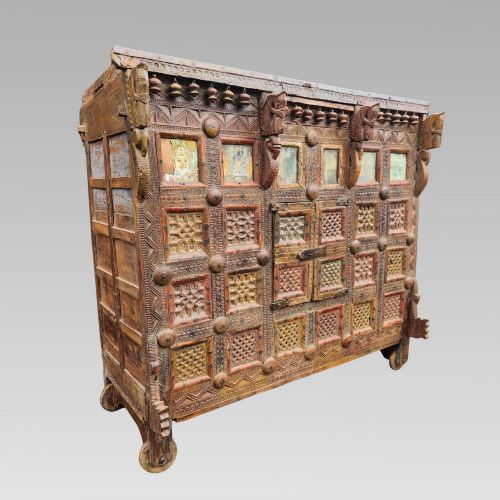
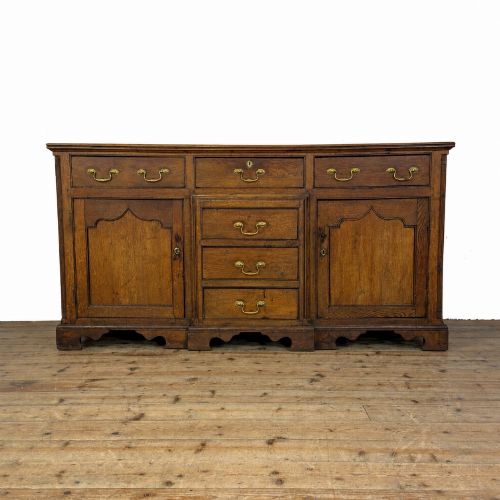


Rustic Wooden Credenza
A rustic wooden credenza brings sturdy charm and deep timber character to a room, offering practical storage grounded in centuries of vernacular design.
Rustic Wooden Credenza
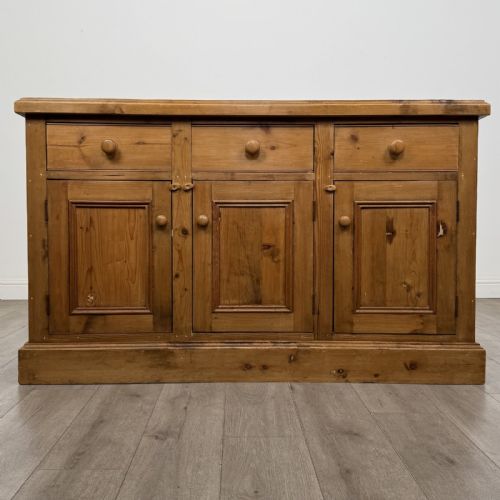
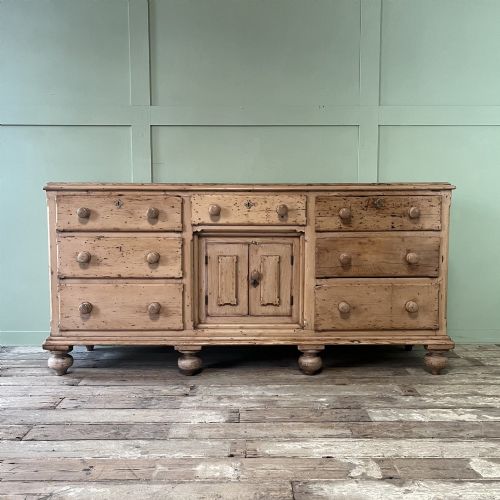
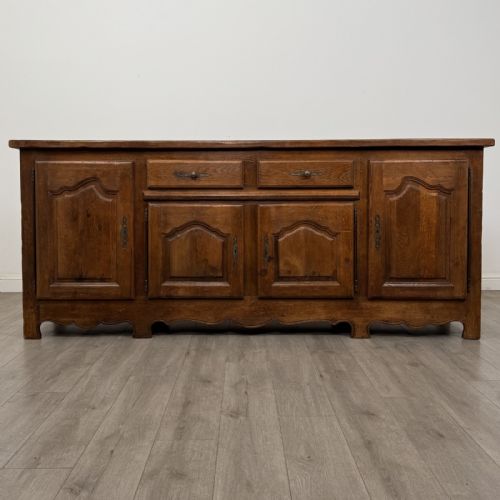
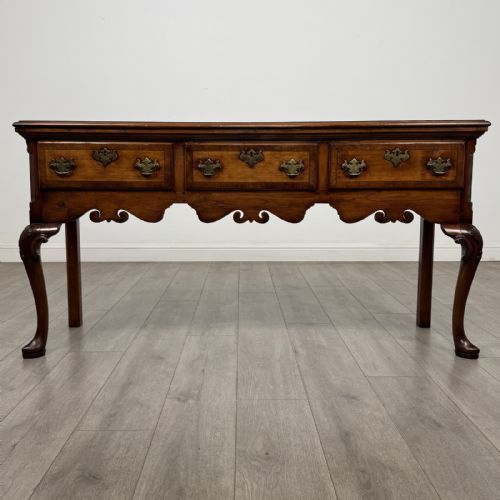
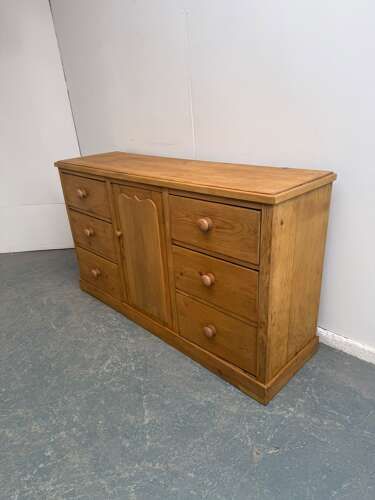
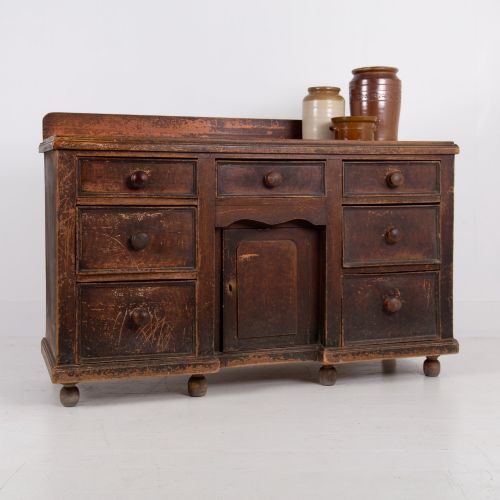
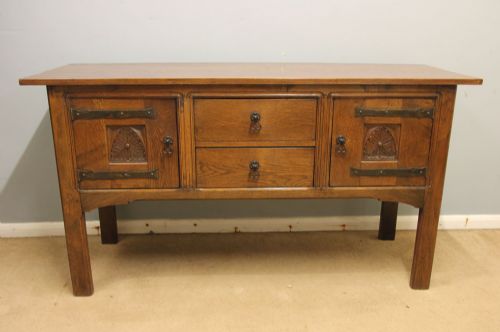
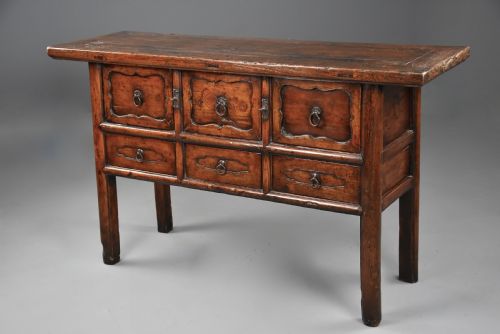
When you search for a rustic wooden credenza, you encounter a robust variety of heavy storage furniture spanning dresser bases, sideboards, and low cabinets. These pieces serve primarily as functional storage units with drawers and doors, suited for kitchens, dining rooms, and hallways.
You are most likely to meet examples originating from the eighteenth and nineteenth centuries, as well as the early decades of the twentieth century. Common regional types range from English country house dresser bases to continental painted buffets and French provincial oak cabinets.
The forms typically emphasise utility and honest construction over delicate ornamentation. Buyers find sturdy timber carcasses fitted with practical combinations of drawers and cupboard doors designed for daily household use.
Materials and construction methods
Construction relies heavily on domestic and imported hardwoods and softwoods, with oak and pine appearing most frequently alongside walnut, elm, cherrywood, teak, and ash. Joinery traditions prioritise strength, utilising solid timber planks for tops and sides, often joined with traditional pegged joints or hand-cut dovetails on drawer construction.
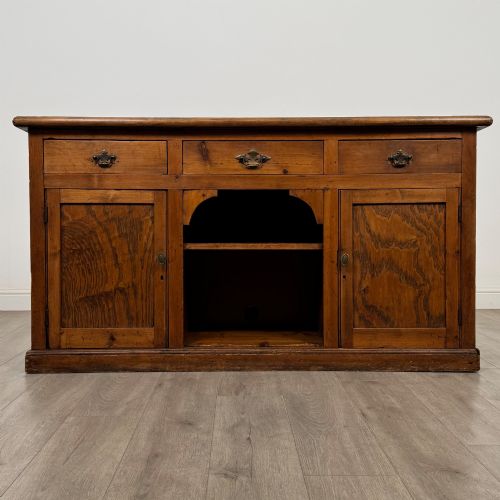
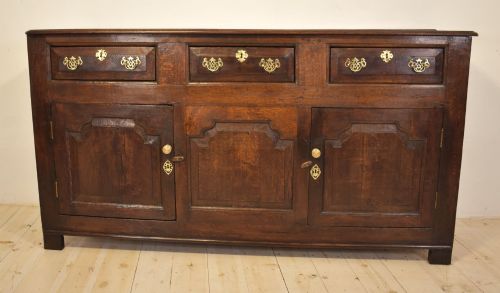
Surface finishes vary according to regional tradition and age, encompassing waxed or polished bare timber that highlights natural grain, alongside original painted finishes in various hues. Iron and brass hardware, including drop handles and hinges, completes the construction of these utilitarian storage forms.
Rustic Wooden Credenza Retail Price Guide 2026
Typical asking prices for rustic wooden credenza among the pieces listed under this phrase on Sellingantiques today, from the lower quarter to the upper quarter. They describe what is for sale here now, not the wider market.
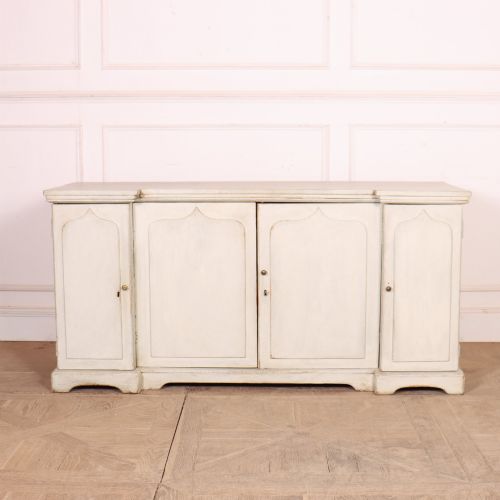
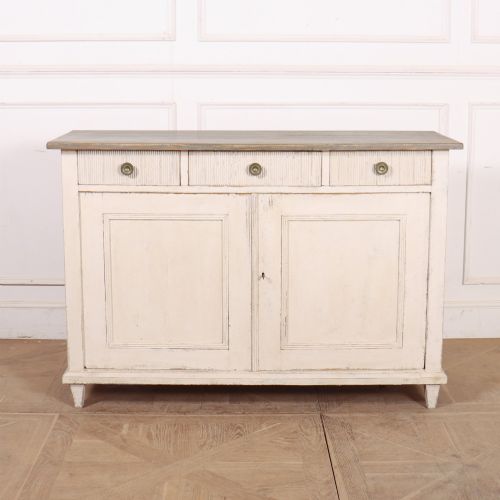
Several cabinets retain their original paint, proving that our ancestors loved a splash of colour just as much as we do.
Judging quality in rustic timber storage
Quality rests upon the integrity of the timber and the preservation of original surfaces. Pieces retain greater appeal when they display untouched patination on the wood or genuine surviving early paint layers rather than stripped or over-restored surfaces.
Structural honesty and proportion dictate the upper tier of the range. The finest examples exhibit well-balanced proportions, original backboards, and drawers that retain their historical runners and internal layout without excessive modern timber replacement.
The Rustic Wooden Credenza Glossary
- Dresser base
- A low sideboard or cabinet featuring drawers and cupboards, traditionally forming the lower section of a kitchen dresser.
- Patina
- The surface sheen and colour acquired by wood and paint through age, handling, and regular waxing.
- Buffet
- A low side cabinet or sideboard utilised primarily for serving food or storing dining room utensils.
- Dovetail
- A traditional interlocking joint used to secure drawer corners with high tensile strength.
- Chiffonier
- A compact sideboard or low cupboard developed during the nineteenth century for domestic storage.
Rustic Wooden Credenza: Frequently Asked Questions
What is a rustic wooden credenza?
It is a sturdy timber storage unit, encompassing sideboards, dresser bases, and low cabinets designed for practical utility.
These pieces draw on centuries of country and provincial woodworking traditions to provide substantial surface space and enclosed storage.
How were these cabinets used historically?
Historically, these items served in kitchens, dining rooms, and hallways for storing tableware, linens, and food provisions.
Their robust construction made them central workhorses in country houses and farmhouses alike.
How do I care for a waxed wood surface?
Maintain waxed timber by applying a quality beeswax sparingly and buffing gently with a soft cloth to preserve the sheen.
Avoid placing wooden furniture near direct heat sources to prevent timber shrinkage and splitting.
How can I tell the period of a sideboard?
Examine the construction methods, tool marks, joinery style, and hardware types to determine the likely era of manufacture.
Hand-cut dovetails and pegged joints usually indicate older eighteenth or nineteenth-century craftsmanship.