


Rustic Timber Trestle Table
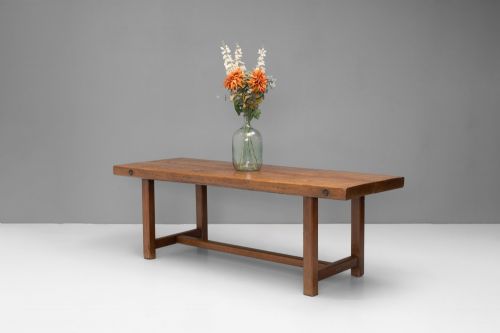
A rustic timber trestle table brings honest construction and simple utility into a room, offering sturdy surfaces built for daily communal dining.
Rustic Timber Trestle Table
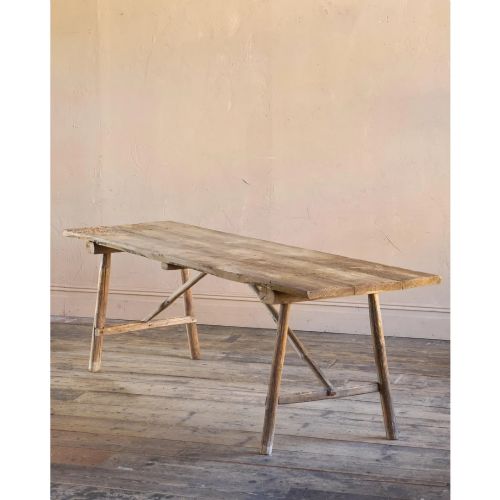
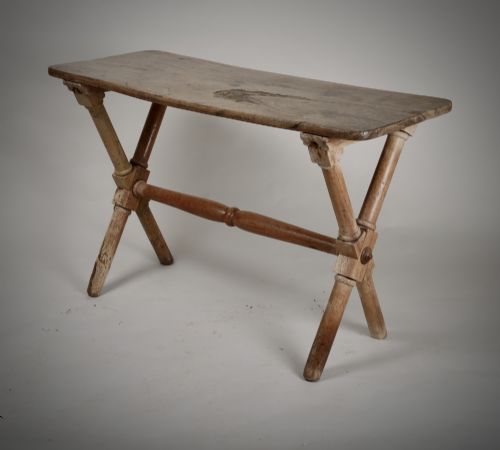
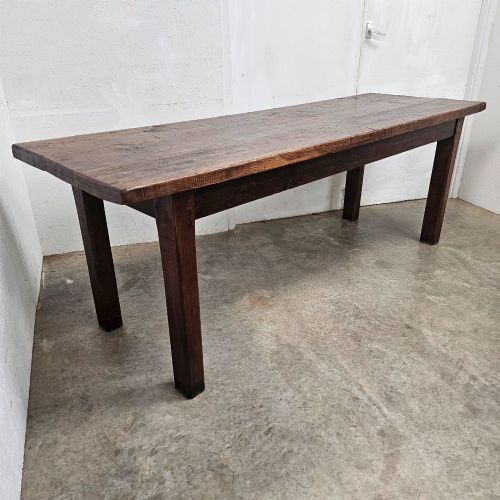
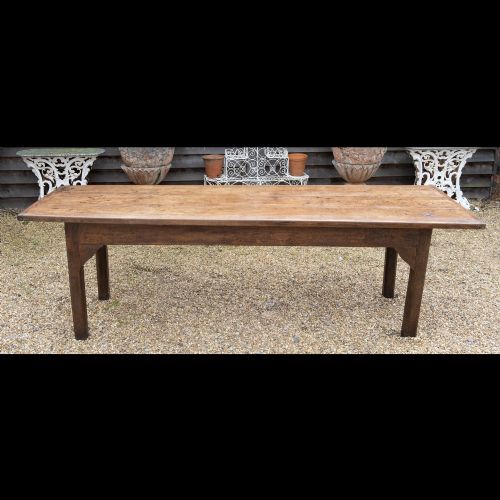
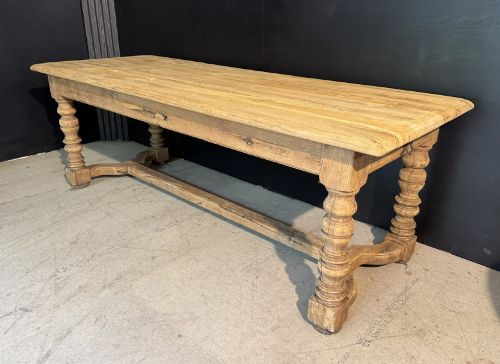
When searching for a rustic timber trestle table, buyers encounter long dining boards, kitchen preparation surfaces, and sturdy work tables supported by braced ends rather than standard corner legs. These pieces emerge primarily from the nineteenth and eighteenth centuries, originating from English, French, and Scandinavian workshops where daily practicality dictated the design.
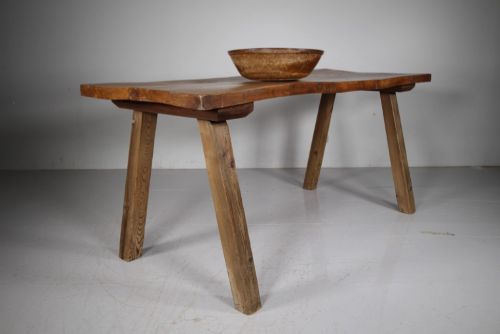
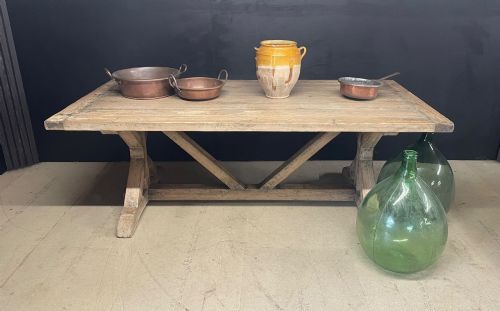
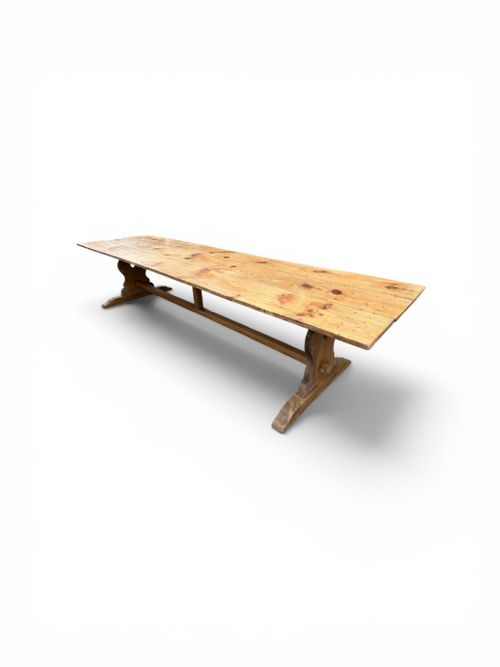
The version most commonly met on this page is the farmhouse or refectory format, constructed with thick plank tops and heavy intersecting supports. Many examples utilise pine, oak, or elm, carrying the honest marks of daily labour and generational use across European country kitchens and dining rooms.
These tables accommodate modern living spaces by providing generous seating capacity without visual clutter, as the inset trestle ends allow chairs to tuck in completely. The combination of unpretentious timber and robust framing suits both contemporary open-plan interiors and traditional period properties.
Materials and construction methods
Carpenters relied heavily on native hardwoods and softwoods such as oak, pine, elm, and sycamore, selecting timbers for their local availability and structural strength. Tops were frequently formed from broad planks joined tightly together, sometimes showing the tool marks of early pit saws or hand planes.
Trestle bases utilised pegged mortise and tenon joints, creating a rigid frame that resisted lateral movement during heavy kneading or communal dining. Wrought iron braces and stretchers occasionally reinforced the timber supports, adding industrial durability to tables built for hard domestic or workshop tasks.
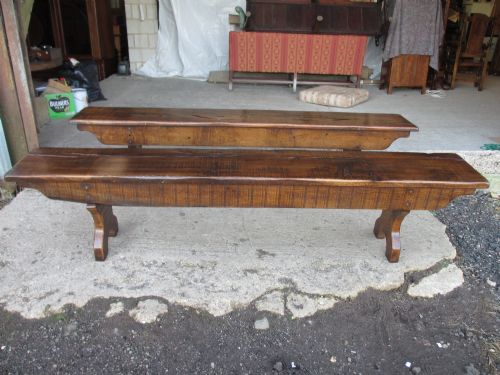
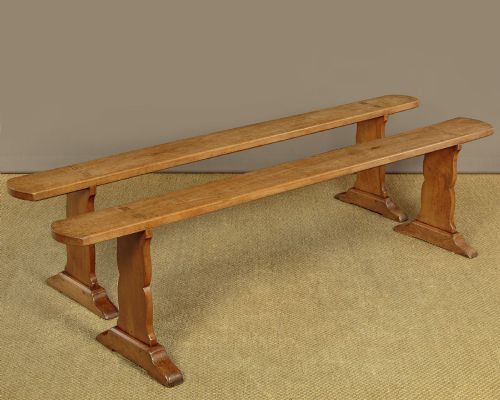
Several pine pig benches survive on this site, having swapped muddy agricultural duties for genteel domestic retirement.
Distinctions in construction and character
Quality rests in the integrity of the timber selection and the honesty of the structural joinery, where original pegs and thick, unwarped top boards demonstrate superior cabinet-making. Tables retaining their early scrubbed surfaces or original painted finishes hold greater integrity than those stripped down or excessively sanded in later decades.
Proportion and stability separate standard utility pieces from exceptional examples, with well-balanced trestle ends providing secure support across larger spans without excessive sagging. The depth and warmth of the patination, developed through decades of domestic use, define the visual authority of the better items.
The Rustic Timber Trestle Table Glossary
- Trestle
- A structural support consisting of a horizontal beam fixed to two splayed legs at each end. This design maximises legroom beneath long dining surfaces.
- Refectory table
- A long, narrow dining table traditionally used in monastic dining halls. These surfaces typically feature substantial timber tops and reinforced underframes.
- Mortise and tenon
- A traditional joint where a projecting tongue fits snugly into a corresponding cavity. This method secures wooden frames without relying on metal fasteners.
- Patina
- The surface sheen and colour depth developed by timber over years of exposure and handling. It reflects the natural ageing process of untreated wood.
- Scrubbed top
- A wooden surface washed repeatedly with water and coarse brushes to remove grease and debris. This treatment leaves the grain raised and pale in tone.
Rustic Timber Trestle Table: Frequently Asked Questions
How do I clean a timber table top?
Wipe the surface gently with a damp cloth using mild soap, avoiding harsh chemical sprays that strip the natural grain.
Dry the timber thoroughly afterwards to prevent moisture penetration, and apply occasional bees-wax to maintain the protective finish.
Can these tables be used for daily dining?
These pieces were originally built for heavy daily tasks, making them robust enough for regular family meals and gatherings.
Using heat-resistant mats protects the aged timber from hot dishes while preserving the historical character of the surface.
How do I identify eighteenth century tables?
Examine the underside and joints for hand-cut peg fixings, wider individual board widths, and deep surface patination.
Construction details like irregular saw marks and pegged frames usually indicate earlier manufacturing methods compared to later Victorian pieces.
Do trestle ends restrict chair placement?
The recessed positioning of the trestle feet often allows chairs to slide completely underneath the surface.
This structural layout provides flexible seating arrangements along the full length of the table without corner legs obstructing diners.