



Rustic Timber Storage Trunk
A rustic timber storage trunk offers robust utility and rich historical character, providing timeless storage solutions for the modern home.
Rustic Timber Storage Trunk
A rustic timber storage trunk encompasses utilitarian wooden chests, coffers, and blanket boxes originating from various centuries and domestic traditions. Buyers searching for a rustic timber storage trunk encounter practical storage forms ranging from simple six-plank constructions to iron-bound dowry chests.
Most items on this page function as blanket boxes, log bins, or travelling boxes, maintaining their original structural integrity and hardware. These vessels served essential household functions, storing textiles, valuables, and provisions in period interiors.
Materials and construction methods
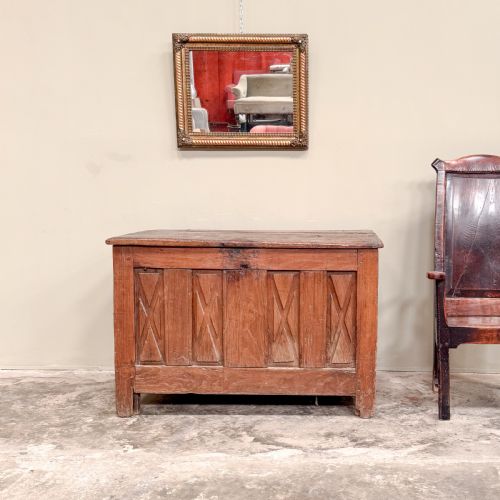
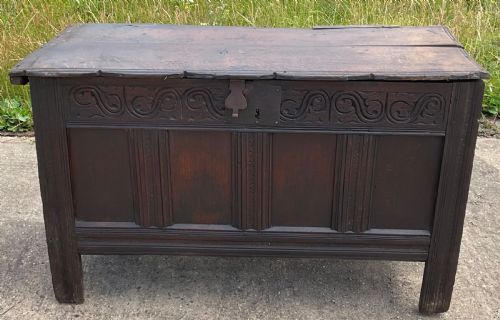
Construction relies primarily on sturdy timbers such as pine, oak, elm, and teak, selected for durability and local availability. Carpenters utilised straightforward joints like the six-plank method or panelled framing to build robust enclosures capable of withstanding heavy daily use.
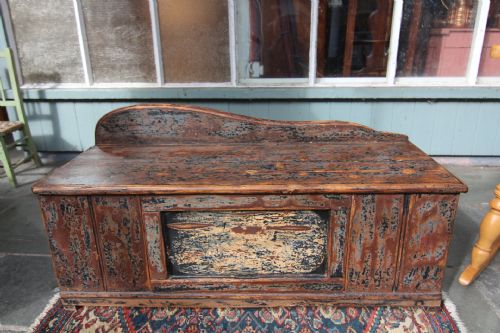
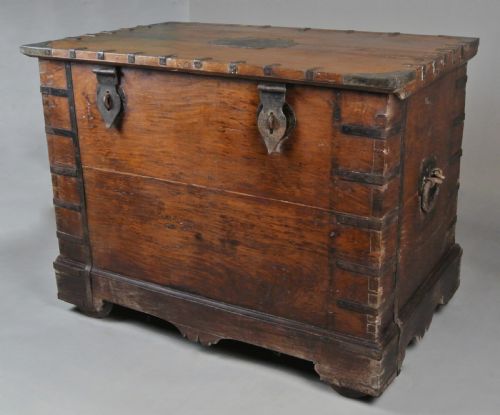
Iron and wrought iron reinforcement hardware, including strap hinges, corner brackets, and carrying handles, provided essential structural support. Surfaces often retain traces of original paint, graining, or polychrome decoration applied to protect the wood and adorn the exterior.
Listings feature pieces fashioned from pine, oak, elm, teak, walnut, and hardwood, alongside iron and brass hardware.
Quality factors in wooden trunks
Quality rests in the integrity of the timber, the retention of original surface finishes, and the survival of authentic hardware. Trunks that retain their original painted surfaces, locks, and forged iron bindings command greater appreciation among collectors.
Construction techniques also dictate merit, distinguishing utilitarian workshop pieces from more refined joinery executed in oak or walnut. The degree of wear and the preservation of internal tills or original hinges further influence the standing of each piece.
The Rustic Timber Storage Trunk Glossary
- Coffer
- A heavy wooden chest traditionally used for storing valuables, documents, or church plate. These box forms typically feature sturdy timber lids and robust construction.
- Six-plank coffer
- A simple chest constructed from six boards of timber joined at the edges with pegs or nails. This method represents an early and direct form of cabinet making.
- Mule chest
- A storage chest fitted with one or more drawers beneath the main compartment. This form bridges the evolution between the traditional coffer and the modern chest of drawers.
- Dowry chest
- A large trunk prepared for a bride to store household linen and possessions for marriage. These pieces frequently display decorative ironwork or regional paintwork.
Rustic Timber Storage Trunk: Frequently Asked Questions
How do I date an old wooden trunk?
Dating relies on examining construction methods, tool marks, and hardware types used in the assembly. Hand-forged iron hinges and pegged joints typically indicate earlier periods.
Secondary woods, nail types, and surface wear patterns provide further clues to confirm whether a piece originates from the seventeenth, eighteenth, or nineteenth century.
What were blanket boxes originally used for?
Blanket boxes served as secure storage for household textiles, woollens, and precious bedding during periods when closets were uncommon. Their robust builds kept dampness and pests away from valuable fabrics.
In many households, these chests also doubled as seating benches or tables within modest living quarters.
How should I clean a painted pine trunk?
Cleaning requires a soft, dry cloth to remove surface dust without disturbing delicate historic finishes or original paint layers. Avoid harsh chemical cleaners or excess moisture that might damage the timber.
Applying microcrystalline wax can help protect surviving painted or grained surfaces while maintaining the dry finish typical of country furniture.
Are iron bound trunks waterproof?
Iron bindings and straps reinforced the structural strength of travel trunks and dowry chests rather than creating a waterproof seal. These metal additions secured the corners and lid against the rigours of transport.
Contents relied on the tightness of the timber boards and interior linings for protection against the elements.