





Rustic Shop Counter
A rustic shop counter brings genuine commercial history into a modern room, offering deep timbers and honest utility for daily life.
Rustic Shop Counter
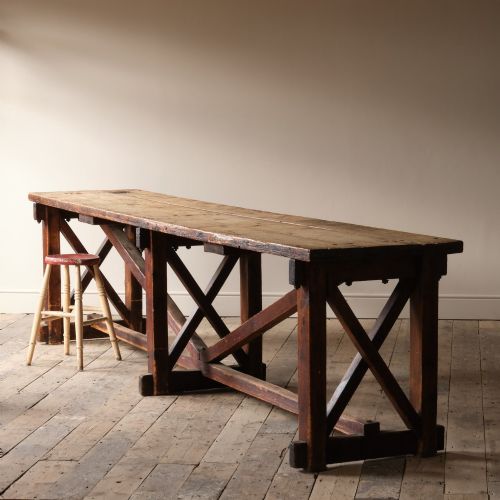
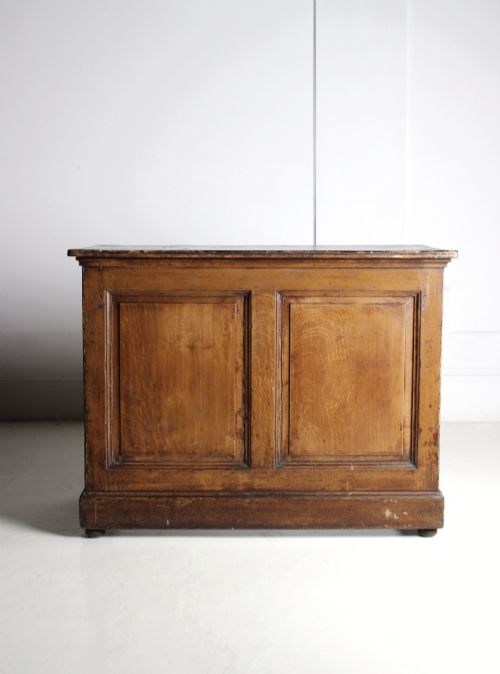
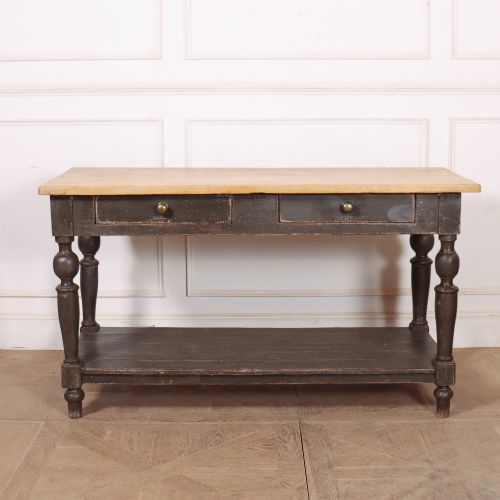
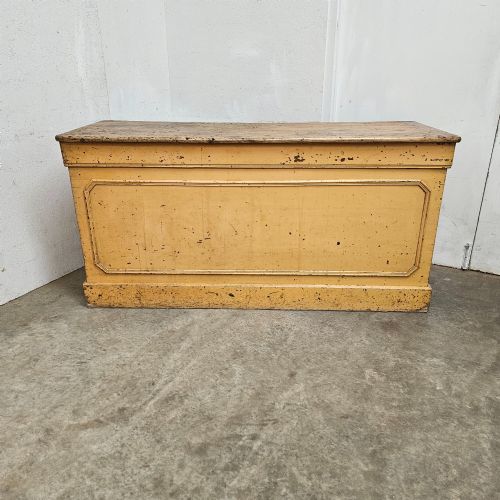
A rustic shop counter represents hard-working commercial heritage, appearing in forms such as drapers tables, panelled timber units, and bank of drawer configurations. These pieces originate primarily from the nineteenth century and early twentieth century, showing influences from French country, Victorian, and industrial traditions.
Buyers seeking a rustic shop counter will most frequently encounter pine and oak constructions, often finished with original painted surfaces or bleached patinas. The selection spans long display tables, reception stations, and countertop cabinets designed originally for trade and provisions.
The category extends beyond standard counters to include related mercantile furnishings like tailors display tables and grocers balance scales. These items share a robust construction vocabulary built to withstand generations of daily commercial use.
Materials and construction methods
Carpenters built these pieces using solid pine and oak, joining heavy timbers to create stable work surfaces capable of supporting heavy merchandise and daily trade. Iron and brass hardware, including handles and corner brackets, reinforced the structural integrity of high-use areas.
Surface treatments rely heavily on original paint finishes, faux wood graining, and bleached wood effects achieved through decades of exposure and cleaning. Metal elements such as copper and cast iron appear frequently on associated scales and storage tins, adding contrasting industrial textures.
Rustic Shop Counter Retail Price Guide 2026
Typical asking prices for rustic shop counter among the pieces listed under this phrase on Sellingantiques today, from the lower quarter to the upper quarter. They describe what is for sale here now, not the wider market.
Trussant and Cie once ensured heavy-duty meat preparation was a sturdy affair, leaving behind butchers blocks ready for modern culinary battles.
Judging quality and character
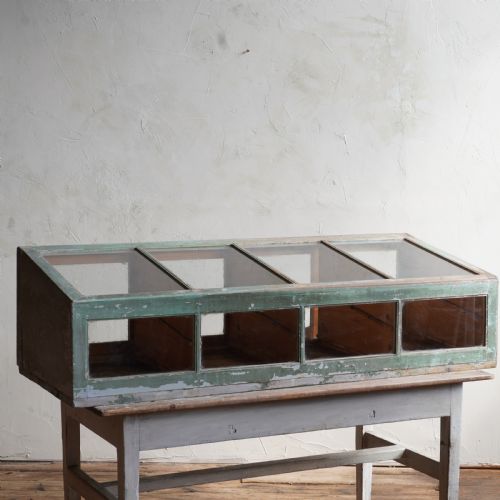
Quality in a rustic shop counter rests upon the integrity of the original timber frame and the unaltered state of its painted or bleached finish. Pieces retaining their authentic working components, such as deep banks of drawers or original glass panels, command greater regard.
Proportion and scale distinguish exceptional examples, particularly monumental lengths of oak or pine that maintain balanced structural lines. The depth of the surface patina, earned through years of commercial service rather than artificial distress, defines the upper tier of these pieces.
Trussant and Cie
The Rustic Shop Counter Glossary
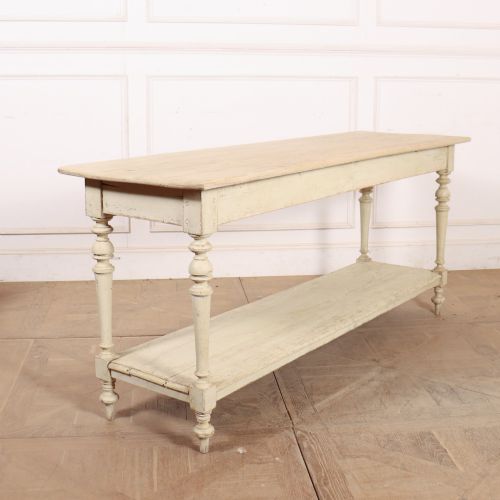
- Drapers table
- A long, wide table historically utilised for measuring and folding textiles in retail establishments. These pieces typically feature lower shelving and narrow proportions suitable for narrow shop interiors.
- Butchers block
- A heavy freestanding work surface constructed from thick end-grain timber blocks. They were designed for heavy food preparation and display in provisions shops.
- Balance scales
- Weighing apparatus utilising counterbalanced pans in copper, brass, and iron. They were essential commercial instruments for measuring dry goods and produce.
- Bleached oak
- Timber treated or naturally weathered to a pale, dry tone. This finish is particularly prized in nineteenth-century French mercantile furniture.
- Faux oak
- A decorative painted finish applied to pine or lesser woods to imitate high-grain oak. Artisans used this technique to impart a richer appearance to utilitarian shop fittings.
Rustic Shop Counter: Frequently Asked Questions
What is a rustic shop counter?
A rustic shop counter is a heavy commercial timber furnishing originating from nineteenth and early twentieth-century retail environments. They were built for trade, featuring sturdy pine or oak construction designed for daily customer interaction.
These pieces now serve as statement kitchen islands, sideboards, or reception consoles in domestic and commercial interiors. Their appeal lies in honest construction and weathered surfaces that tell a story of past use.
How were drapers tables used?
Drapers tables were utilised in fabric shops for displaying, measuring, and cutting bolts of cloth for customers. Their long, narrow proportions allowed shop assistants to handle large lengths of textile efficiently.
Today, their generous surface area and open lower shelving make them ideal kitchen preparation islands or hallway console tables. They bring substantial character and practical storage to modern living spaces.
Are these counters suitable for kitchens?
These counters make exceptional kitchen islands due to their sturdy timber construction and generous working heights. Their historic surfaces add warmth and industrial character to contemporary culinary spaces.
When using antique pine or oak in a kitchen, protect the bare or bleached wood with suitable food-safe oils or sealers. Regular maintenance ensures the historic timber withstands modern food preparation demands.