


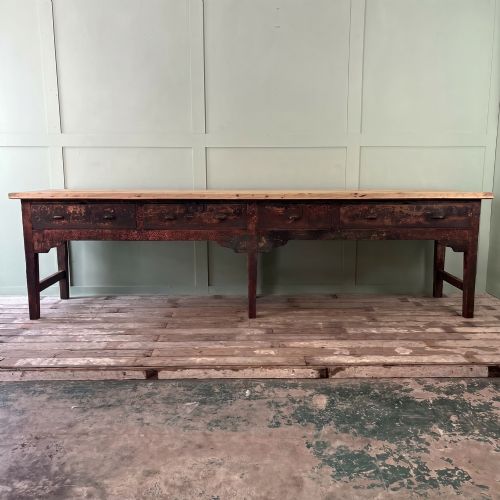
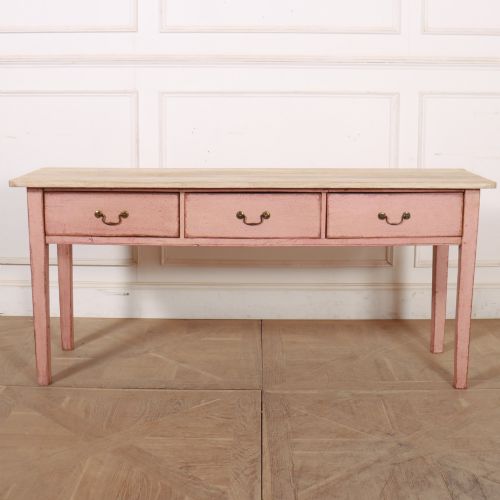
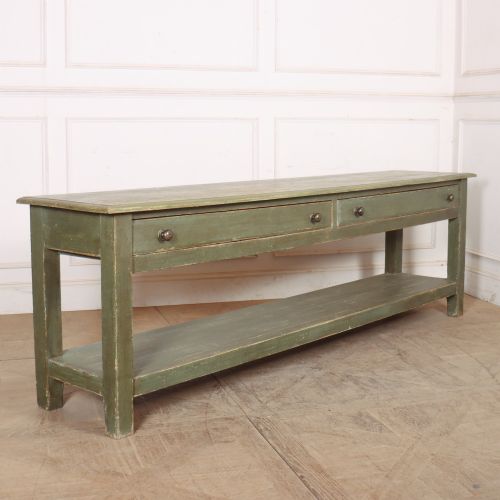

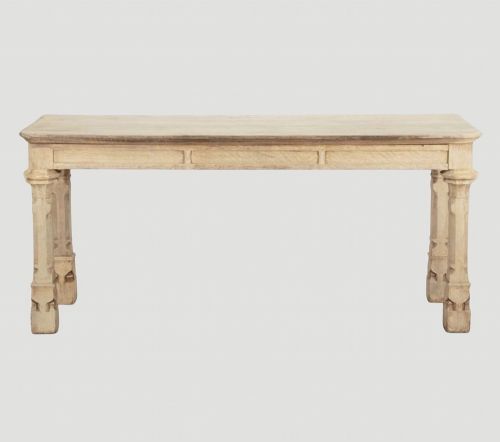

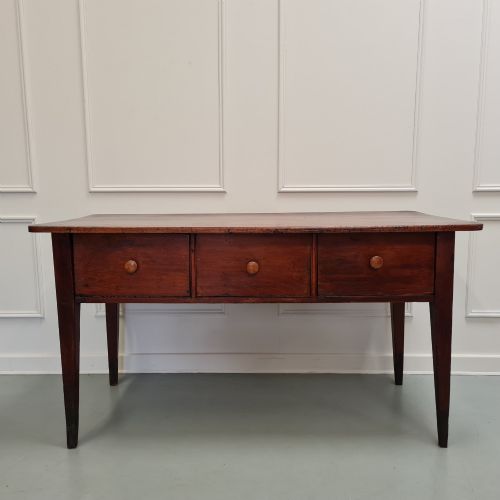
Rustic Serving Table
A rustic serving table brings grounded utility and honest timber grain to a dining room or hallway.
Rustic Serving Table
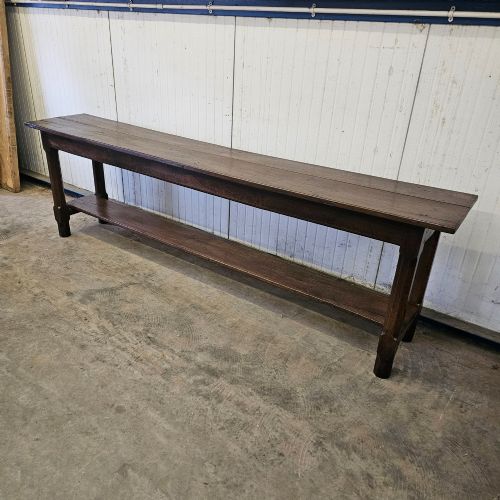
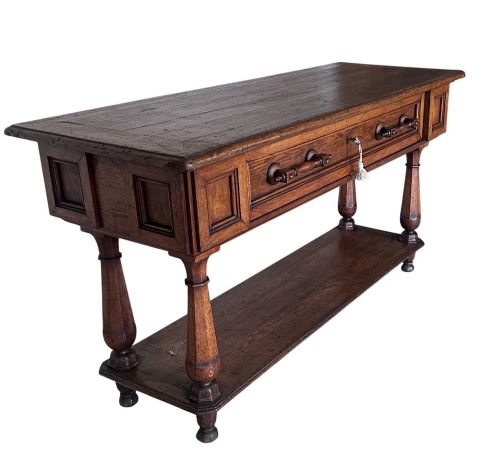
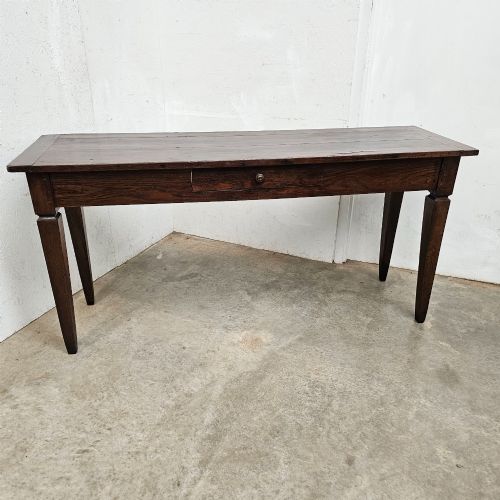
A rustic serving table is a sturdy timber surface designed for food preparation and dining service, frequently seen in forms like potboard servers, drapers tables, and console tables. These pieces draw from French, English, Spanish, and Scandinavian country traditions, reflecting practical domestic use rather than formal parlour display.
The pieces appearing on this page span from the Georgian and Victorian eras into the early twentieth century, alongside seventeenth-century styles recreated later. Solid oak, pine, cherrywood, and walnut form the structural core of these tables, often enhanced by painted finishes or bleached surfaces.
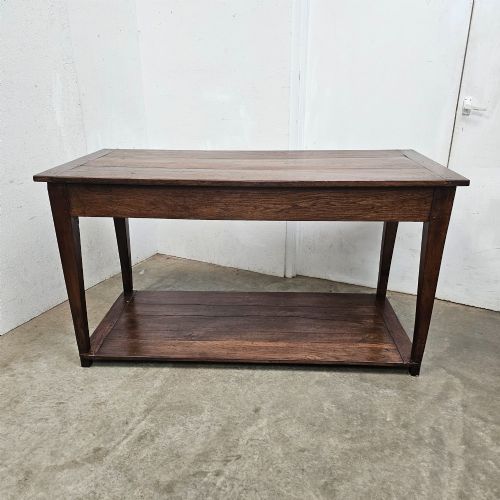
Buyers will most frequently encounter nineteenth-century examples in oak or pine, ranging from simple side tables to large serving surfaces with potboards or drawers. These tables bridge the gap between dining preparation and everyday display, offering robust utility with regional character.
Materials and construction
Carpenters built these tables from hard and soft timbers, relying heavily on solid oak, pine, cherrywood, and walnut for daily strength. Many surfaces show the marks of active domestic labour, constructed with thick timber tops and sturdy legs joined for heavy loads.
Secondary treatments include traditional paint layers, bleached wood finishes, and occasional brass or iron hardware. Pot-shelves and drawers added functional storage below the primary surface for kitchen or dining equipment.
Rustic Serving Table Retail Price Guide 2026
Typical asking prices for rustic serving table among the pieces listed under this phrase on Sellingantiques today, from the lower quarter to the upper quarter. They describe what is for sale here now, not the wider market.
Listings feature solid oak and pine alongside cherrywood and walnut, spanning the Georgian, Victorian, and Edwardian periods.
Judging quality and timber character
Quality rests in the integrity of the timber selection, such as dense solid oak or well-grained cherrywood, and the honesty of the construction. Tables featuring integrated potboards, original drawers, or untouched regional paint finishes command greater interest from collectors.
The handling of the wood surface, whether through historical bleaching or deep patination built up over centuries of use, dictates the visual depth of the piece. Proportion and structural sturdiness separate everyday workshop utility from finer country furniture.
The Rustic Serving Table Glossary
- Potboard
- A lower slatted shelf fitted beneath a serving table used for storing pots and pans. This feature provides both structural stability and practical storage.
- Drapers Table
- A long, utilitarian table originally utilised in cloth merchandising but frequently adopted as a serving or prep surface. They typically feature deep proportions and sturdy timber construction.
- Bleached Oak
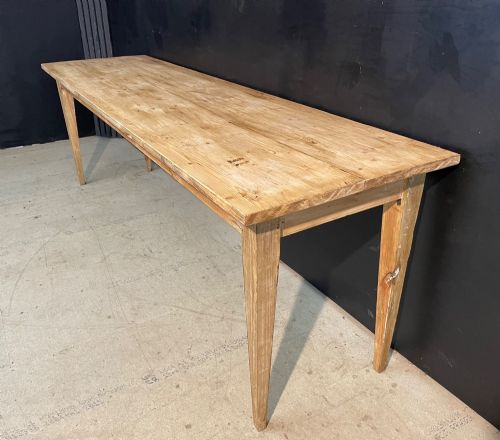
- Timber treated to lighten its natural tone, a finish seen on several nineteenth-century French and English servers. This process highlights the natural grain pattern.
- Refectory Table
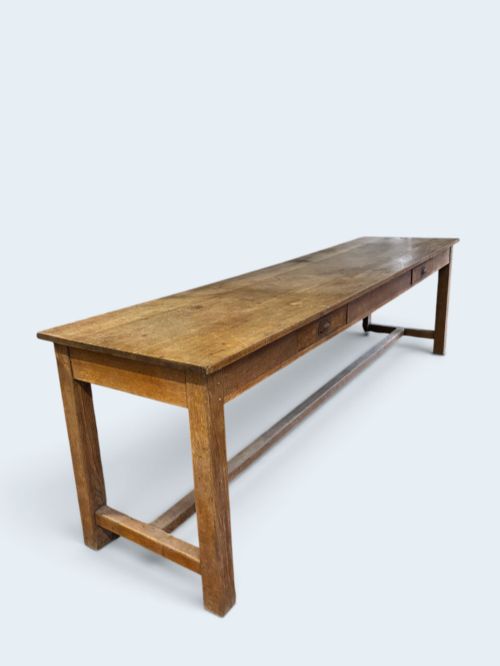
- A long narrow dining or serving table designed for communal meals. They offer substantial length and stable leg bracing.
- Bobbin Turned
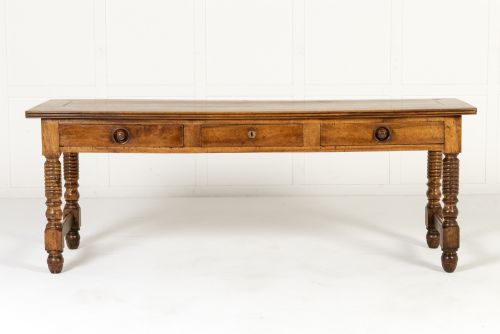
- A form of leg turning composed of repeating spherical or oval shapes resembling bobbins on a thread. This decorative woodwork appears on seventeenth-century style tables.
Rustic Serving Table: Frequently Asked Questions
What is a rustic serving table?
A rustic serving table is a utilitarian timber surface used historically for food preparation, storage, and dining service in country houses and farmhouses. They combine robust construction with regional styles ranging from French provincial to English country.
These pieces typically feature solid oak, pine, or cherrywood, often incorporating lower potboards, drawers, or painted finishes. Their unpretentious design makes them adaptable for modern dining rooms and hallways.
How do I date an antique serving table?
Dating involves examining the timber species, tool marks, construction joints, and overall style relative to known periods like the Georgian era, Victorian period, or nineteenth century. Regional characteristics also help pinpoint origin and age.
Secondary woods, nail types, and wear patterns provide additional clues to when a table was constructed. Comparing hardware and finish techniques against documented pieces confirms the era.
Where should I place a serving table?
These tables suit dining rooms as auxiliary serving spaces, or hallways as console surfaces for dropping keys and displaying objects. Their narrow proportions allow them to fit against walls without blocking movement.
Kitchens also benefit from their prep space, particularly models with potboards or drawers for storage. The sturdy timber construction handles everyday domestic activity with ease.
Are painted serving tables original?
Painted finishes on country furniture can be period-original, particularly on English, Welsh, and Scandinavian pieces from the eighteenth and nineteenth centuries. Many regional workshops applied paint to protect softer woods like pine.
Evaluating the wear, crackle, and layering of the paint helps distinguish early or original finishes from later decorative applications. Both original paint and natural wood patinas hold distinct appeal for collectors.