



Rustic Rocking Chair
A rustic rocking chair brings honest country craft into a modern room, offering simple comfort built to last through generations.
Rustic Rocking Chair
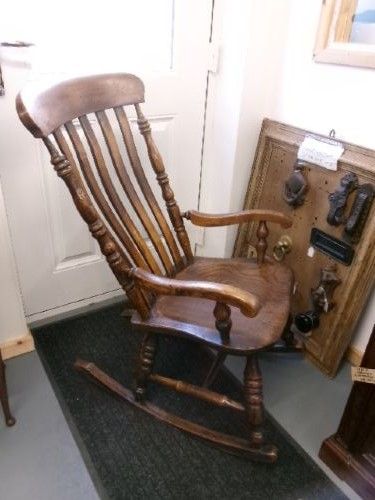
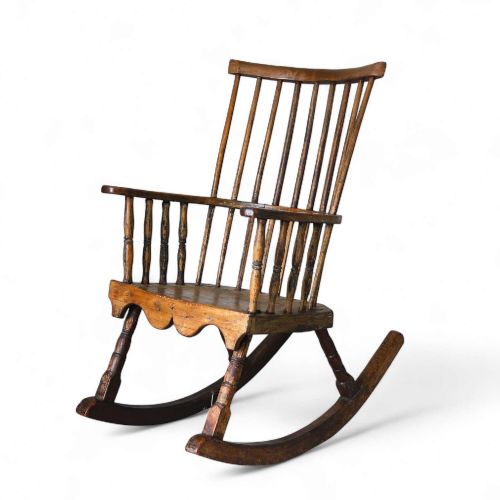
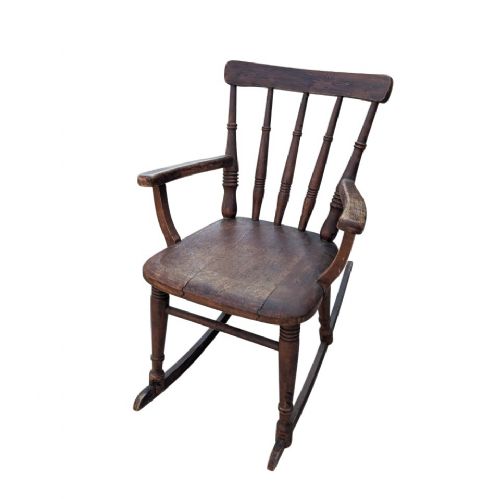
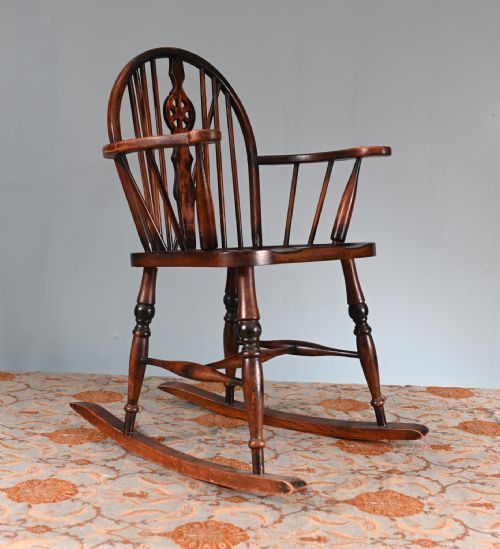
A rustic rocking chair is an armchair mounted on curved rockers, designed for practical comfort in farmhouse and vernacular settings. When you search for a rustic rocking chair, you find pieces rooted in regional traditions, ranging from early English comb-back designs to American primitive models.
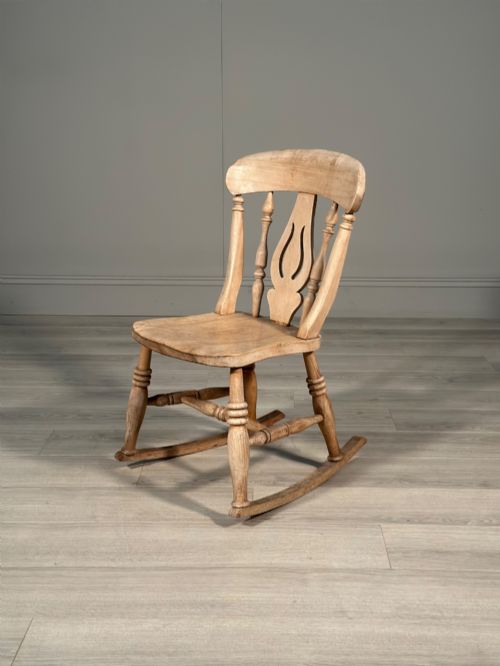
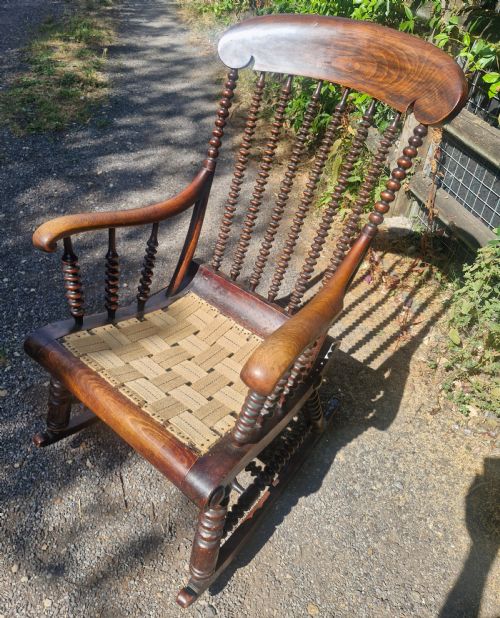
The selection here spans several centuries, drawing heavily on the nineteenth century alongside earlier eighteenth-century examples. Forms include wheelbacks, spindle backs, ladder backs, and bobbin-framed pieces, often built in smaller proportions for children or specific domestic tasks.
Origins vary widely across these listings, taking in English, Scottish, Welsh, Scandinavian, and American workshops. Each regional style brings its own structural quirks, from robust elm seats to delicate rush and sea grass weaving.
Materials and construction
Makers relied on durable native hardwoods such as oak, elm, beech, ash, and pine, selected for strength and local availability. These timbers were often combined within a single frame, using bendable woods for bows and rigid trunks for legs and spindles.
Construction techniques favour traditional joinery, including turned components, pegged mortise and tenon joints, and steam-bent elements. Surfaces frequently show the marks of the drawknife and lathe, while some pieces retain historic paint or ebonised finishes.
Seating areas rely on solid carved timber or woven materials like rush and sea grass. These natural surfaces provide a flexible base that softens with age and use.
Rustic Rocking Chair Retail Price Guide 2026
Typical asking prices for rustic rocking chair among the pieces listed under this phrase on Sellingantiques today, from the lower quarter to the upper quarter. They describe what is for sale here now, not the wider market.
Several miniature chairs wait patiently on rockers, built centuries ago so the youngest household members could join the circle by the hearth.
Assessing quality and character
Quality in a vernacular chair rests on the integrity of its construction and the harmony of its proportions. Superior examples maintain original rockers and structural members without intrusive modern reinforcements.
The character of the wood surface dictates much of the visual appeal. Chairs that retain untouched patination, original paint finishes, or honest signs of historic wear stand apart from heavily restored or stripped alternatives.
The Rustic Rocking Chair Glossary
- Comb-back
- A Windsor chair variation where the vertical spindles extend through a horizontal crest rail, resembling the teeth of a comb. This construction offers robust support to the upper back.
- Bobbin-framed
- Furniture featuring turned wooden sections shaped like spools or bobbins along the uprights and stretchers. It is a distinctive decorative technique seen in nineteenth-century vernacular pieces.
- Vernacular
- Objects made by local craftsmen for everyday use rather than following strict high-style academic rules. These pieces reflect regional materials and practical domestic needs.
- Ladder back
- A chair back constructed with horizontal slats spanning between two rear uprights. The slats are often curved to fit the sitter's spine.
- Wheelback
- A Windsor chair style featuring a pierced wooden splat shaped like the wheel of a cart. This decorative motif became popular in nineteenth-century country seating.
Rustic Rocking Chair: Frequently Asked Questions
How do I care for a wooden rocking chair?
Keep the wood nourished by applying a traditional beeswax polish occasionally, avoiding modern silicone sprays that build up a sticky film.
Position the chair away from direct heat sources and sudden temperature changes to prevent the timber from splitting or joints from loosening.
Are these chairs comfortable for daily use?
Many country rocking chairs were designed with ergonomic wooden saddles and supportive spindles that accommodate the body naturally.
Adding a simple loose cushion can enhance comfort while preserving the historic seat surface underneath.
How do I date a rustic rocking chair?
Examine the tool marks, construction methods, and timber species to gauge the period of manufacture. Hand-turned components and pegged joints often point to earlier craftsmanship.
Compare the specific form, such as a comb-back or ladder back, against documented regional styles from the eighteenth and nineteenth centuries.
Can I use a child's rocking chair in a modern interior?
Smaller rocking chairs make charming decorative accents in living spaces or bedrooms, serving as display stands for textiles or soft toys.
Their compact scale allows them to fit easily into corners where a full-sized armchair would overwhelm the room.