
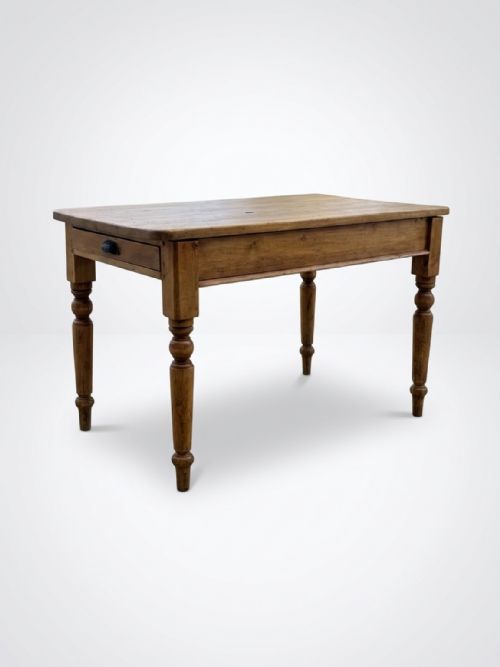
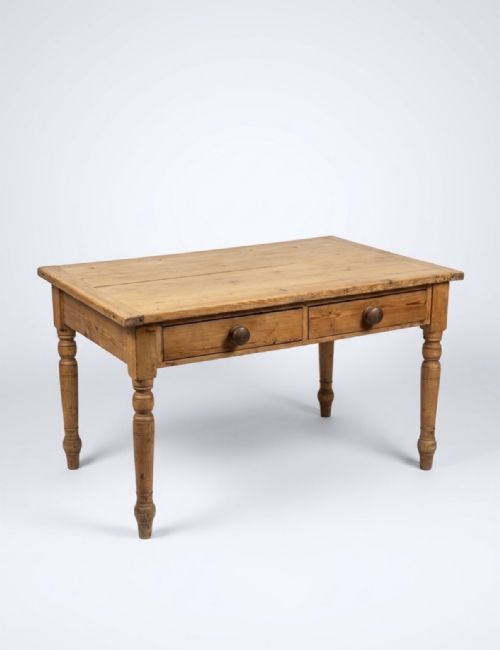
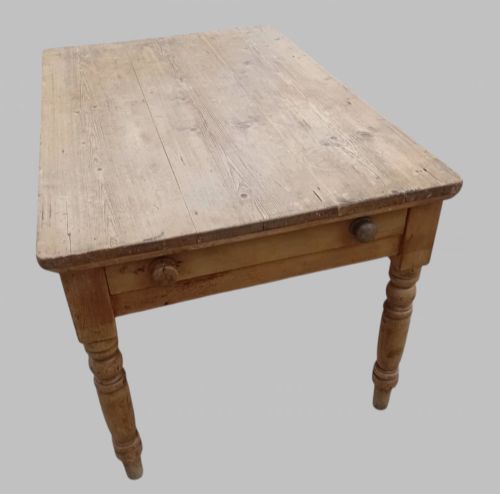
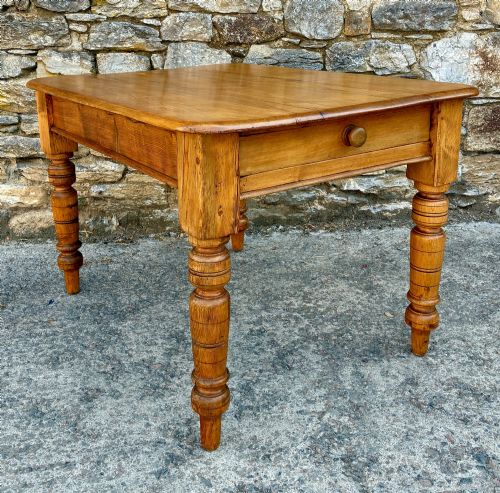
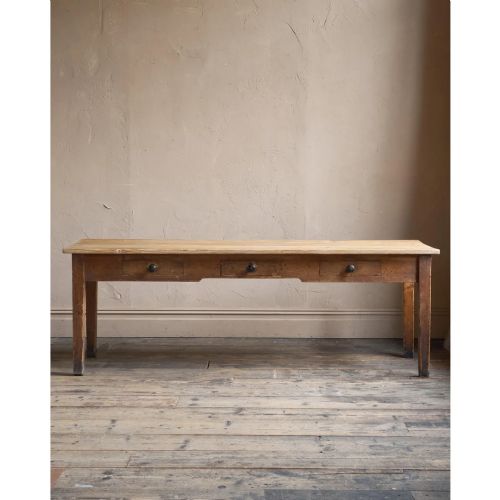
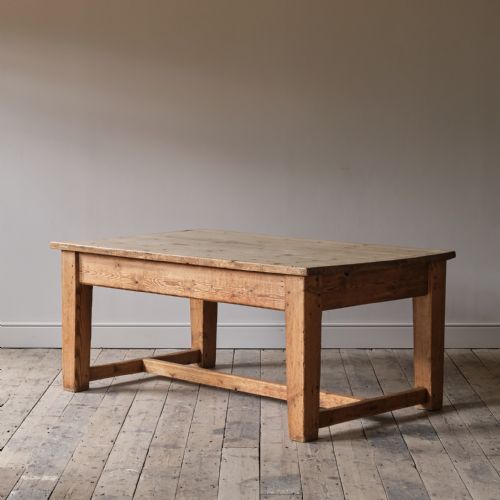
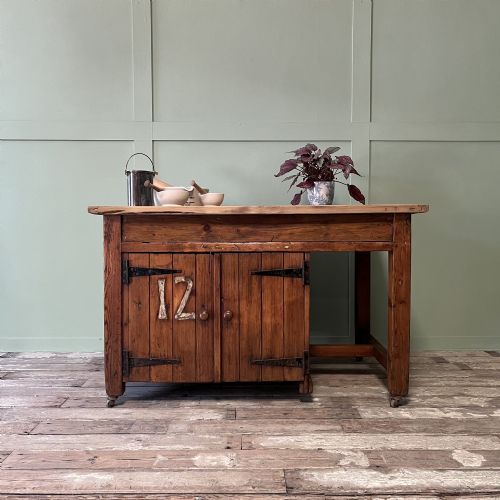
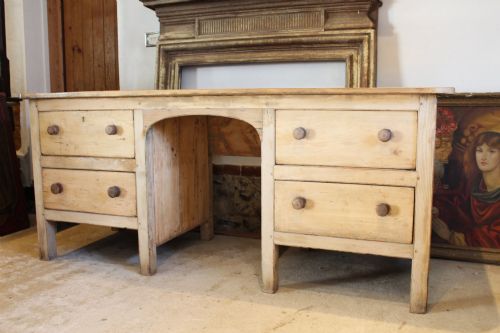
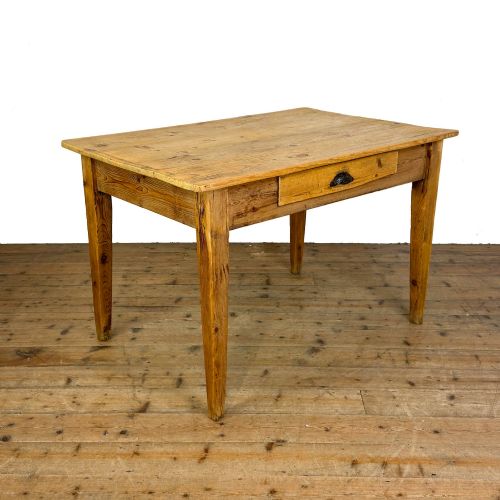
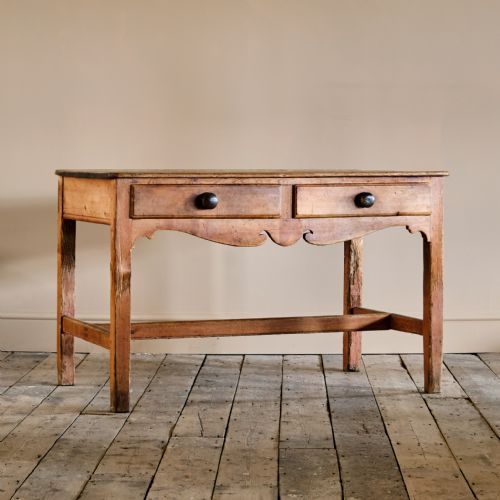
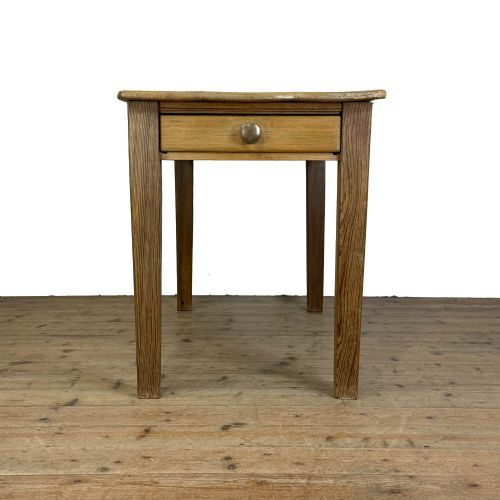
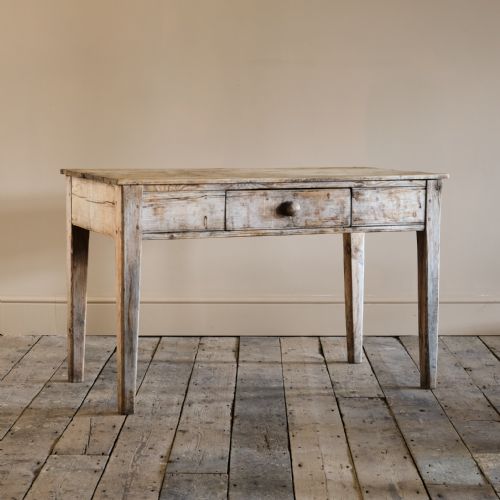
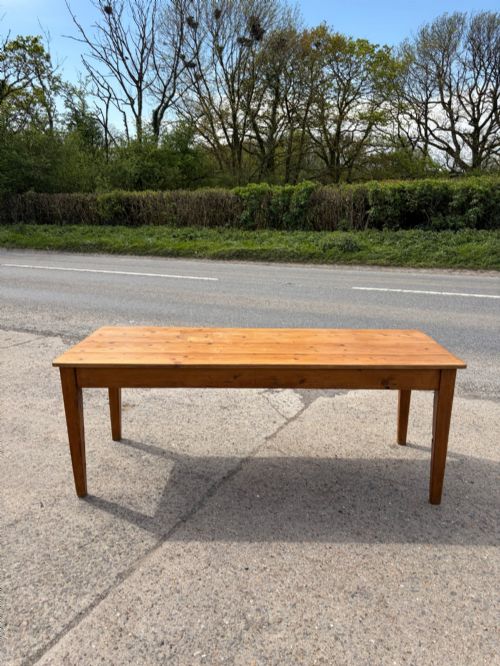
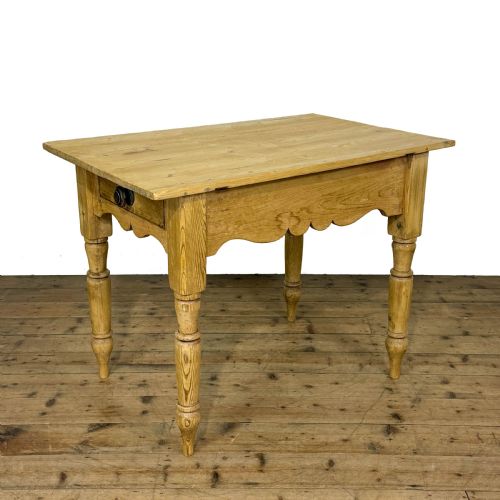
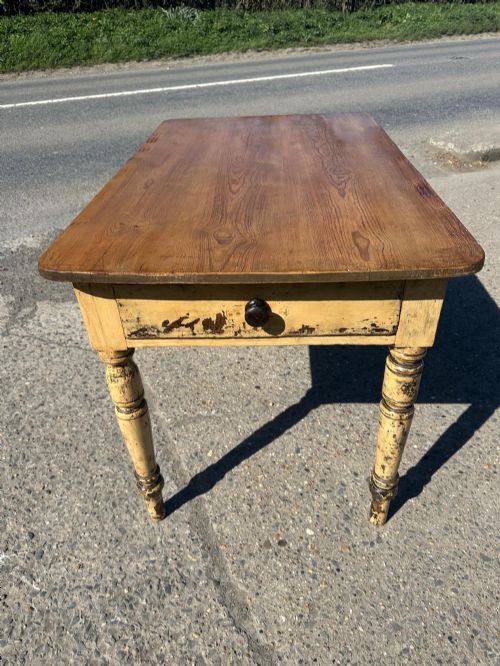
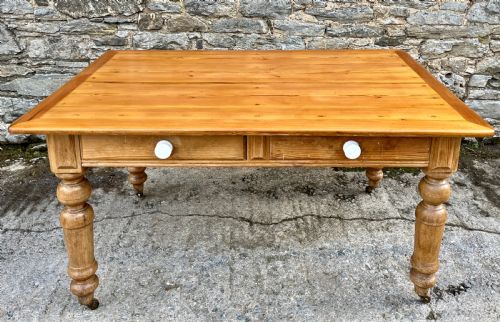
Rustic Pine Kitchen Desk
A rustic pine kitchen desk brings honest utility and warmth to a room through practical timber construction.
Rustic Pine Kitchen Desk
A rustic pine kitchen desk represents working timber furniture built for utility across the nineteenth and early twentieth centuries. These pieces encompass farmhouse tables, prep tables, and writing desks produced in styles such as Victorian Country and Rustic Farmhouse.
The version most commonly met on this page combines a sturdy timber frame with practical drawers or scrub tops intended for daily domestic labour. They originate from British, French, and Scandinavian workshops, showing simple lines and durable construction.
Makers utilised available softwoods and hardwoods together, pairing pine with fruitwood, oak, or sycamore for increased longevity. These surfaces show decades of domestic use, bearing the marks of preparation, writing, and daily work.
How they were made
Constructed primarily from pine and pitch pine timber, these pieces frequently incorporate secondary woods like elm, fruitwood, and sycamore for tops or internal framing. Iron, cast iron, and brass fittings appear on trestle bases, hinges, and drawer pulls.
Surfaces often retain traces of original paint finishes, including traditional Falu red or distressed green pigment, alongside scrubbed bare timber tops. Joinery relies on straightforward pegged or dovetailed joints designed to endure heavy physical labour.
Several tables retain traces of historic flour dust trapped deep within the pine drawer joints.
What varies in quality
Quality rests upon the integrity of the timber selection and the retention of original structural elements like drawers, scrub tops, and painted legs. Pieces retaining untouched surfaces and secondary woods such as fruitwood or sycamore stand above heavily altered examples.
Proportion and utility define the better items, where trestle bases, drop leaves, or integrated brass and iron hardware display thoughtful domestic design. The honesty of the timber grain and the character of the natural wear determine the overall visual presence.
The Rustic Pine Kitchen Desk Glossary
- Scrub top
- A bare timber tabletop designed to be repeatedly scrubbed clean with water and sand after food preparation or work. This process leaves the grain raised and pale.
- Falu paint
- A traditional deep red paint originating in Sweden, composed of copper mine waste, linseed oil, and flour. It preserves exterior and interior softwood effectively.
- Trestle table
- A table structure consisting of two or more supports connected by a horizontal beam. This design provides sturdy legroom for tavern or kitchen use.
- Frieze
- The central horizontal band situated directly beneath the tabletop. This area frequently houses single or multiple storage drawers.
- Dog kennel dresser
- A specific regional furniture form featuring an open central recess flanked by cupboards or drawers beneath a work surface.
Rustic Pine Kitchen Desk: Frequently Asked Questions
What is a rustic pine kitchen desk used for?
These tables and desks served multiple domestic functions including food preparation, scullery work, and household administration in nineteenth-century homes.
Today they adapt easily into kitchen islands, writing spaces, or side tables within contemporary interiors.
How do I care for a scrubbed pine top?
Maintain the dry timber surface using soft brushes and mild soap without applying heavy modern varnishes or synthetic sealers.
Allow the natural patina to develop further through regular use and light waxing if desired.
How can I tell a Victorian table apart from an Edwardian one?
Victorian examples generally display heavier timber scantlings, deeper frieze drawers, and hand-cut joinery typical of nineteenth-century country workshops.
Edwardian pieces often show slightly lighter proportions and cleaner machine-sawn timber dimensions while retaining traditional farmhouse forms.
What does scrub top mean on a listing?
A scrub top refers to an unpainted wooden tabletop that historical users scoured clean with water and abrasive sand after daily kitchen tasks.
This historic cleaning method produces a pale, smooth surface that highlights the natural grain of the pine.