


Rustic Pastoral Canvas
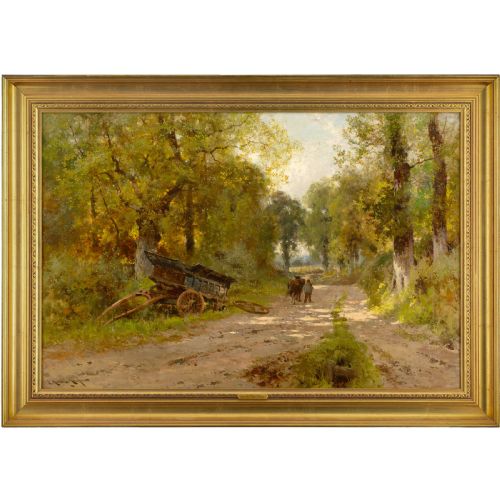
These rustic pastoral canvas works capture agrarian life and rolling countryside scenes in oils, offering an enduring window into traditional rural landscapes.
Rustic Pastoral Canvas
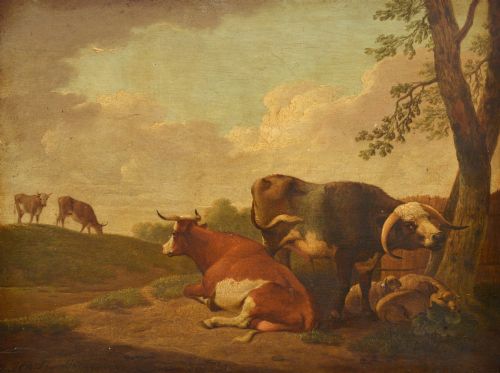
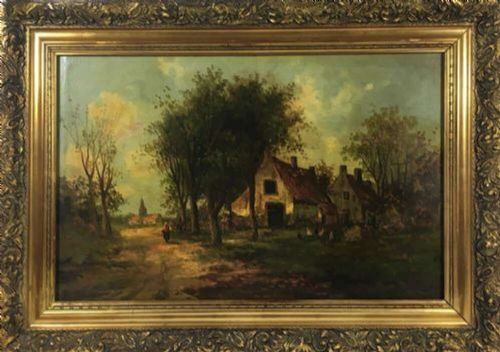
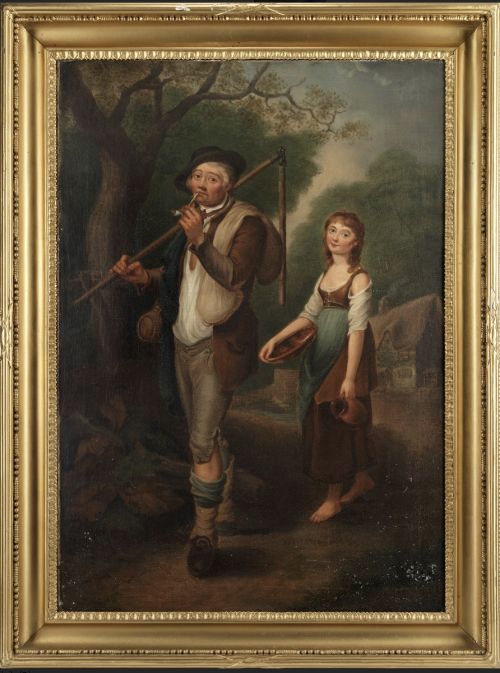
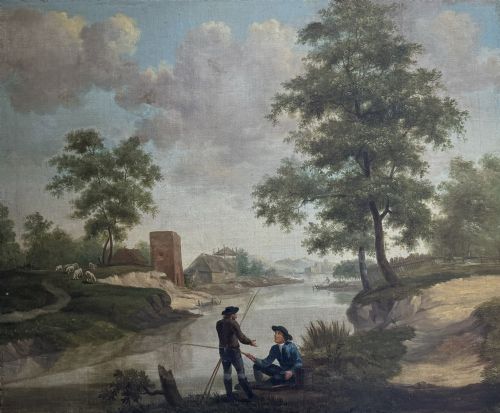
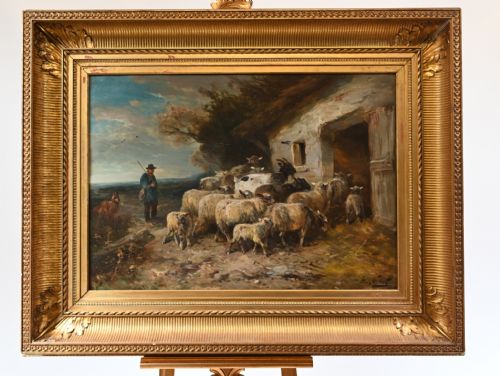
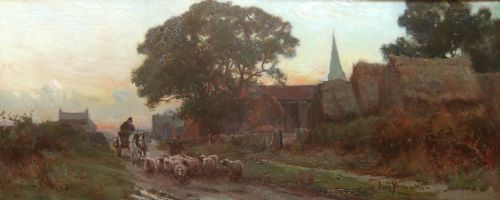
A rustic pastoral canvas typically portrays rural scenes, farmyard animals, cottages, and agricultural labourers working the land. These oil paintings span from the eighteenth century through to the mid-twentieth century, capturing changing interpretations of the countryside.
The most common examples encountered on this page date from the nineteenth century, reflecting Victorian and British Realism movements. They range in scale from intimate pastoral studies to large framed works depicting livestock and village life.
Materials and execution
Artists painted primarily with oil paint applied to stretched woven canvas, often supported by wooden stretchers and housed within giltwood or gesso frames. Gold leaf details frequently highlight the inner mouldings of period framing.
Brushwork varies from the smooth, detailed academic approach of the eighteenth century to the looser impasto strokes characteristic of later nineteenth-century impressionist and realist interpretations.
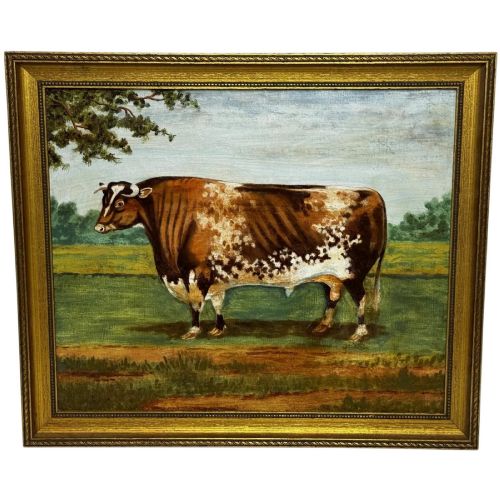
Several canvases pay surprisingly high attention to the facial expressions of prize-winning bulls.
Assessing quality and execution
Quality rests in the anatomical accuracy of livestock, the handling of natural light across open fields, and the overall compositional balance. Superior examples demonstrate a confident control of tone that brings depth to cloudy skies and shadowed barns.
The integrity of the original canvas surface and the subtlety of the artist's palette separate standard decorative pieces from accomplished fine art paintings by recognised regional schools.
John Horace Hooper·Hendrik Willem Schweickhardt·Thomas Barker of Bath·Henry Schouten·Owen Bowen·Charles Vickers·Thomas Sidney Cooper·Kershaw Schofield·Thomas Spinks·GW Horlor·W E Millner·Jack R Mould·Georgina Lara·James Ward·Arthur Walker Redgate·Eugene Battaille·George Morland·William Greaves·Louis Marie Dominique Robbe·John Holland Snr·G R Vaughan
The Rustic Pastoral Canvas Glossary
- Canvas
- A heavy woven fabric used as a support surface for oil paintings. It is typically stretched over a wooden frame before application.
- Giltwood
- Wood carved and coated with gold leaf or metallic paint. This material is frequently used for traditional picture frames.
- Impasto
- Paint applied thickly to a canvas so that it stands out from the surface. This technique provides distinct texture and visible brush marks.
Rustic Pastoral Canvas: Frequently Asked Questions
What subjects appear in these paintings?
These works depict farming scenes, cottages, riversides, and agricultural animals such as sheep, cattle, and shire horses. Artists focused on everyday rural life and the changing seasons.
Compositions often include figures working the land, gathering water, or tending livestock within expansive countryside settings.
How do I identify the age of a canvas?
Dating relies on stylistic clues, framing methods, and the preparation of the canvas support behind the painted surface. Nineteenth-century works often show distinct stretcher construction compared to earlier examples.
Signatures, inscriptions on the reverse, and historical provenance notes also help establish the exact period of creation.
Are these works original or copies?
The listings consist of original hand-painted oil works created by individual artists and regional schools. Each piece bears unique brushwork and physical characteristics inherent to oil painting.
Followers of notable painters occasionally produced period interpretations, which are documented through historical attribution.
How should I display a heavy oil painting?
Large framed canvases require secure wall fixings suited to the combined weight of the wooden stretcher, canvas, and giltwood frame. Proper placement avoids direct sunlight and excessive humidity.
Maintaining stable environmental conditions protects both the oil paint layer and the underlying canvas from natural degradation.