
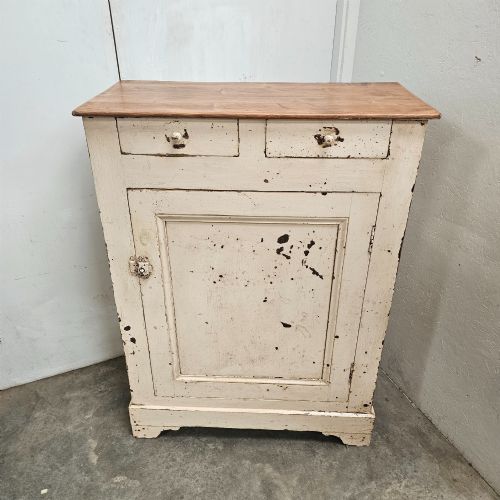
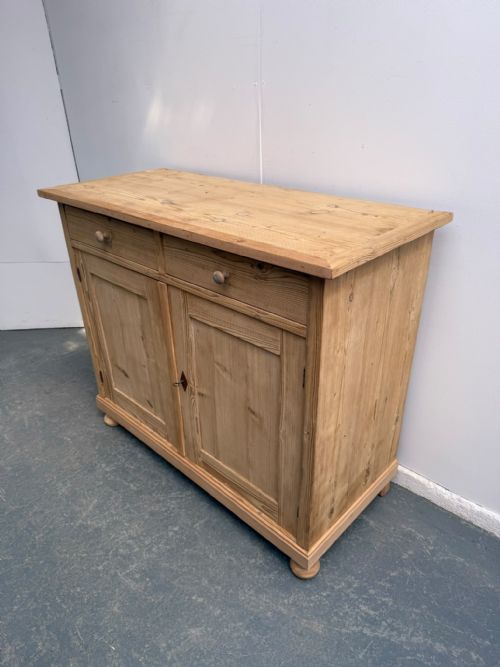
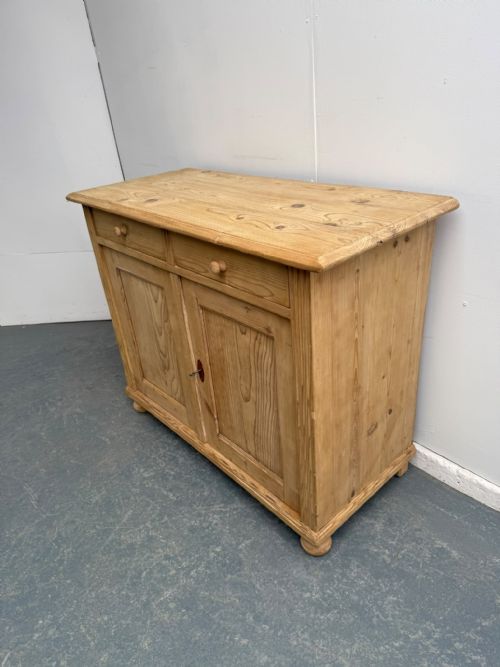
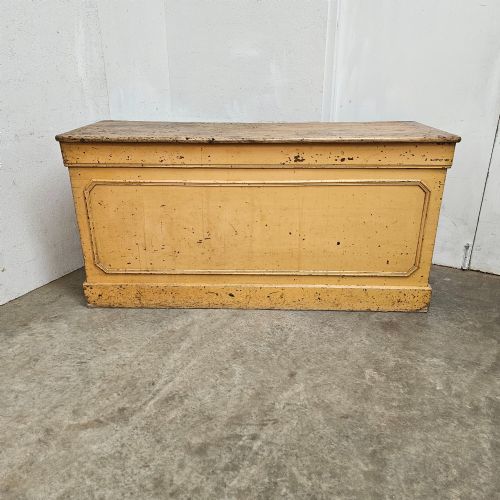

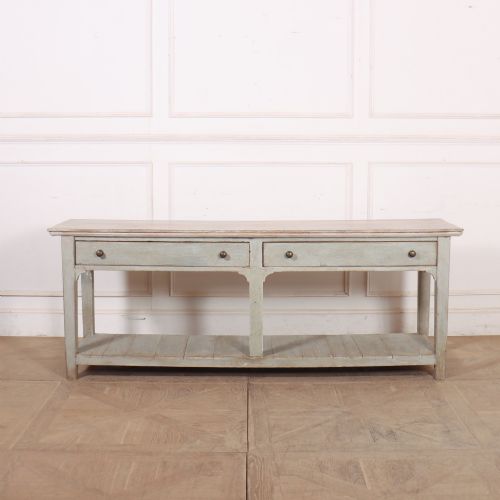


Rustic Painted Kitchen Sideboard
A rustic painted kitchen sideboard brings honest utility and vernacular character into a room, offering robust storage built from timber and finished in pigment.
Rustic Painted Kitchen Sideboard
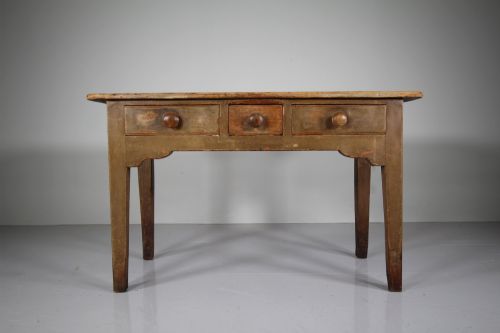
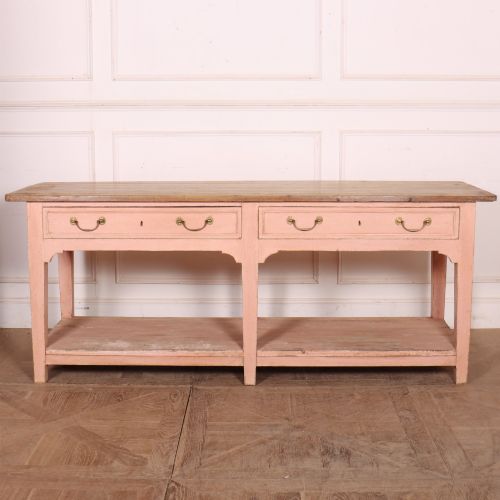
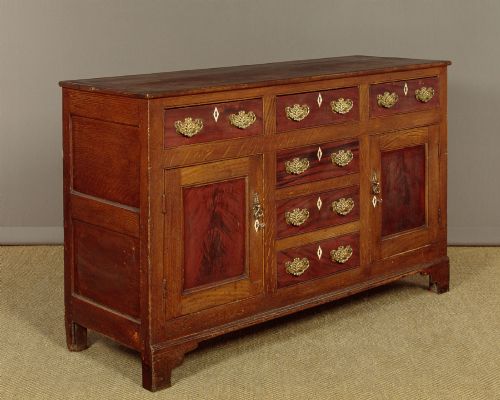
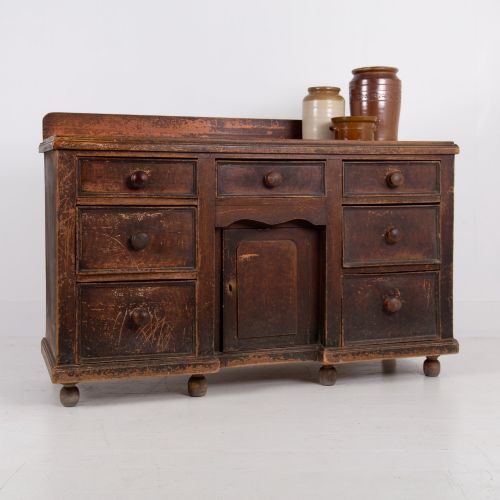
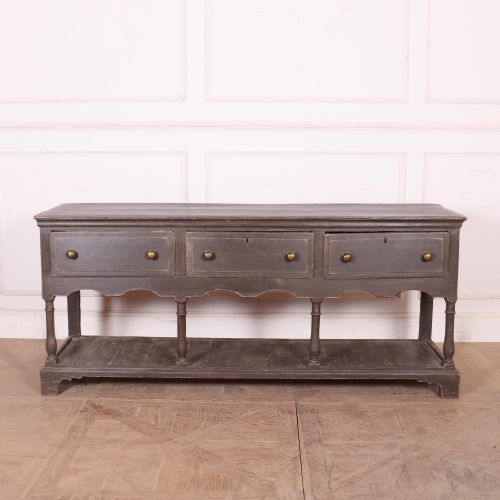
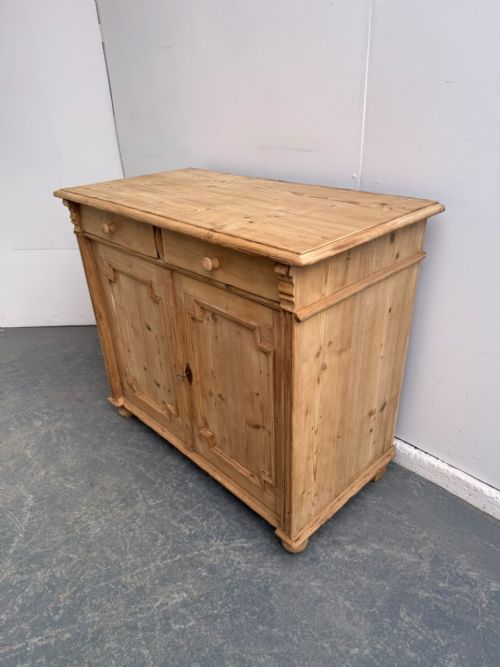
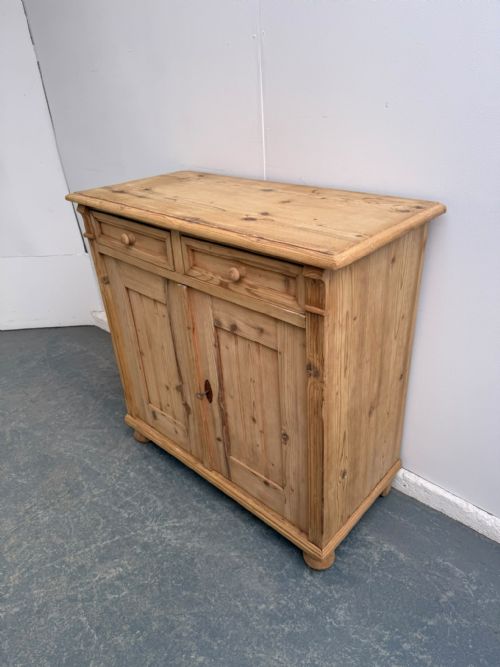
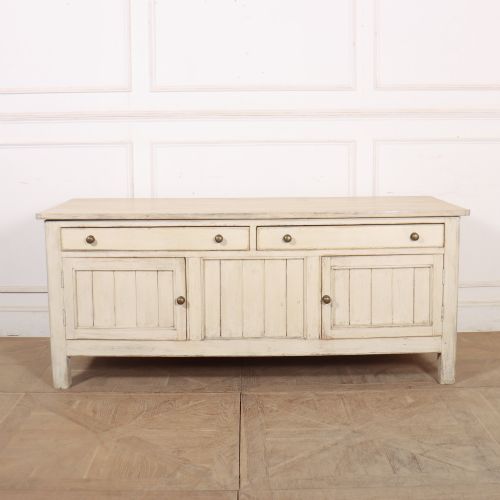
When searching for a rustic painted kitchen sideboard, buyers encounter functional furniture built for daily domestic use in country houses, farmhouses, and provincial kitchens. These pieces encompass dresser bases, potboard servers, shop counters, and jam cupboards originating from various regions including England, France, Wales, Scotland, and Denmark. Most examples found on this page date from the eighteenth, nineteenth, and early twentieth centuries, reflecting utilitarian domestic and commercial traditions.
The prevalent form is the dresser base or potboard serving table, often fitted with drawers above cupboards or open lower shelves. Pine and oak serve as the principal timbers, frequently preserved with original paint surfaces or historic pigment over old wood. Buyers also find specialised regional variants such as dog kennel dressers, bread slide bases, and shallow farmhouse counters designed for specific kitchen tasks.
Materials and construction methods
Makers constructed these kitchen boards predominantly from solid pine and oak, utilising sturdy timber planks capable of enduring heavy daily use. Iron and brass hardware, including hinges, drop handles, and escutcheons, secured doors and drawers while adding functional metal detail to the wooden structures.
Surfaces were frequently finished with layers of paint, ranging from original historic pigments to later decorative coats, while some examples remained unpainted or prepared for waxing. Joinery techniques prioritized utility and strength, employing pegged tenons, panelled doors, and dovetailed drawers suited to hardworking kitchen environments.
Listings feature pine and oak furniture spanning the eighteenth, nineteenth, and early twentieth centuries across English, French, Welsh, Scottish, and Danish origins.
Factors that distinguish quality
Quality in these pieces depends heavily on the integrity of the original timber and the survival of authentic painted surfaces. Pieces retaining genuine historic paint layers show a depth of colour and surface texture that later decorative finishes cannot replicate.
Proportion and structural originality also determine the standing of a piece, distinguishing honest vernacular utility from later alterations. Well-balanced proportions, undisturbed timber patination, and original brass or iron hardware elevate an ordinary domestic cupboard into a notable example of country craftsmanship.
The Rustic Painted Kitchen Sideboard Glossary
- Potboard
- A lower open shelf built into the base of a dresser or serving table, traditionally used for storing pots and pans. This feature allows air circulation and provides accessible low-level storage.
- Dresser base
- The lower section of a kitchen dresser, functioning as a standalone sideboard or serving table with drawers and cupboards. It provides a sturdy wooden worktop and enclosed storage.
- Dog kennel
- A central open recess situated beneath the drawers of a dresser base, flanked by cupboards. The name derives from its resemblance to a small shelter, though it served practical kitchen storage needs.
- Bread slide
- A pull-out wooden shelf integrated into the cabinetry, historically used for cooling or preparing bread loaves. It extends smoothly from the framework beneath the main top surface.
- Confiturier
- A small French cupboard or cabinet traditionally used for storing confit meats and preserves. These compact pieces typically feature a single door and drawer.
Rustic Painted Kitchen Sideboard: Frequently Asked Questions
How do I identify original paint?
Original paint shows natural wear, craquelure, and multiple thin layers that correspond to the age of the underlying timber.
Examining the edges and recesses reveals how the pigment has aged alongside the wood over centuries.
Where were these sideboards used?
These pieces served practical duties in farmhouse kitchens, sculleries, country houses, and provincial shops.
Their robust construction was tailored for food preparation, storage, and general domestic administration.
Are these pieces made of solid wood?
Traditional kitchen sideboards utilise solid timbers such as pine and oak for their frames, panels, and drawer construction.
Cabinetmakers relied on thick boards to ensure the furniture could withstand rigorous daily use in busy cooking environments.