


Antique Green Hallway Console
An antique green hallway console brings painted colour and classic form straight to an entranceway, offering immediate surface space.
Antique Green Hallway Console
An antique green hallway console encompasses painted timber tables suited for narrow entrance spaces, drawing from periods ranging across the eighteenth and nineteenth centuries. These pieces appear in forms such as demi-lune tables, side tables, and dresser bases featuring painted pine or other woods.
The selection frequently includes English and French provincial examples alongside neoclassical revival pieces. Buyers meeting these tables will notice various shades of green paint applied over wood surfaces, sometimes paired with marble tops or brass mounts.
Materials and construction
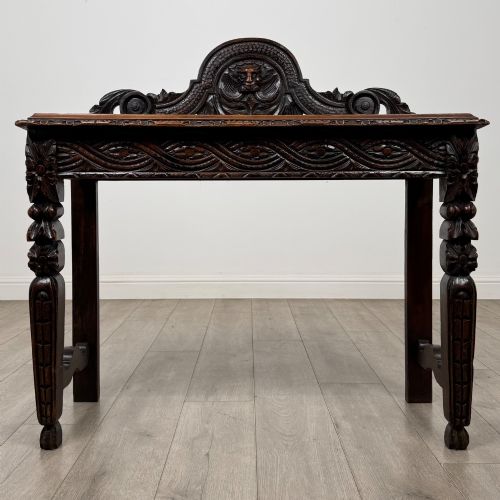
Construction relies heavily on traditional timber framing using pine, oak, mahogany, and birch, often shaped into console tables, side tables, and washstands. Many examples utilise painted wood finishes to achieve the characteristic green surface, occasionally incorporating carved details such as green man motifs.
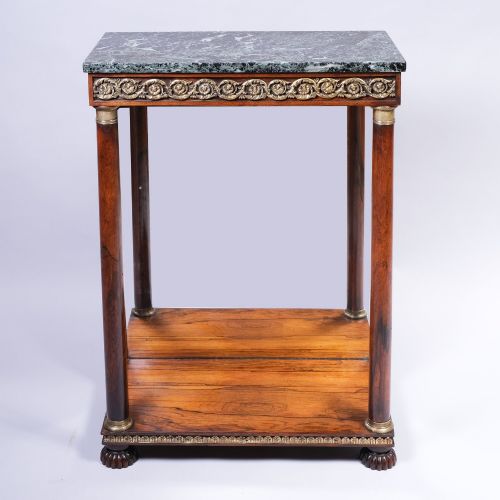
Higher specifications feature inset marble tops and brass mounts, particularly on French Empire and neoclassical revival pieces dating from the nineteenth century. Joinery methods reflect the period of origin, from rustic farmhouse builds to refined cabinet making.
Listings feature pieces spanning the eighteenth century through to the twentieth century, utilising pine, oak, mahogany, marble, and brass.
Distinguishing quality in console tables
Quality rests upon the integrity of the timber frame and the originality of the painted surface, distinguishing provincial utility from formal reception furniture. Heavier pieces with integrated marble tops and refined brass mounts represent a different tier of craftsmanship compared to simpler rustic pine builds.
Proportion and decorative carving also dictate the standing of a console, with crisp execution in oak or mahogany pointing to superior workshop output. The harmony between the painted finish and the underlying wood structure defines the overall success of the piece.
The Antique Green Hallway Console Glossary
- Demi-lune
- A half-moon shaped table designed to stand flat against a wall in a hallway or reception room. These tables often feature painted finishes and multiple legs.
- Dresser base
- A low wooden sideboard fitted with drawers and cupboards, utilised historically for storage and surface display. Examples often appear with painted pine or hardwood construction.
- Washstand
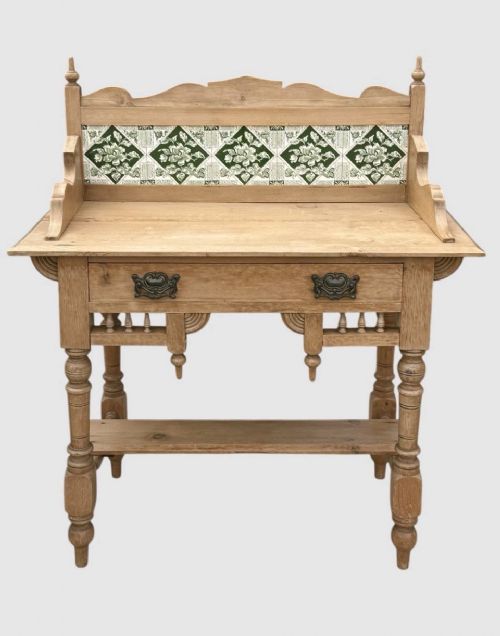
- A freestanding wooden piece designed to hold a wash basin and water pitcher, frequently adapted for modern bathroom or hallway use. They often include marble tops or splashbacks.
- Neoclassical revival
- A stylistic movement drawing inspiration from classical antiquity, featuring symmetrical lines and restrained ornamentation. Console tables from this tradition display formal painted decoration.
- Green man
- A sculptural architectural ornament depicting a human face surrounded by foliage and vines. This motif occasionally appears carved into nineteenth century oak tables.
Antique Green Hallway Console: Frequently Asked Questions
Where should I place a green console table?
These narrow tables suit entrance halls, corridors, and narrow reception spaces where floor area is restricted. Their shallow depth allows them to sit flush against a wall while providing surface area for lamps and daily items.
They also function effectively in dining rooms or bedrooms as serving tables or writing desks, depending on the specific form and drawer configuration.
How do I clean painted wooden furniture?
Dust surfaces regularly with a soft, dry cloth to prevent the accumulation of grit that can scratch the painted finish. Avoid harsh chemical cleaners or excessive water, which can damage historic paint layers and underlying wood.
Wax polish may be used sparingly on unpainted wooden elements, but consult a conservator if the painted surface shows signs of flaking or instability.
What is the difference between a console and a side table?
A console table is traditionally designed to be fixed against a wall or supported by brackets, sometimes featuring two legs at the front with the rear secured to the masonry. Side tables are freestanding pieces equipped with four independent legs designed to stand anywhere in a room.
In modern usage, the terms often overlap, but console tables generally emphasise narrow proportions suitable for hallways.
Are these tables suitable for daily use?
Antique console tables constructed from solid pine, oak, or mahogany remain robust enough for everyday household tasks like holding keys, post, and decorative lamps. Care should be taken with unsealed painted surfaces and marble tops to prevent liquid stains and impact damage.
Using coasters and placemats helps preserve the historic finish during routine daily interaction.