

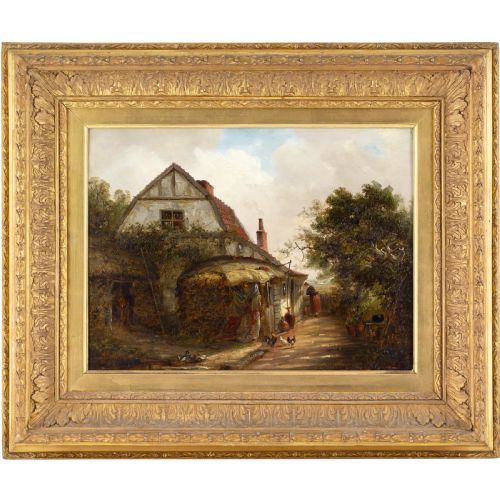
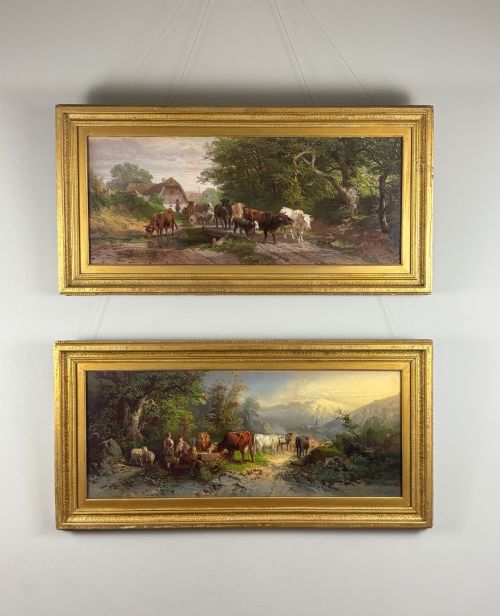
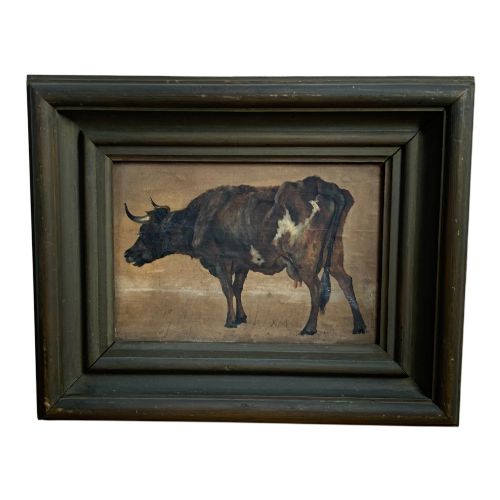
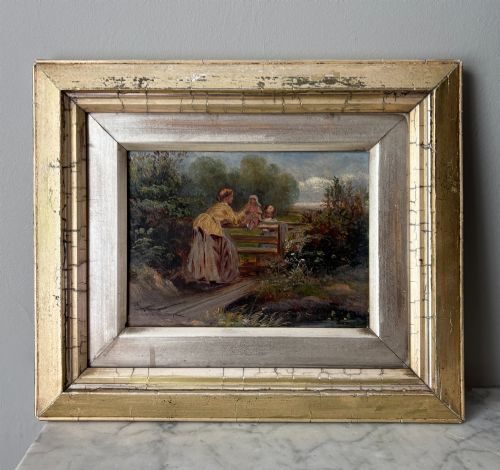
Rustic Oil Artwork
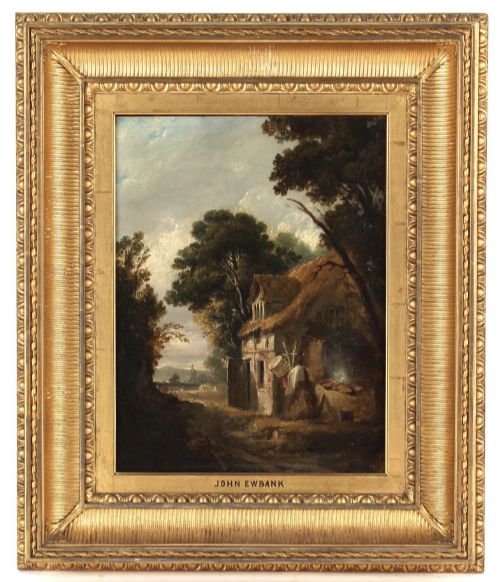
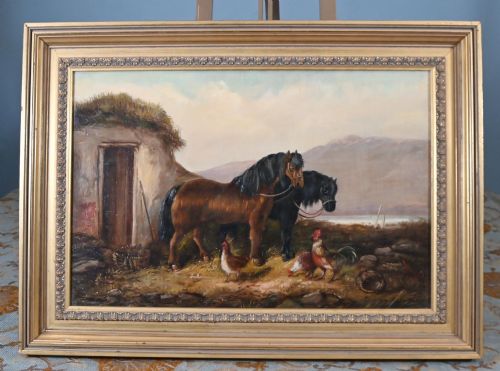
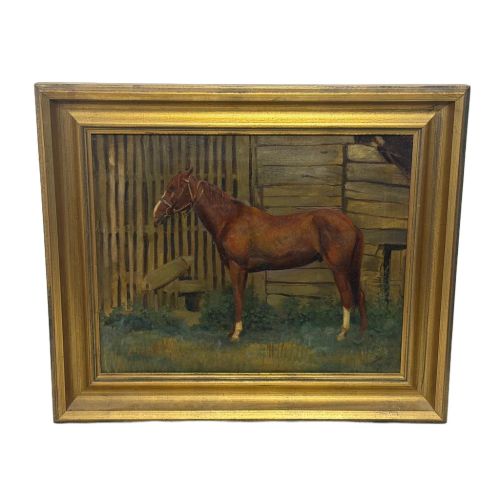
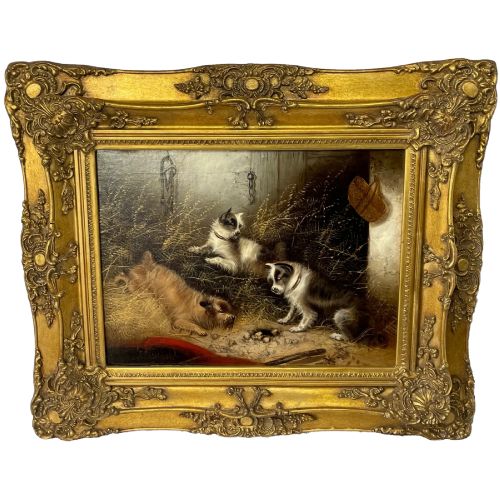
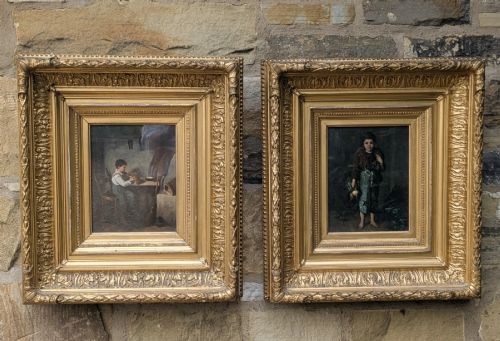
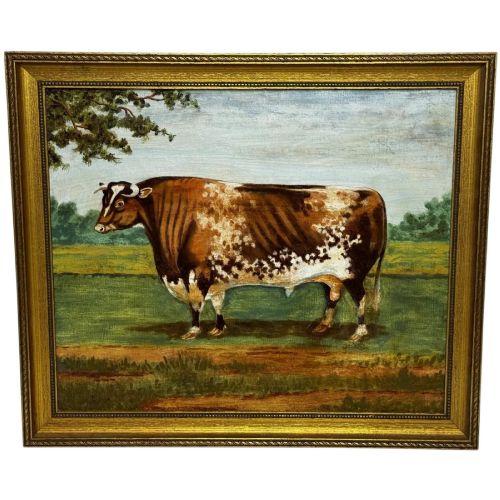
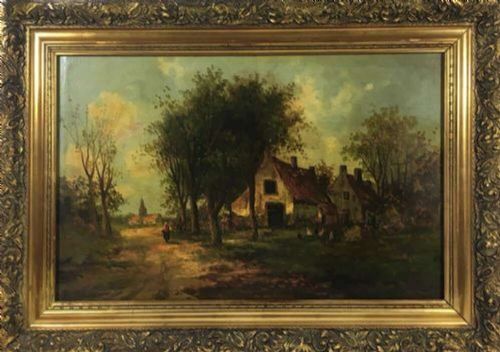
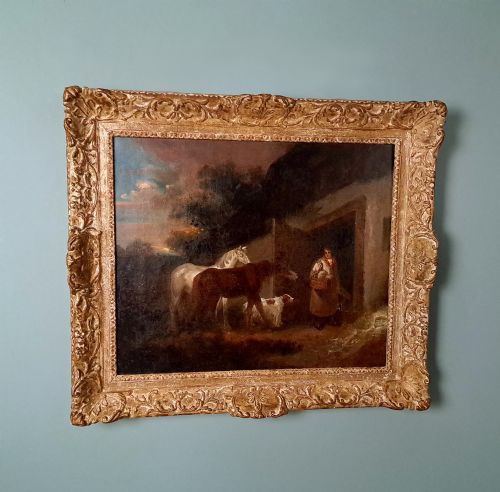
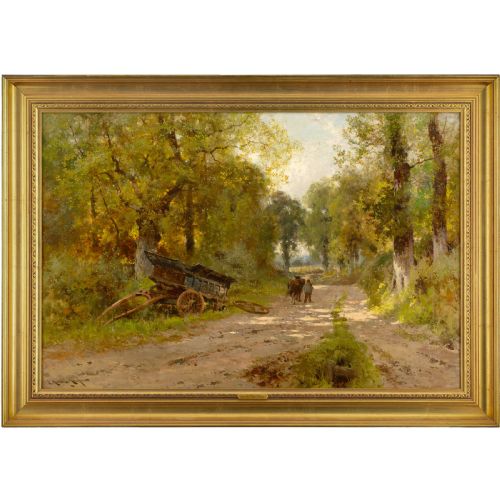
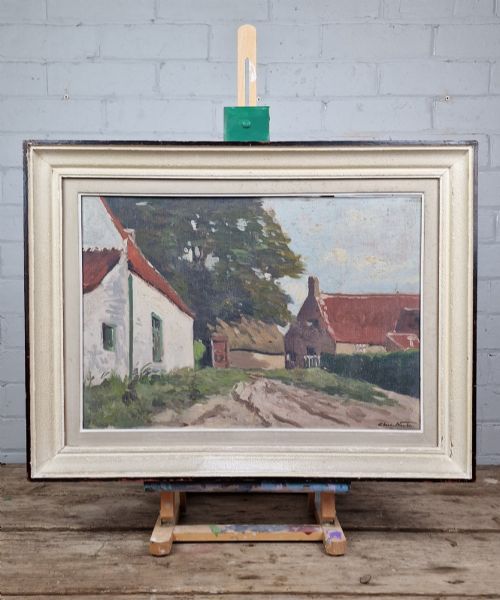
These rustic oil artwork examples bring pastoral life, rural landscape and quiet domestic scenes into focus through historical brushwork.
Rustic Oil Artwork
Rustic oil artwork encompasses traditional oil paintings focused on countryside subjects, farmyard scenes, cottage interiors, and rural animal life. When searching for rustic oil artwork, buyers encounter pieces dating from the eighteenth century through the mid twentieth century, with a strong representation of nineteenth century Victorian works.
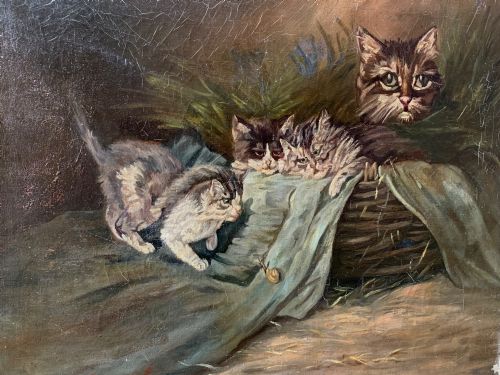
The subjects range from working terriers and prize shorthorn bulls to domestic genre scenes of children and spinning maids in highland cottages. British and continental European schools dominate, capturing provincial naive folk art alongside academic realist traditions.
Materials and Technique
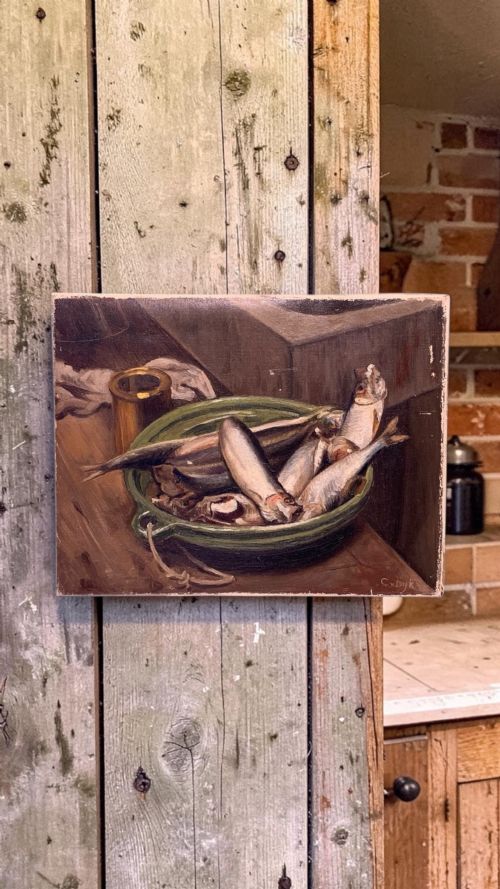
Painters applied oil paint using canvas stretched over wooden frames, or directly onto sturdy wooden panels and oak boards that provided a rigid ground. Frames were frequently constructed from wood, embellished with gesso and finished in gold leaf or giltwood to house the finished composition.
Techniques varied from smooth, detailed nineteenth century realism to broader post impressionist strokes and provincial folk art approaches. Canvases were occasionally laid onto board later in their history to ensure structural stability.
Rustic Oil Artwork Retail Price Guide 2026
Typical asking prices for rustic oil artwork among the pieces listed under this phrase on Sellingantiques today, from the lower quarter to the upper quarter. They describe what is for sale here now, not the wider market.
Watch closely for the occasional observant farmyard cat or working terrier peering out quietly from the corner of a grand nineteenth century landscape.
Factors of Quality
Quality rests in the precision of the draftsmanship, particularly in the anatomical rendering of animals and the expressive detail in human figures. The handling of light, shadow, and atmosphere distinguishes a master composition from a standard provincial piece.
Condition of the oil paint surface and the originality of the accompanying frame contribute significantly to the standing of a piece. Finer works retain their original textural impasto and pigment vibrancy without heavy, intrusive overpainting.
Edward Armfield·John Horace Hooper·William Joseph Shayer Senior·Charles Houben·Edgar Hunt·Harry Brooker·Thomas Hicks
The Rustic Oil Artwork Glossary
- Genre painting
- Depiction of aspects of everyday life by depicting ordinary people engaged in common activities. These works often show domestic interiors, tavern scenes, or farmyards.
- Impasto
- The process or technique of laying on paint or paste thickly so that it stands out from a surface. This technique adds tactile depth to highlights on water, clothing, or animal coats.
- Tondo
- A seventeenth century term for a circular painting or relief. These round formats appear in landscape and portrait compositions.
- Giltwood
- Wood that has been treated with gold leaf or a gold coloured finish. It is commonly found on antique picture frames surrounding these canvases.
Rustic Oil Artwork: Frequently Asked Questions
What subjects appear in rustic oil artwork?
These paintings depict rural landscapes, farm animals, tavern interiors, and cottage life. Common subjects include working terriers, horses, cattle, and people engaged in daily domestic tasks.
Artists drew inspiration from both British and continental European countryside settings, capturing provincial charm and pastoral tranquility through traditional oil paint.
How do I date these antique paintings?
Dating relies on stylistic clues, framing techniques, and the materials used for the support, such as canvas or oak panels. Eighteenth and nineteenth century pieces often display specific dress, architectural details, and painting conventions.
Signatures, dealer inscriptions on the reverse, and historical framing styles also help narrow down the period of creation.
Are these paintings executed on canvas or wood?
Both supports appear frequently across these historical listings. Many works utilise traditional oil on canvas, while others are painted directly onto wooden boards or oak panels.
Panel paintings often provide a very stable surface for detailed brushwork, whereas canvas allows for larger compositions with textured impasto.
How should I care for an oil painting?
Display the artwork away from direct sunlight and sudden humidity changes to protect the oil paint and wooden support. Gentle dusting with a soft, dry brush keeps the surface clear without harming the delicate pigments.
Avoid using liquid cleaners or chemical solvents on the painted surface or the giltwood frame.