


Rustic Oak Kitchen Rack
A rustic oak kitchen rack brings honest utility and centuries of warmth into domestic spaces through enduring timber construction.
Rustic Oak Kitchen Rack
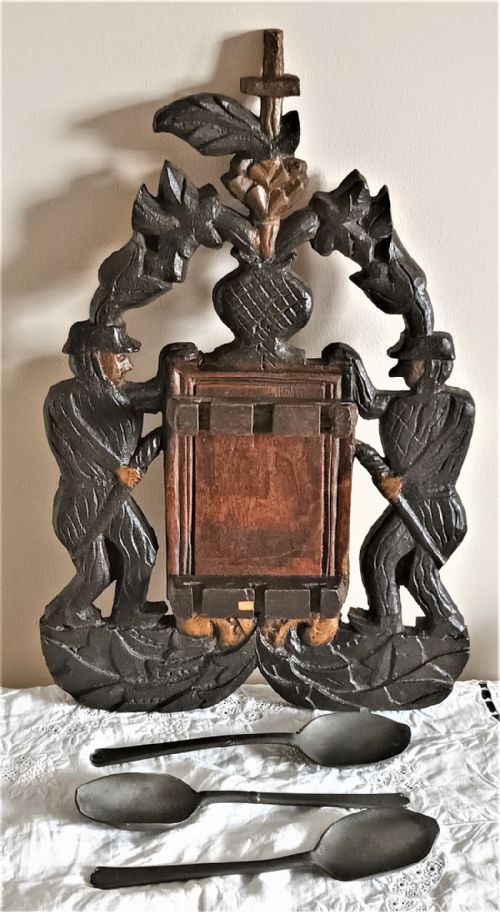
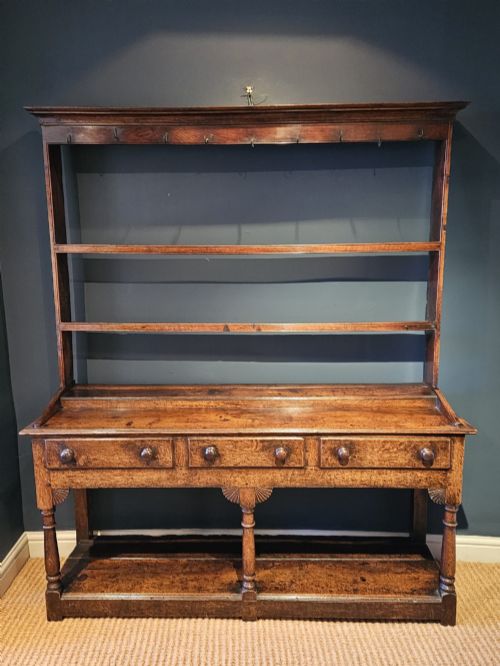
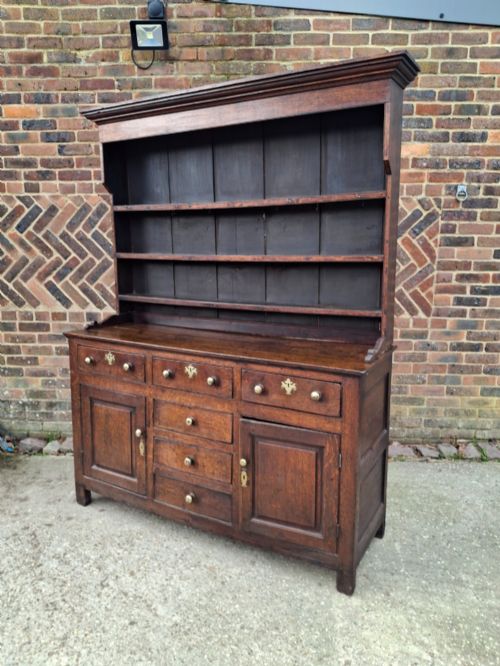
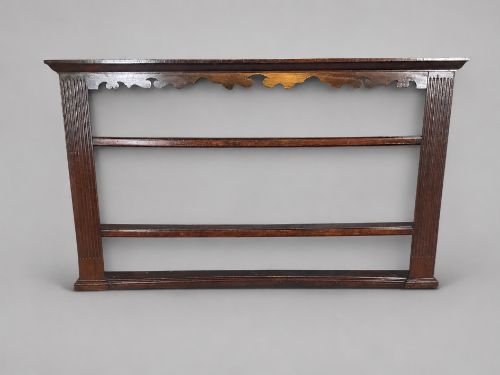
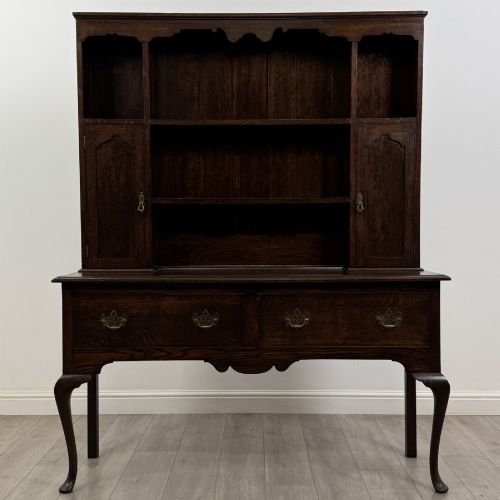
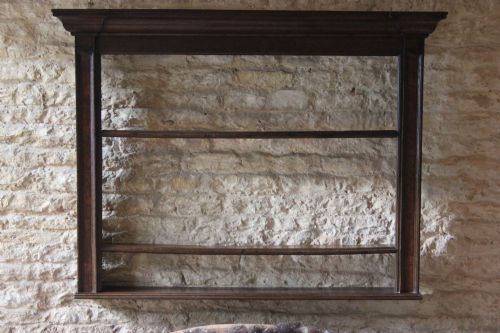
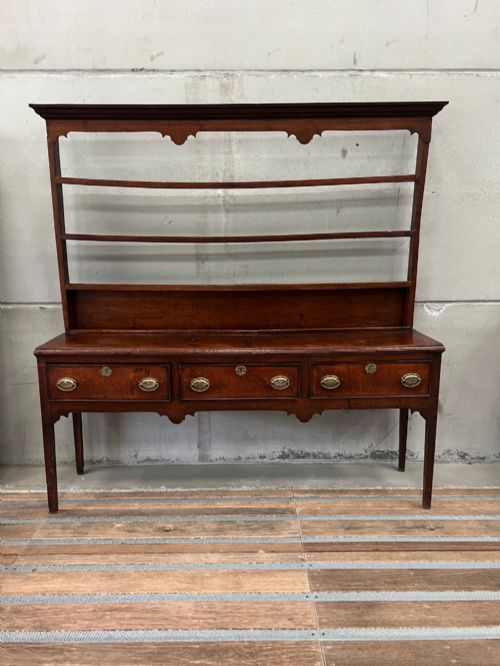
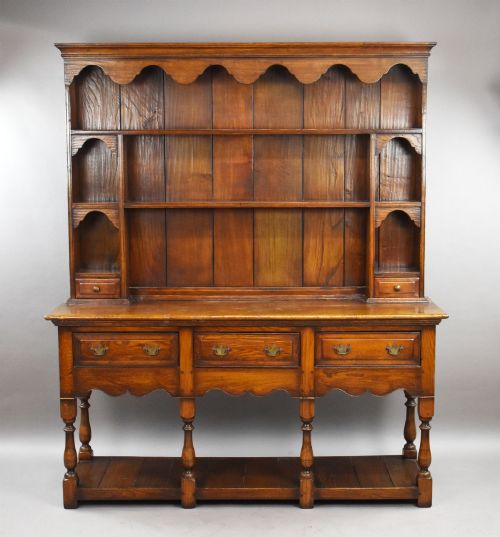
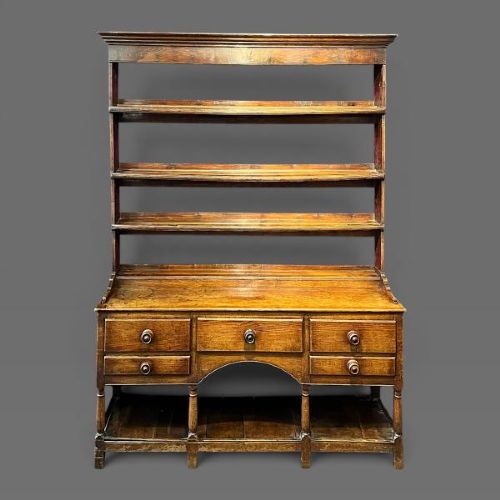
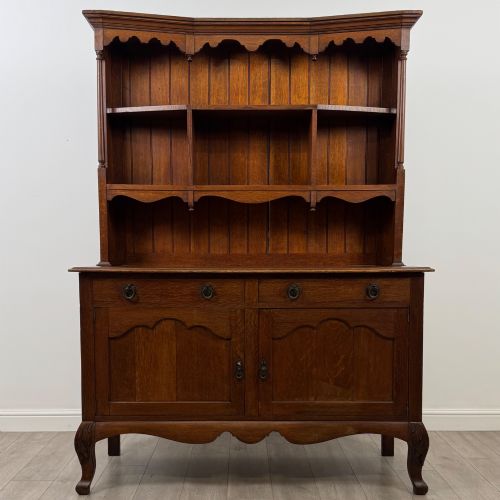
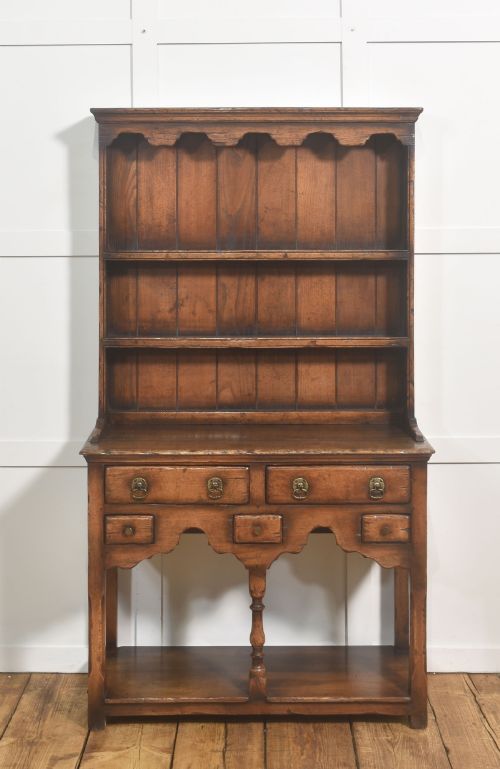
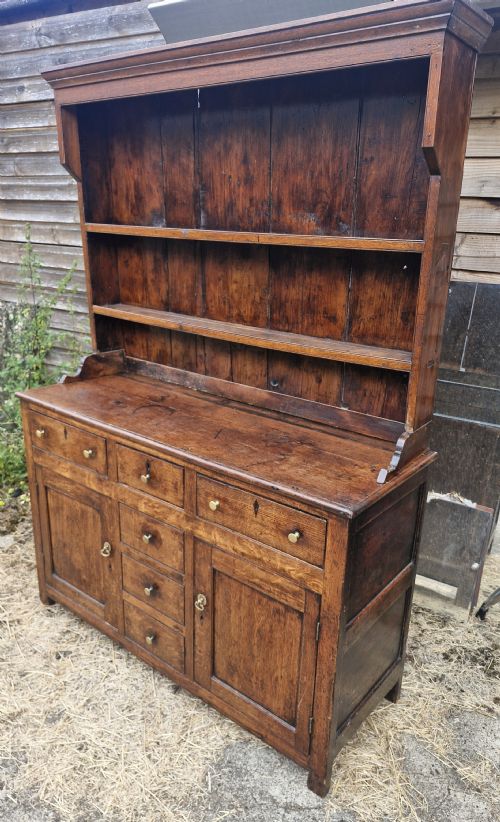
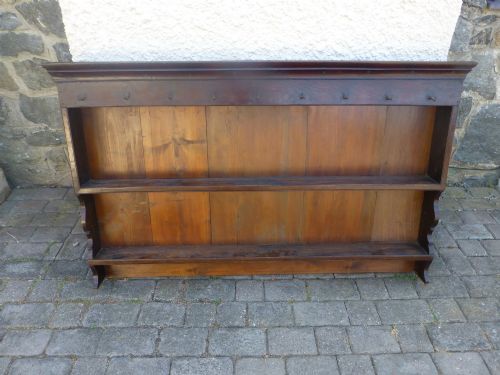
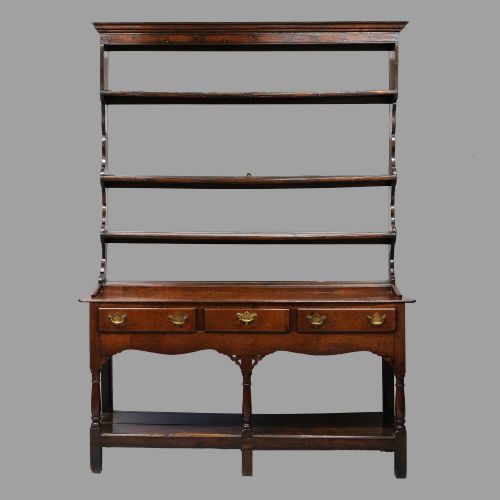
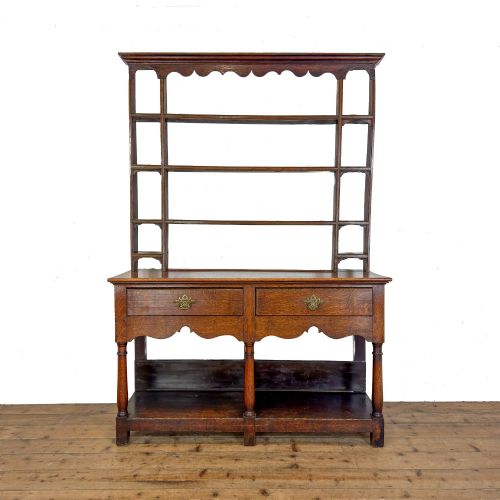
A rustic oak kitchen rack provides sturdy wall storage or forms the upper display section of a traditional Welsh dresser. These pieces originate across the eighteenth and nineteenth centuries, embodying English and Welsh country vernacular traditions.
Buyers encounter standalone plate racks, wall shelves, and spoon racks alongside complete dressers featuring open shelving. The form serves utilitarian purposes for displaying pottery, pewter, and kitchen wares.
Examples span Georgian periods through to Edwardian interpretations and later revivals from the early twentieth century. Native timbers dominate the selection, often complemented by elm, pine, and brass or iron hardware.
How they were made
Local joiners constructed these racks using solid native oak, frequently paired with secondary woods like elm for internal boards or shelves. Workshops relied on traditional pegged joints and hand-planed boards that display the natural grain of the timber.
Hardware details involve forged iron hinges, brass knobs, and pewter accents that indicate period assembly methods. Surfaces developed deep patinas over generations of domestic use and polishing.
Rustic Oak Kitchen Rack Retail Price Guide 2026
Typical asking prices for rustic oak kitchen rack among the pieces listed under this phrase on Sellingantiques today, from the lower quarter to the upper quarter. They describe what is for sale here now, not the wider market.
Listings feature oak alongside elm, pine, and brass hardware across eighteenth and nineteenth-century periods.
What varies in quality
The degree of timber selection and depth of patination separate simpler regional pieces from sophisticated urban or regional masterworks. Cabinets with integrated pot boards and untouched original surfaces reflect superior craftsmanship.
Proportion and structural integrity define the hierarchy among country furniture, where well-balanced shelves and minimal timber replacement preserve historical value.
The Rustic Oak Kitchen Rack Glossary
- Pot board
- A lower slatted shelf fitted between the legs of a dresser base, traditionally used for storing earthenware pots. This feature distinguishes many Georgian and vernacular country pieces.
- Delft rack
- An open wall-mounted shelving unit designed to display plates and ceramic tableware upright. These racks formed a standard fixture in historic kitchens.
- Vernacular
- Architecture and furniture built by local craftsmen using traditional regional methods and native materials without academic high-style pretensions. These objects reflect local domestic requirements.
- Trefid spoon
- An early form of spoon characterised by a lobed terminal and flat stem, often associated with seventeenth and eighteenth-century domestic contexts.
- Breakfront
- A piece of furniture where the central section projects forward from the flanking sections. This configuration adds architectural depth to larger dressers and storage units.
Rustic Oak Kitchen Rack: Frequently Asked Questions
How do I hang a wall rack safely?
Secure the rack directly into structural wall studs using appropriate heavy-duty fixings suited to the weight of solid oak.
Distribute ceramic plates evenly across the shelves to maintain balance and prevent undue strain on the mounting points.
What is a Welsh dresser?
A Welsh dresser combines a lower base of drawers and cupboards with an upper open rack for displaying plates.
This form evolved as central kitchen furniture for storing and showing domestic tableware in country homes.
How do I care for antique oak?
Apply traditional beeswax sparingly to nourish the dry timber and maintain the historic surface sheen.
Keep the wood away from direct heat sources and sudden humidity changes to prevent splitting.
How do I date an oak rack?
Examine the tool marks, construction methods, and timber patination to estimate the period of manufacture.
Hand-sawn boards and pegged joinery typically indicate eighteenth or early nineteenth-century origin.