





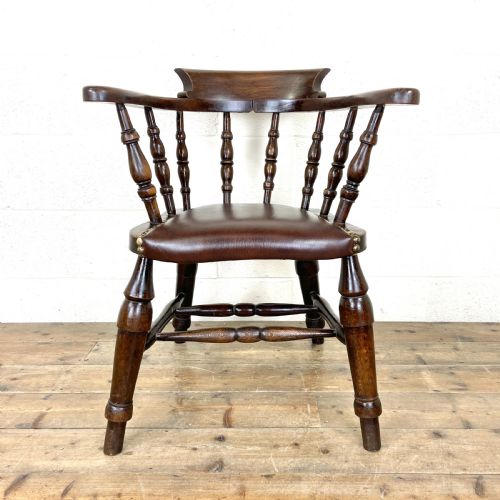
Rustic Leather Seating
Rustic leather seating brings tactile warmth and enduring character to a room through time-worn hides and honest timber frames.
Rustic Leather Seating
Rustic leather seating encompasses a varied selection of stools, armchairs, benches, and dining chairs originating from the nineteenth century through the early twentieth century. When searching for rustic leather seating, buyers encounter robust everyday furniture forms shaped by practical utility rather than formal salon display.
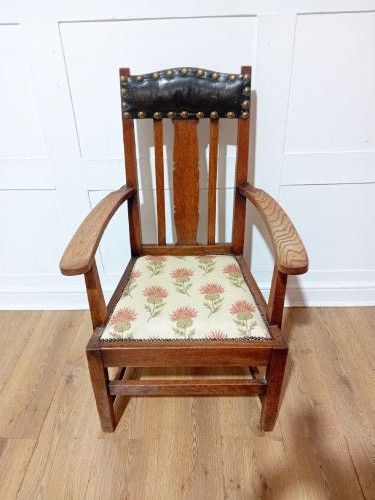
The pieces on this page span diverse cultural traditions and stylistic influences, ranging from English Country and Arts and Crafts designs to Cape Dutch and Spanish Colonial examples. Stools and joint stools appear alongside substantial armchairs, smoking chairs, and complete dining sets.
Makers utilised a wide array of sturdy timbers to build the framework for these leather seats, incorporating oak, pine, yew, elm, stinkwood, and occasional iron or brass details. The integration of hard-wearing hide upholstery with exposed wooden joinery defines the core aesthetic of these durable domestic objects.
Materials and construction
Makers constructed the timber frameworks of these pieces using traditional joinery methods suited to heavy daily use, selecting native hardwoods like oak, elm, and yew alongside regional timbers such as stinkwood. Frames often feature turned supports, ladderbacks, or heavy uprights designed to bear weight securely.
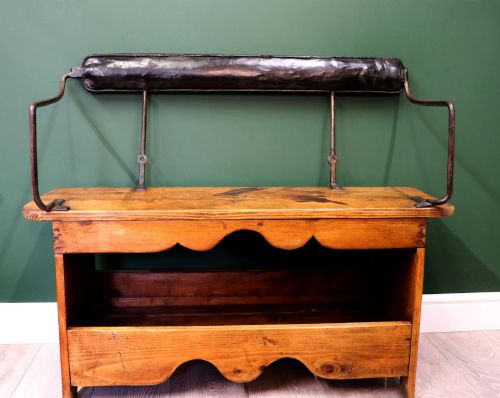
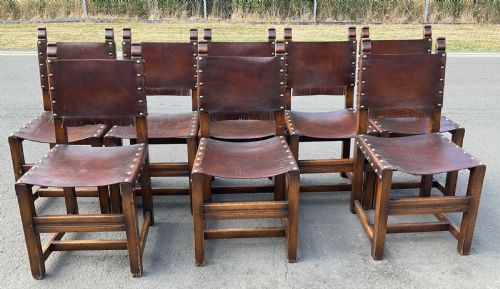
Leather hides were fixed directly to wooden seats or frames, frequently secured with visible brass studs or nails that combined structural holding power with decorative edging. The resulting combination of supple or aged leather with dense timber creates a tactile contrast fundamental to the construction.
Rustic Leather Seating Retail Price Guide 2026
Typical asking prices for rustic leather seating among the pieces listed under this phrase on Sellingantiques today, from the lower quarter to the upper quarter. They describe what is for sale here now, not the wider market.
Listings feature seating spanning the nineteenth century through the 1930s, utilising oak, elm, yew, pine, and stinkwood.
Assessing quality and character
Quality in these pieces rests upon the integrity of the timber frame and the authentic patina of the leather upholstery. Superior examples demonstrate harmonious proportions, solid joint construction, and hides that have aged gracefully through decades of use without losing structural stability.
The relationship between the wooden structure and the leather upholstery dictates the overall success of each piece. Better items maintain original fixings and honest integration of materials, whereas lesser examples may show unsympathetic alterations or diminished structural cohesion in the legs and stretchers.
The Rustic Leather Seating Glossary
- Joint stool
- A sturdy wooden stool constructed with mortise and tenon joints rather than turned legs pegged into a solid seat. These early forms provide stable low seating.
- Smoker's bow
- A low-backed Windsor-style armchair with a continuous curved armrail, commonly fitted with a solid wooden or leather-covered seat for tavern or domestic use.
- Stinkwood
- A dense, durable timber native to South Africa, prized by makers for cabinetwork and seating due to its rich grain and characteristic scent when freshly cut.
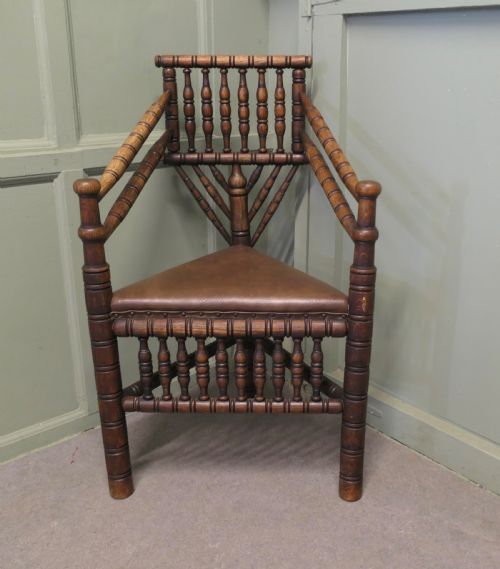
- Turned chair
- A chair formed predominantly of turned wooden spindles and members, creating an intricate geometric framework that supports a simple seat.
Rustic Leather Seating: Frequently Asked Questions
How do I care for antique leather seats?
Keep leather seating away from direct heat sources and strong sunlight to prevent the hide from drying and cracking over time. Regular gentle dusting and occasional specialist leather conditioning help maintain the suppleness of the material.
Avoid applying modern synthetic cleaning products that might alter the historic finish of the hide. Allow the natural patina to show the age and handling of the piece.
Were these chairs meant for dining or relaxing?
The pieces span several functions, including upright dining chairs, fireside armchairs, and low stools for general room use. Dining sets provide matched seating around a table, while armchairs and smoker's bows offer supportive comfort for reading or resting.
Stools and benches serve versatile roles as occasional seats or low surfaces in hallways and living spaces.
How can I tell the period of a wooden frame?
Dating relies upon observing construction techniques, tool marks, and stylistic indicators such as turned spindle profiles or carved details. Pieces from the early nineteenth century often exhibit heavier hand-tooled timber components compared to later Edwardian or 1930s examples.
Comparing the joinery style and wood species helps place the object within its broader Victorian or Arts and Crafts context.
What timber types appear most often?
Oak is the most frequent wood used for framing these chairs and stools, followed by elm, yew, and pine. Regional variations introduce less common materials like South African stinkwood in specific colonial pieces.
The choice of timber usually reflects the local availability and the functional strength required by the maker.