



Rustic Iron Candle Holder
A rustic iron candle holder brings raw, honest weight to a room through centuries of hand-forged metalwork.
Rustic Iron Candle Holder
A rustic iron candle holder is a practical utility object shaped by a blacksmith to hold tallow dips, candles, or rushes for illumination. These pieces bridge utilitarian purpose and domestic history, offering tangible links to pre-electric interiors.
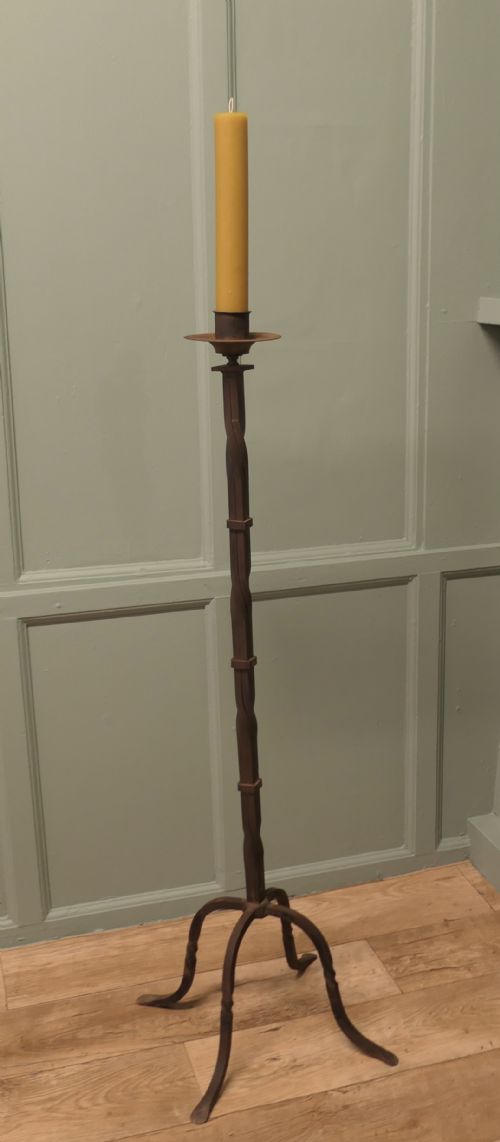
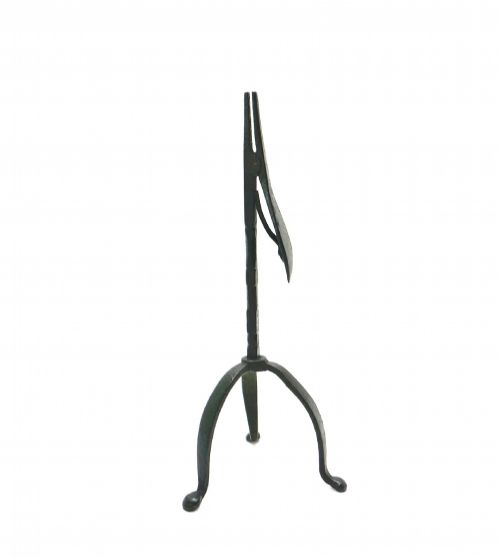
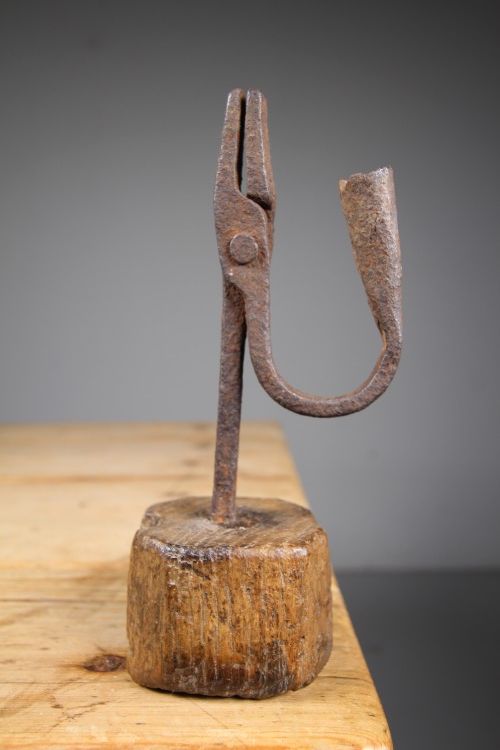
The versions most commonly met on this page date from the eighteenth and nineteenth centuries, spanning Georgian and Arts and Crafts sensibilities. They range from simple benchtop rushnips to tall floor-standing torchères and pivoting spiral candlesticks.
Makers fashioned these holders for daily farmhouses and grander halls alike, utilising durable metals that survived generations of heavy use. Collectors prize them for their unpretentious forms and the heavy tool marks left behind by regional smiths.
How they were made
Blacksmiths hammered and shaped wrought iron while hot over an anvil, using tongs and chisels to create spring actions, tripod bases, and cruciform supports. This labour-intensive process leaves distinct surface textures and hammer ripples across the metal.
Makers occasionally combined iron with wood, hardwood, brass, or glass to add stability or visual contrast to lanterns and torchères. The joints were often riveted, lap-welded, or tenoned directly into timber bases for firm daily placement.
Rustic Iron Candle Holder Retail Price Guide 2026
Typical asking prices for rustic iron candle holder among the pieces listed under this phrase on Sellingantiques today, from the lower quarter to the upper quarter. They describe what is for sale here now, not the wider market.
Many an eighteenth-century blacksmith doubled as the village dentist, which might explain the aggressive spring grip on these rushnip jaws.
What varies in quality
Quality rests in the economy of the smith's design and the integrity of the surviving mechanisms, such as spring-action jaws and pivoting arms. A balanced tripod base and clean, intentional forging lines separate standard utility items from more ambitious architectural pieces.
The purity of the metalwork surface and the presence of original, undisturbed patination dictate the visual success of the piece. Heavy scaling or crude later repairs diminish the historic harmony of the object.
The Rustic Iron Candle Holder Glossary
- Rushlight
- A simple candle substitute made by peeling the pith of a rush and dipping it in animal fat. These were gripped tightly in spring-action metal jaws.
- Rushnip
- An alternative term for a rushlight holder, describing the scissor-like jaws that nip the rush in place. It represents the most basic form of domestic lighting.
- Pricket
- A sharp metal spike upon which a thick candle or torch is impaled to hold it upright. This technique predates hollow socket candlesticks.
- Torchère
- A tall decorative stand designed to support a candle or light fixture at a raised height. These taller pieces often feature sturdy tripod or cruciform bases.
- Spiral candlestick
- A metal candlestick formed with a twisted shaft that often allowed the candle height to be adjusted. The coiled iron displays the dexterity of the blacksmith.
Rustic Iron Candle Holder: Frequently Asked Questions
What is a rushlight holder?
A rushlight holder is a small iron device designed to clamp dried rushes dipped in grease to provide cheap indoor illumination.
These pieces usually combine a heavy base with counterbalanced jaws that squeeze the rush securely at an angle.
How old are these iron holders?
The pieces available here primarily date from the eighteenth and nineteenth centuries, spanning Georgian vernacular and Arts and Crafts periods.
Earlier examples often display complex spring actions and hand-forged tripod legs suited to farmhouse hearths.
Where were these pieces used?
Blacksmith-made iron holders were essential fixtures in rural cottages, farmhouses, and larger country houses before the advent of reliable gas and electric lighting.
Floor-standing torchères and lanterns lit hallways and dark corners, while smaller rushnips sat directly on tables.
How do I care for antique iron?
Keep wrought iron in a stable environment away from damp conditions that encourage rust and flaking metal.
A light application of microcrystalline wax can help protect the historic surface without stripping the original patina.