




Rustic Interior Artwork
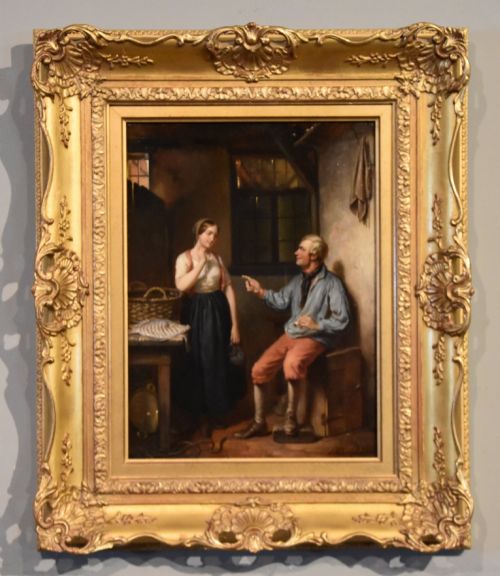
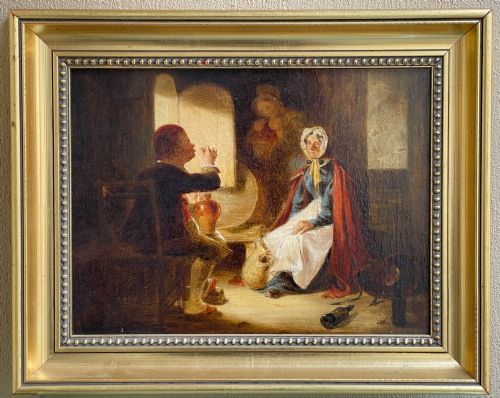
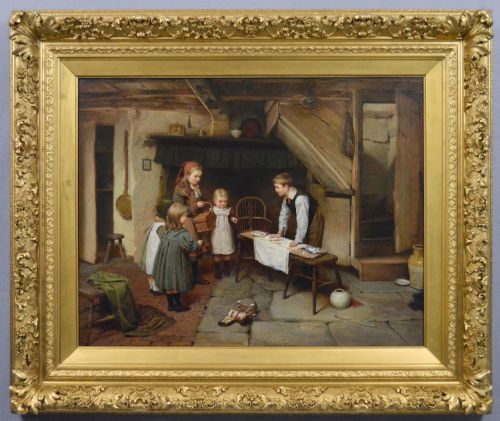
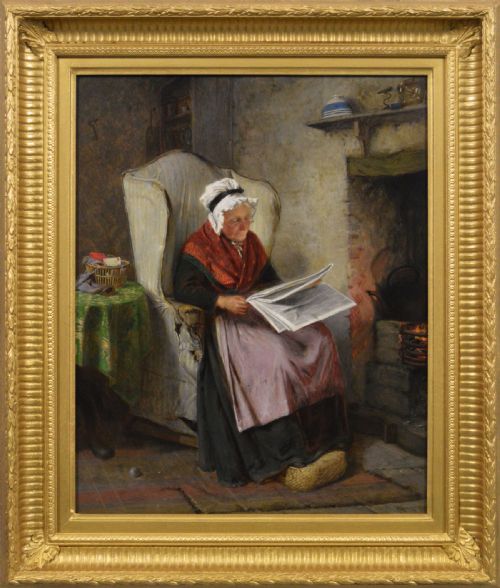
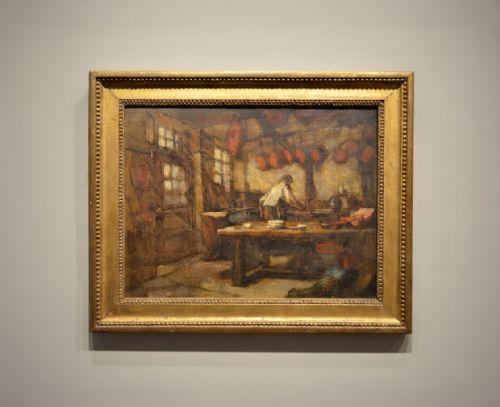
These rustic interior artwork pieces capture domestic cottage scenes and rural life through Victorian oil paintings and watercolours.
Rustic Interior Artwork
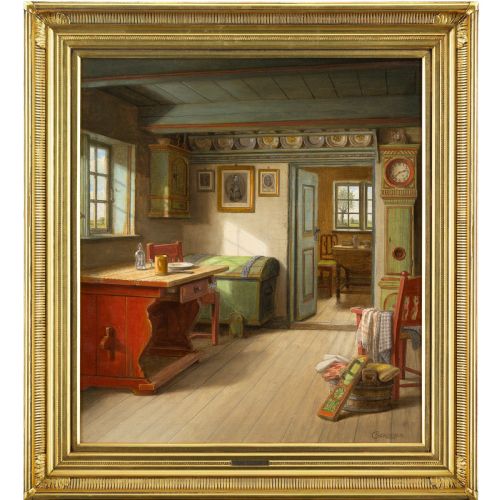
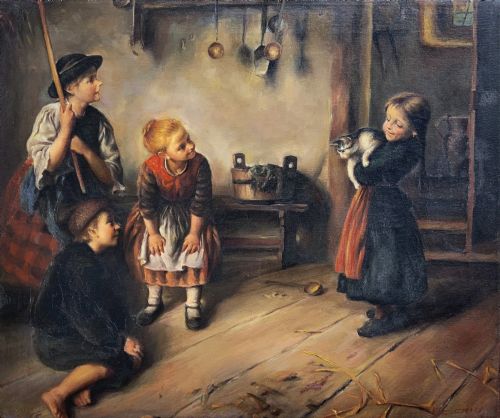
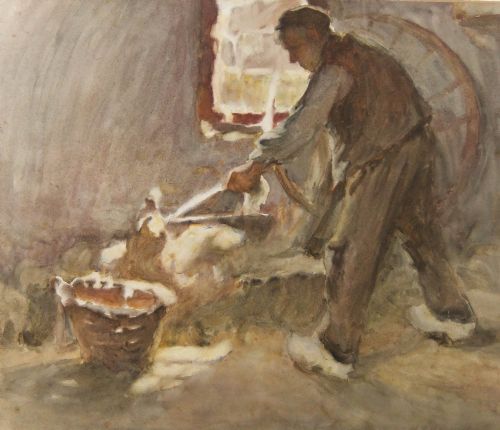
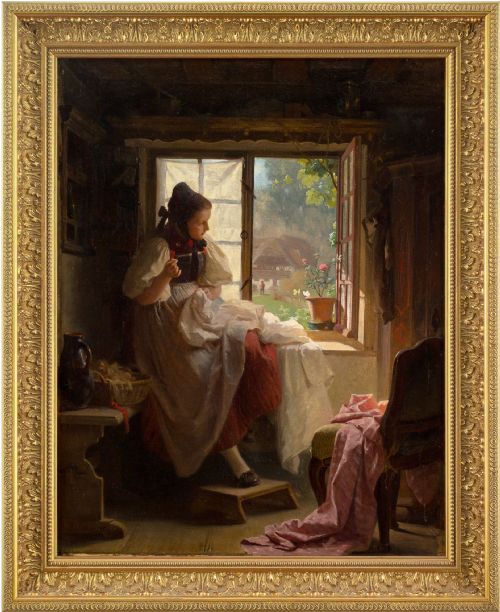
Rustic interior artwork depicts scenes of daily domestic life within cottages, workshops, and farms, capturing moments such as spinning wool, blacksmithing, and family gatherings. These works frequently focus on genre painting traditions, showing figures engaged in quiet household tasks or children playing by the hearth.
The pieces available span from the nineteenth century into the mid-twentieth century, with Victorian examples forming a significant portion of the selection. Alongside British works, the selection includes Dutch, Scandinavian, German, and Italian pieces representing regional domestic settings.
Works appear in various formats, predominantly oil on canvas or panel, alongside watercolour paintings on paper. These range from intimate cabinet-sized portraits to larger framed compositions of farmyards, smithies, and tavern interiors.
Materials and Techniques
Painters utilised oil paint applied to canvas, wood panels, or paper, building layers to achieve depth in dark cottage interiors through chiaroscuro effects. Watercolours on paper also capture lighter domestic scenes with delicate washes and fine detail.
Framing often involves period mouldings such as giltwood, gesso, and burr wood frames that complement the traditional subject matter.
The selection spans Victorian genre painting, Dutch interior traditions, and Scandinavian regionalism executed in oil paint and watercolour.
Assessing Quality
Quality rests in the handling of light and shadow within enclosed spaces, where masterly chiaroscuro directs attention to the central figures and objects. Weaker examples flatten the interior space, whereas superior works render textures of textiles, wood, and stone with distinct fidelity.
The liveliness of narrative detail distinguishes finer genre paintings, evident in the natural postures of figures and the integration of animals such as dogs, pigs, and donkeys within the cottage setting.
C Sørensen·Henry Silkstone Hopwood·Max Kaltenmoser·Jacob Akkersdijk·Harry Brooker·Haynes King·James Kyd·Edwin Thomas Roberts·Thomas Couture·Leonardo Morello·Théophile Emmanuel Duverger·Henry Spernon Tozer·Gustav Goemans·Alfred Provis·Henry Collins·Frank Moss Bennett·Louis Marie Dominique Robbe·Jonathan Pratt·William Shayer Snr·Charles Hunt Jnr·Jan Steen·George Harcourt Sephton
The Rustic Interior Artwork Glossary
- Genre painting
- Depiction of aspects of everyday life by portraying ordinary people contemporary to the artist in everyday scenes. These works tell a story without elevated historical or mythological subjects.
- Chiaroscuro
- The use of strong contrasts between light and dark, usually bold contrasts affecting a whole composition. Painters utilise this technique to create volume in figures and dramatic atmosphere within dark cottage interiors.
- Gesso
- A paint mixture consisting of a white pigment combined with a binding agent used to prepare rigid surfaces like wood panels before painting. It also forms the base for moulded ornament on gilt frames.
- Giltwood
- Wood that has been treated with gold leaf or gold paint for decorative effect. Frames finished in giltwood are common on nineteenth-century oil paintings.
- Watercolour
- Artists' paint made with water-soluble binders and transparent pigments applied to paper. It allows for luminous washes and fine illustrative detail.
Rustic Interior Artwork: Frequently Asked Questions
What subjects appear in rustic interior artwork?
These pieces depict rural life, showing cottage interiors, blacksmiths at work, spinning maids, and children playing by firesides. Domestic animals and farmyard scenes frequently accompany the human figures.
The works record everyday activities from past centuries, offering a window into historical trades and domestic routines across different European regions.
How do I date an antique oil painting?
Dating relies on stylistic clues, costume details of the figures, and the physical composition of the canvas or wood panel support. Nineteenth-century works often show specific Victorian dress and academic painting techniques.
Frame construction and backing materials also provide supporting evidence for the period of the artwork, alongside any artist signatures or inscribed titles.
Where were these painted?
The artists originated from Britain, France, Germany, the Netherlands, Italy, and Scandinavia. They recorded the distinct vernacular architecture and rural dress of their respective regions.
Some works reflect specific regional movements, such as British Impressionism or Dutch genre painting traditions passed down through generations.
How should I display these watercolours?
Watercolours require placement away from direct sunlight to prevent fading of the delicate pigments on paper. Archival framing with acid-free mounts protects the medium from deterioration.
Maintaining stable indoor humidity prevents warping of the paper and preserves the integrity of the original period frames.