




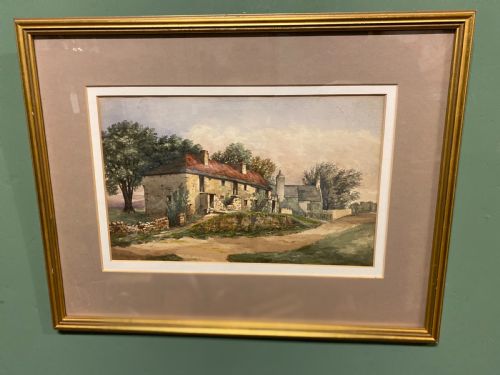


Rustic Farm Picture
These rustic farm picture works capture rural life across centuries, offering collectors authentic glimpses of traditional agriculture.
Rustic Farm Picture
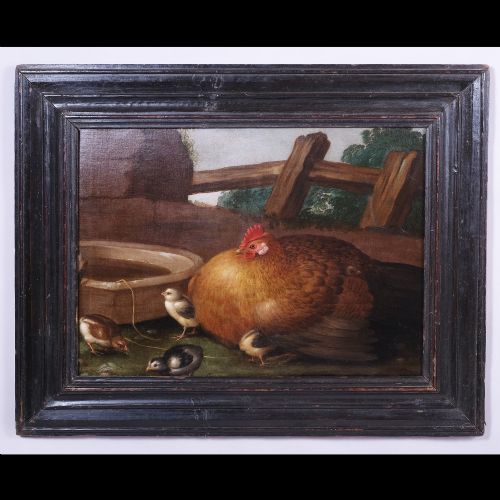
A rustic farm picture brings traditional agriculture indoors, depicting farmyards, livestock, and rural cottages. The selection spans the eighteenth century through to the mid-twentieth century, capturing changing artistic interpretations of the countryside.
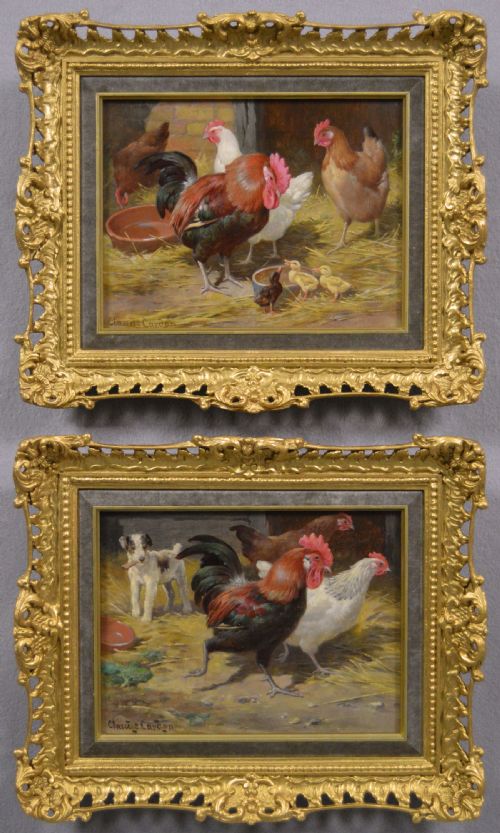
Buyers will encounter oil paintings on canvas and board alongside delicate watercolours and framed prints. These pieces frequently feature chickens, horses, cattle, and farmworkers engaged in daily labour.
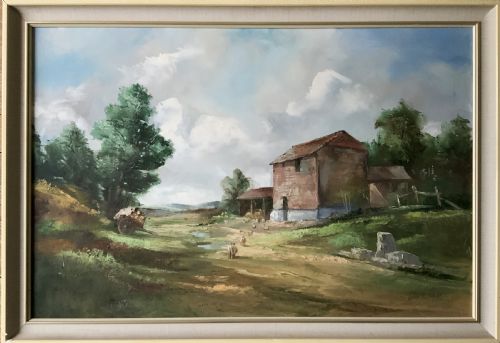
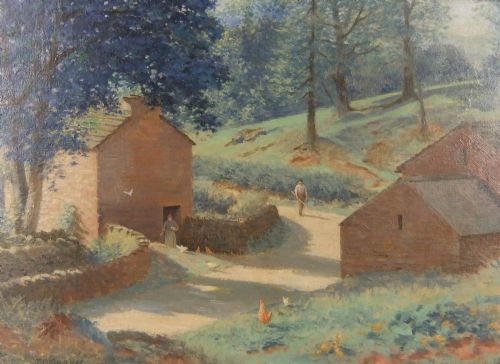
Origins range from British realism and impressionism to continental European scenes and naive folk art. The variety includes intimate watercolours of individual cockerels alongside expansive landscape oils.
Materials and Technique
Artists relied primarily on oil paint applied to canvas, board, or paper, capturing texture with heavy brushwork or delicate washes. Watercolours provided a lighter medium for detailed studies of poultry and country cottages.
Frames play a crucial role in presentation, often utilising gilt wood to complement the painted scenes. Glass protects the watercolours and paper prints from environmental damage.
British realism and impressionism appear alongside continental European and naive school examples within the selection of rural artwork.
Judging Quality
Quality rests on the artist's ability to render animal anatomy and rural light convincingly. Works by listed nineteenth and twentieth-century painters demonstrate superior draughtsmanship compared to anonymous naive pieces.
The integration of the subject matter within its original frame influences the overall integrity of the piece. Handling of oil on canvas requires stable paint layers without extensive cracking.
Claude Cardon·John Atkinson·Percival Glenfern·George Hamilton Constantine·Jack R Mould·T B Garvie·John Falconar Slater·Nora Munro Summers·H Strafford·Fred C Jones·Louis Marie Dominique Robbe·Charles Hunt Jnr
The Rustic Farm Picture Glossary
- Oil on Canvas
- A traditional painting medium where pigments suspended in oil are applied to stretched fabric. This combination allows for rich colour blending and textured brushwork.
- Watercolour
- A painting method where water-soluble pigments are used on paper. It produces transparent layers well suited for delicate rural studies.
- Naive Art
- Artistic work created by a person without formal professional training, often characterised by a childlike perspective and charming simplicity. These pieces offer direct insight into folk traditions.
- Gilt Wood
- Wood that has been covered with a thin layer of gold leaf or metallic gilt paint. It is commonly found on traditional picture frames from the Victorian and Edwardian periods.
Rustic Farm Picture: Frequently Asked Questions
What periods do these paintings cover?
The available artworks span from the eighteenth century through the Victorian and Edwardian eras into the mid-twentieth century. This timeline demonstrates evolving artistic approaches to rural subject matter.
Collectors can trace stylistic shifts from detailed British realism to French art deco and naive folk art interpretations.
How were these rustic artworks originally displayed?
Many paintings are housed in their original gilt wood frames, reflecting the interior tastes of the period in which they were created. These frames were designed to complement the warm tones of farmyard scenes.
Watercolours and prints typically feature glass protection to preserve the delicate paper surfaces from moisture and dust over decades.
What subjects appear most frequently?
Farmyard scenes dominate the selection, featuring domesticated animals such as chickens, cockerels, sheep, cattle, and ponies. Human figures also feature prominently, including farmworkers, milkmaids, and cottagers.
Landscapes with cart sheds, rolling hills, and rural cottages provide the setting for these daily agricultural activities.
How do I care for an oil painting?
Oil paintings require stable indoor humidity and protection from direct sunlight to prevent the canvas from warping and the paint from fading. Dusting should be done gently with a soft, dry brush.
Avoid using liquid cleaners on the canvas or the gilt wood frame to preserve the integrity of the materials.