
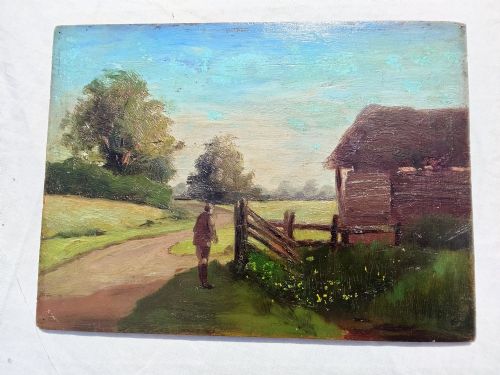


Rustic English Landscape
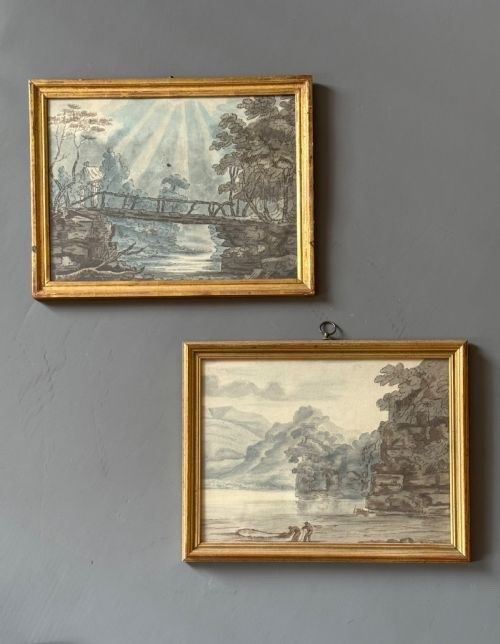
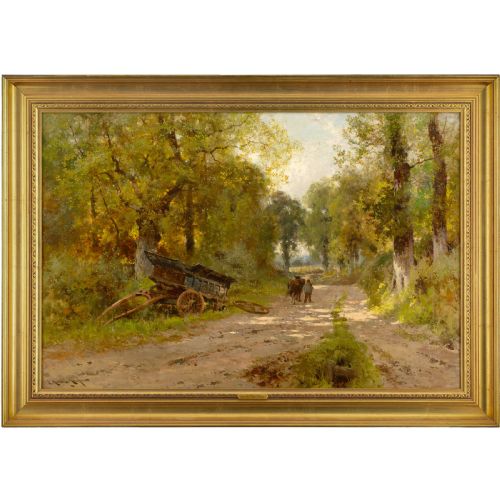
When you search for a rustic english landscape, you are entering a visual world of nineteenth-century countryside scenes, thatched cottages, and farming life.
Rustic English Landscape
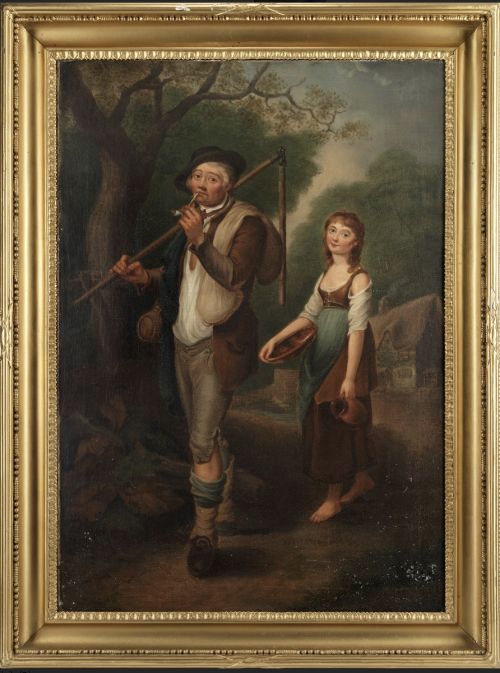
A rustic english landscape brings together oil paintings, watercolours, and gouache works depicting rural settings, farmyards, and pastoral views across Britain. You will frequently encounter nineteenth-century canvases showing rivers, mills, and figures in the countryside.
The selections span from Georgian and Victorian periods into the early twentieth century, capturing changing approaches to British Impressionism and naturalism. These artworks record specific regional views, from Somerset and Devon to Yorkshire and Oxfordshire.
Most examples present framed compositions executed on canvas, wooden boards, or paper. They range from intimate watercolour studies to large oils depicting harvest time and rural dwellings.
How they were made
Painters applied oil paint or watercolour onto prepared canvas, wooden board, or paper supports, often finishing works with gold leaf frames. Some pieces involve canvas later laid onto board to ensure structural stability over time.
Watercolour works utilise pigment washes on paper to capture light and atmosphere in rural scenes, while oil paintings build up rich textures through layered brushwork. Many nineteenth-century works employ traditional framing methods appropriate to their period.
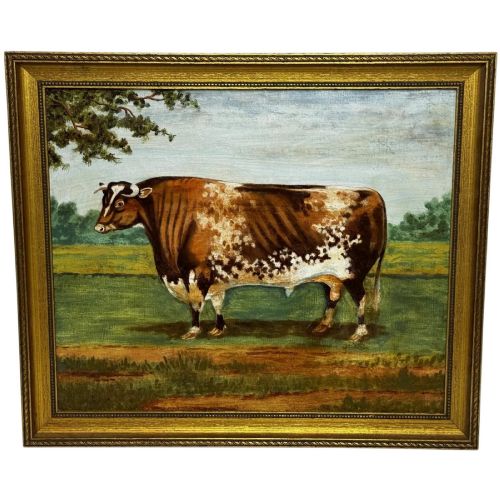
Several canvases faithfully record prize bulls and pet rabbits posing patiently for nineteenth-century artists.
What varies in quality
Quality rests upon the artist's handling of light, depth, and atmospheric perspective within the rural setting. Stronger pieces demonstrate confident brushwork and precise command of tone.
The vitality of the composition and the preservation of the original pigment surface distinguish finer examples from standard decorative works. Framed condition and provenance further elevate individual pieces.
Thomas Barker of Bath·Miles Birkett Foster·George Morland·John Constable·Henry John Yeend King·Abraham Hulk Junior·Ernest Higgins Rigg
The Rustic English Landscape Glossary
- Oil on Canvas
- A painting medium where pigments bound in drying oil are applied to stretched fabric. This technique allows for rich colour blending and texture.
- Watercolour
- A painting method where water-soluble pigments are applied to paper. It creates luminous, transparent effects favoured for topographical and pastoral views.
- Gouache
- An opaque water-based paint that includes a white pigment to create solid, matte areas of colour. It offers greater coverage than traditional watercolour.
- British School
- A term used to describe artists working within the British tradition of painting. It encompasses various regional and stylistic movements from the eighteenth century onwards.
- Provenance
- The documented history of a painting's ownership and origin. It helps verify the authenticity and background of an artwork.
Rustic English Landscape: Frequently Asked Questions
How do I identify a Victorian landscape?
Victorian landscape paintings often feature narrative elements like farm animals, cottages, or figures engaged in daily rural labour. They typically display naturalistic palettes and detailed brushwork characteristic of the period.
You can also examine the framing and stretcher bars, which often correspond to nineteenth-century workshop practices. Signatures and dates, where present, help confirm the exact decade of execution.
What is the difference between oil and watercolour?
Oil paintings utilise pigments suspended in drying oil on canvas or wood boards, allowing for heavy texture and deep, layered colours. Watercolours employ water-soluble pigments on paper to achieve a lighter, more translucent effect.
Oils were generally chosen for major finished works intended for grand frames, while watercolours often captured direct studies or detailed regional views.
How should I care for an antique painting?
Keep antique artworks away from direct sunlight and areas prone to high humidity or rapid temperature changes. Stable indoor environments prevent the canvas or wooden board from warping.
Dust frames and glass gently with a dry, soft cloth, but avoid touching the painted surface directly. Professional conservators should handle any cleaning or restoration work.
Where were these rural scenes typically painted?
Artists travelled across English counties such as Yorkshire, Somerset, Oxfordshire, and Devon to record local countryside views. Rural backdrops included rivers, mills, farmyards, and thatched cottages.
These locations reflected a growing artistic interest in pastoral life and naturalism during the nineteenth and early twentieth centuries.