
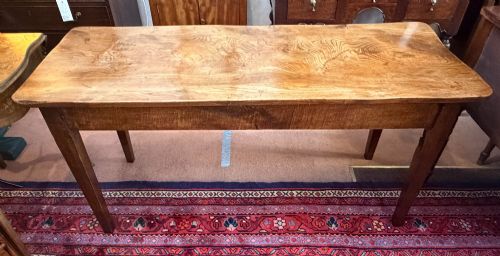
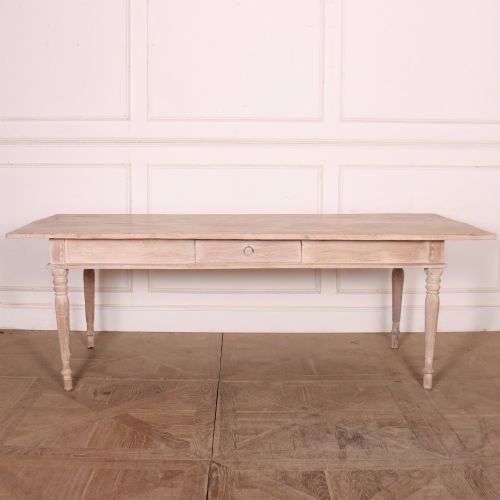
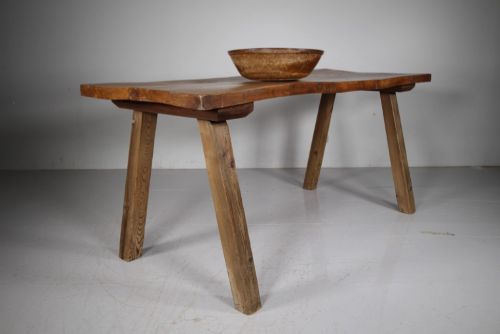
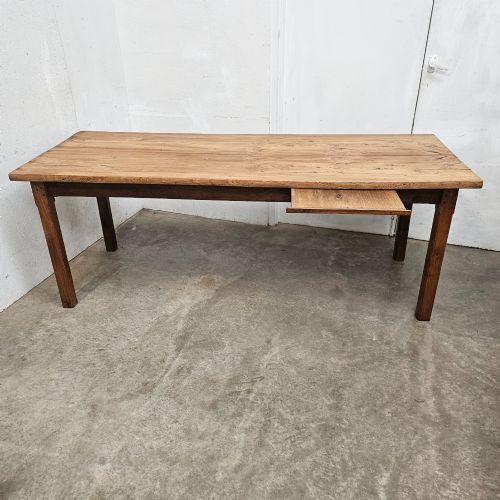


Rustic Elm Kitchen Table
A rustic elm kitchen table brings hard-wearing timber character and generous proportions into the heart of a home.
Rustic Elm Kitchen Table
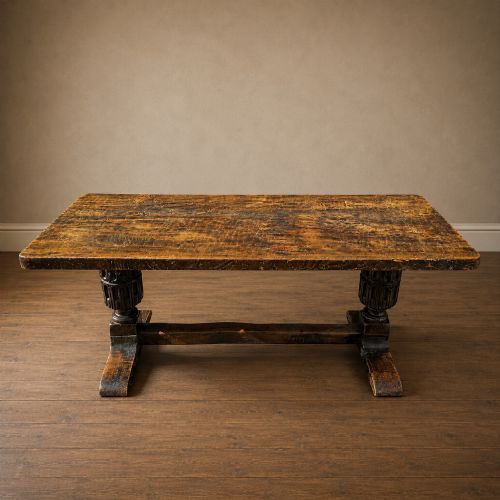
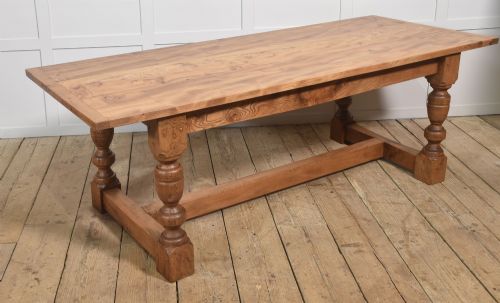
A rustic elm kitchen table is a utilitarian dining or work surface rooted in country house traditions. When you search for a rustic elm kitchen table, you encounter pieces spanning from the seventeenth century through the Victorian era.
Most examples appearing here belong to the nineteenth century, taking the form of traditional farmhouse or refectory dining tables. These practical objects frequently feature regional characteristics such as French provincial styling or English country vernacular details.
Makers constructed these surfaces for daily domestic labour or communal dining. Alongside standard four-legged formats, the selections include trestle tables, chopping blocks, and single-drawer variations.
How they were made
Cabinet makers and local joiners utilised native hardwoods, pairing elm tops with oak, pine, or sycamore frames. Elm proved ideal for table surfaces due to its interlocking grain, which resisted splitting under heavy daily use.
Many historical examples utilise robust single-plank or two-board tops joined to sturdy structural timber bases. Some pieces incorporate secondary materials like metal reinforcement or drawers integrated into the apron.
The archive and active inventory include diverse regional forms such as French provincial chopping blocks and English country refectory tables.
What varies in quality
Quality rests upon the integrity of the timber top and the balance of the underlying structure. Tables fashioned from single thick planks of elm command greater attention than those assembled from multiple smaller boards.
The proportion between the top and the supporting legs dictates visual success. Surviving examples that retain their original unblemished scrubbed finish or honest patination demonstrate superior historical value.
The Rustic Elm Kitchen Table Glossary
- Refectory table
- A long dining table traditionally used for communal meals. These long formats often feature stretchers close to the floor for added stability.
- Trestle table
- A table supported by two or more vertical frames connected by a horizontal beam. This construction method allows for unobstructed legroom along the length of the top.
- Chopping block
- A heavy, thick-topped work table designed for food preparation. These utilitarian objects often display surface wear from intensive historical use.
- Plank top
- A table surface constructed from wide boards joined edge to edge. Single plank variations are particularly prized for their uninterrupted grain pattern.
- Apron
- The wooden framework beneath the tabletop that connects the legs and provides structural rigidity. Some variations incorporate integrated storage drawers within this zone.
Rustic Elm Kitchen Table: Frequently Asked Questions
How do I clean a rustic elm top?
Maintain the surface using a dry cloth or a slightly damp sponge with mild soap. Avoid harsh chemical cleaners that strip the historic patination.
Treat the timber periodically with natural oils or beeswax to prevent the wood from drying out while preserving the tactile grain.
Can I use these daily for dining?
These pieces were originally built for heavy domestic labour and communal meals. Their sturdy construction makes them well-suited for everyday family life.
Use coasters and placemats to protect the historic timber from excessive moisture and thermal shock while enjoying their utility.
How do I date a kitchen table?
Examine the construction methods, tool marks on the underside, and the wood species combination. Hand-cut joints and timber shrinkage indicators point towards earlier periods.
Compare the leg turnings and apron profiles against documented regional vernacular styles from the seventeenth through nineteenth centuries.
Are these tables completely solid elm?
Makers frequently combined timber species for structural reasons. While the prominent tabletops are typically solid elm, the base frames often utilise oak, pine, or sycamore.
This mixed-timber construction is entirely traditional for country farmhouse furniture and reflects the materials available to local joiners.