

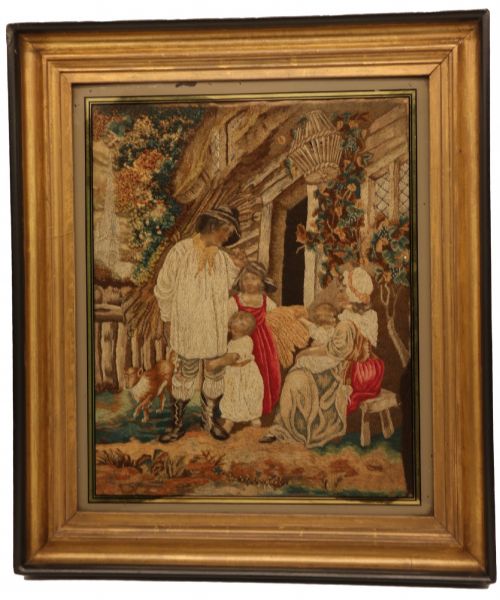


Rustic Country Picture
A rustic country picture brings rural landscapes and farmyard scenes into a room, offering quiet views of cottages, fields and livestock.
Rustic Country Picture
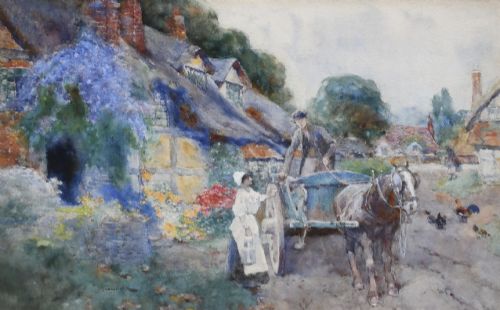
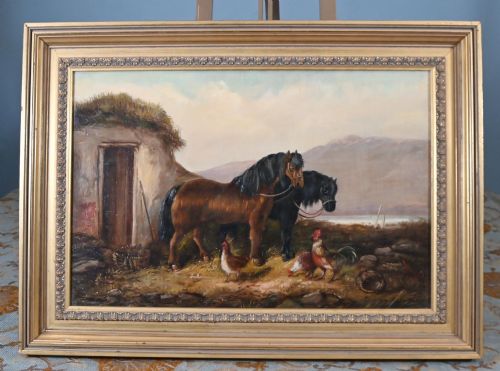
A rustic country picture captures pastoral scenes, farmyard animals and thatched cottages through oil paintings, watercolours and framed prints. These works span the eighteenth, nineteenth and twentieth centuries, reflecting rural life across British and European communities.
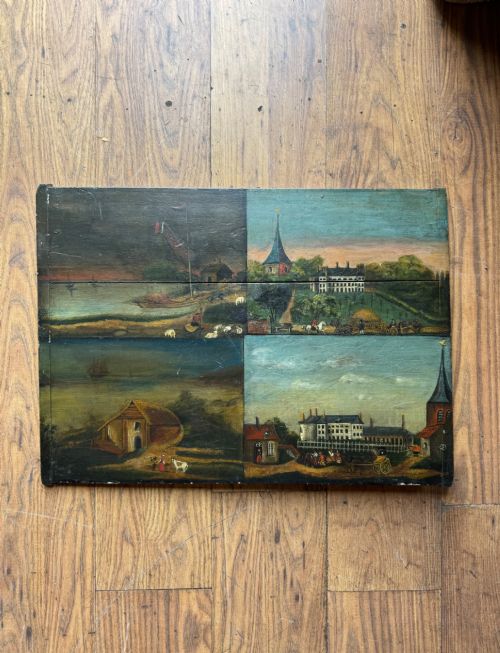
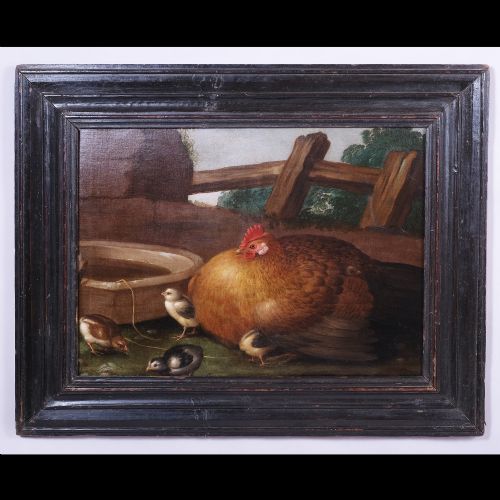
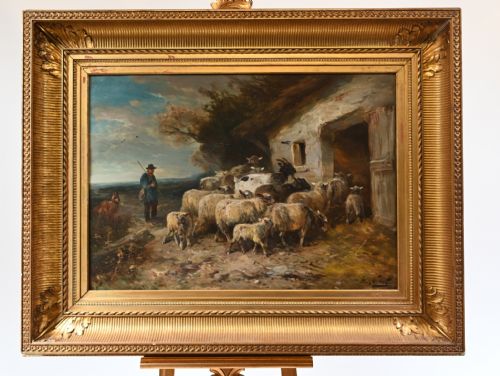
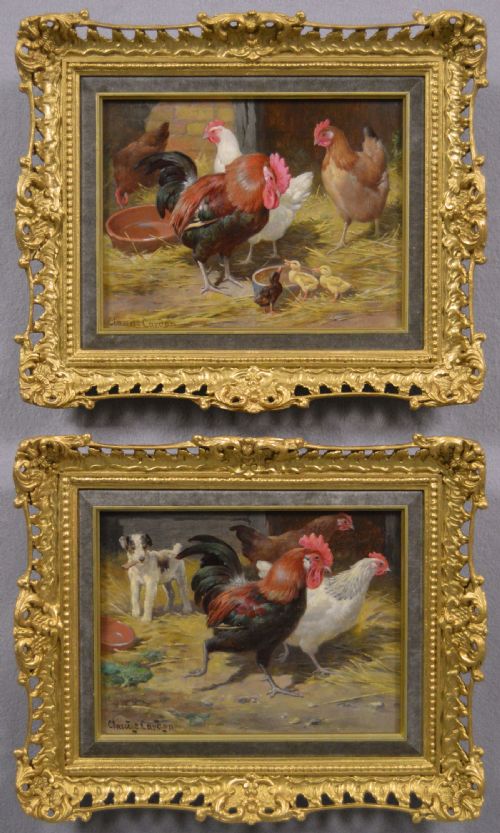
The selections on this page rely heavily on nineteenth-century and early twentieth-century examples, alongside select eighteenth-century pieces and mid-century works. Buyers encounter depictions of sheep, chickens, farmworkers and village lanes rendered with traditional realism and naive charm.
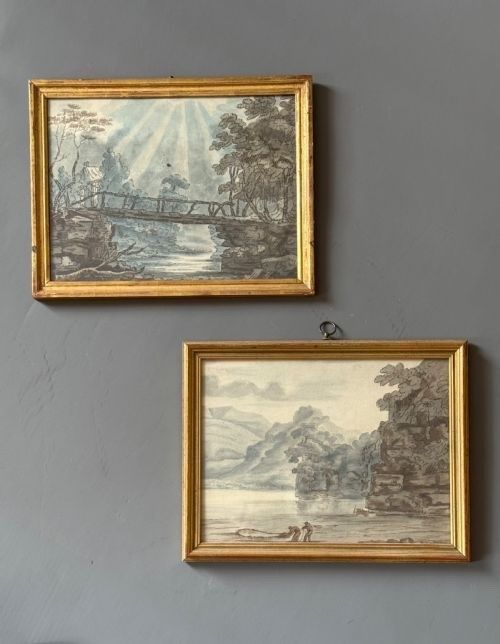
Subjects range from tranquil river streams and harvest fields to intimate depictions of farm animals and domestic poultry. These artworks bring historical rural imagery into contemporary spaces through traditional framing and varied artistic hands.
Materials and Techniques
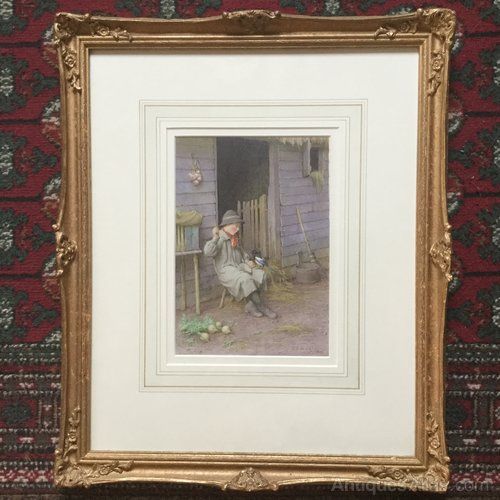
Artists painted these rural scenes using oil paint on canvas or board, alongside delicate watercolours and gouache on paper. Canvases provide rich texture for layered oils, while watercolours rely on fluid washes to capture atmospheric light in landscapes.
Many works incorporate traditional handmade paper, hand-painted silk and needlework elements to add texture and detail. Finished artworks are housed in period frames made from wood, often featuring burr wood finishes or gold leaf detailing.
Rustic Country Picture Retail Price Guide 2026
Typical asking prices for rustic country picture among the pieces listed under this phrase on Sellingantiques today, from the lower quarter to the upper quarter. They describe what is for sale here now, not the wider market.
Listings feature works spanning the eighteenth, nineteenth and twentieth centuries, created in oil, watercolour, gouache and lithography.
Quality and Execution
Quality rests in the precision of the brushwork and the naturalism of the composition, distinguishing skilled academic output from simpler folk art. Master painters capture light, shadow and anatomy with convincing depth, particularly in depictions of livestock and human figures.
The integrity of the original materials, from stable canvas grounds to well-preserved watercolours without excessive fading, dictates the enduring visual strength of the piece. Period framing matching the age of the artwork adds cohesion and historical completeness.
Henry Schouten·Claude Cardon·Charles Edward Wilson·John Henry Dell·William Manners·George Hamilton Constantine·Walter Henry Sweet·Thomas Nicholson Tyndale
The Rustic Country Picture Glossary
- Oil on Canvas
- Pigments mixed with drying oils applied to a stretched cloth support. This technique allows for rich colour blending and textured impasto surfaces.
- Watercolour
- Pigments suspended in a water-soluble vehicle applied to paper. It creates transparent washes that capture light and delicate atmospheric effects.
- Folk Art
- Artistic work created by people without formal academic training. These pieces emphasise expressive narrative and direct observation over strict academic rules.
- Gouache
- An opaque watercolour paint containing pigment and a binding agent mixed with white. It produces solid matte colour fields with greater opacity than standard watercolours.
- Lithograph
- A print made from a stone or metal plate using a process based on the repulsion of oil and water. It enables multiple faithful reproductions of an original drawing.
Rustic Country Picture: Frequently Asked Questions
What subjects appear in rustic country pictures?
These artworks typically show farmyards, cottages, shepherds with sheep, poultry and rural village lanes.
Scenes range from quiet riverbanks and harvest fields to daily agricultural labour and domestic farm animals.
How do I date an antique rural painting?
Dating relies on the style of clothing, framing methods, canvas preparation and artist signatures where available.
Examining the backing boards, paper types and pigment characteristics provides further clues to the period of creation.
Where should I hang a country landscape?
These pieces suit living rooms, dining spaces and hallways where traditional decor benefits from natural scenery.
Keeping them away from direct sunlight protects watercolours and oils from fading or temperature-induced cracking.
What is the difference between oils and watercolours here?
Oils use heavy paint on canvas or board to build rich textures and deep colour saturation over time.
Watercolours use transparent pigments on paper under glass, offering lighter and more luminous depictions of countryside light.