




Rustic Cottage Interior Art
These rustic cottage interior art pieces capture domestic scenes of hearth and home, offering a glimpse into rural life through period paintings.
Rustic Cottage Interior Art
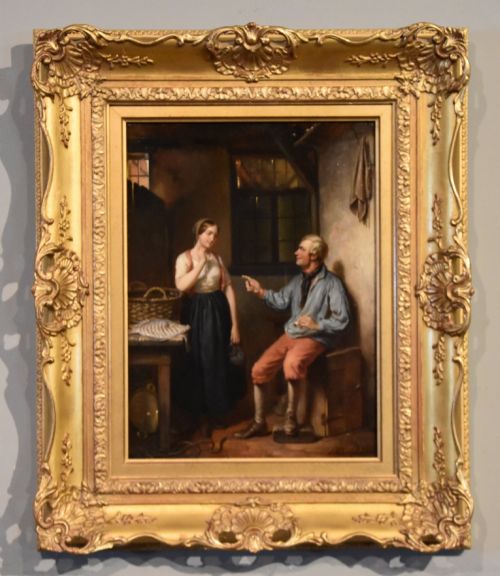
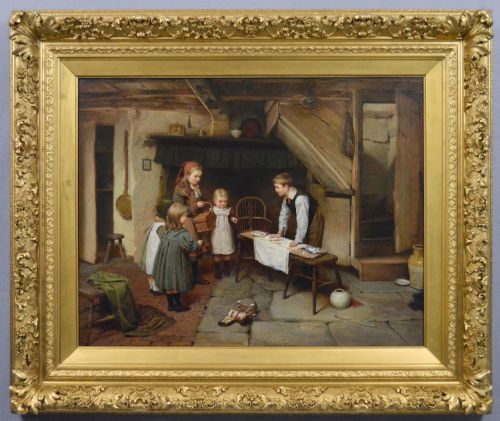
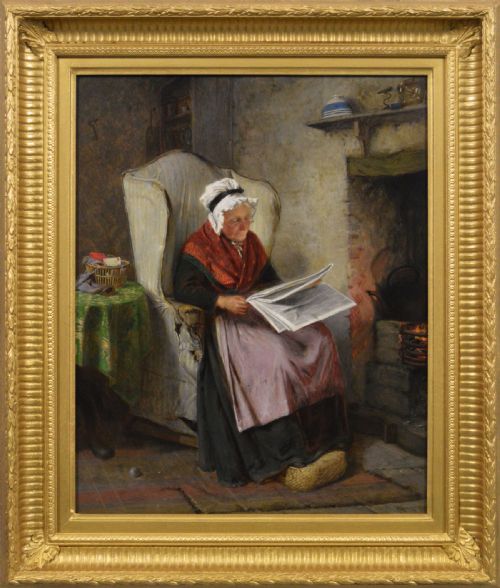
Rustic cottage interior art brings domestic scenes of rural life into view, capturing everyday moments inside period homes. The works span from the Victorian era through the mid-nineteenth century and into the early twentieth century.
Most examples take the form of oil paintings on canvas or panel, alongside occasional watercolours. They depict figures engaged in quiet daily tasks, children playing, or elderly residents resting by the fireside.
Origins stretch across Britain, the Netherlands, and Germany, reflecting diverse regional approaches to genre painting. Buyers encounter Victorian genre realists alongside Northern European masters who focused on peasant life and cottage interiors.
Materials and construction
Painters relied principally on oil paint applied to stretched canvas or wooden panels, building up rich layers of colour and shadow. Watercolour on paper appears in works from the Edwardian period.
Frames frequently incorporate gilt wood, gold leaf, and gesso embellishments, complementing the warm tones within the painted scenes. These original surrounds help define the visual weight of each piece.
Rustic Cottage Interior Art Retail Price Guide 2026
Typical asking prices for rustic cottage interior art among the pieces listed under this phrase on Sellingantiques today, from the lower quarter to the upper quarter. They describe what is for sale here now, not the wider market.
Materials recorded in the archive include gesso, gold leaf, giltwood, canvas, and wood.
Distinguishing quality
Execution of light and shadow dictates the visual strength of a composition, particularly where chiaroscuro defines the warmth of a cottage hearth. Finer pieces demonstrate careful handling of facial expressions and domestic objects.
The integration of multiple figures and animals within confined interior spaces demands high technical skill from the artist. Stronger works balance complex domestic narratives without crowding the canvas.
Jacob Akkersdijk·Harry Brooker·Haynes King·James Kyd·Henry Spernon Tozer·Alfred Provis·Henry Silkstone Hopwood·Jonathan Pratt·Charles Hunt Jnr
The Rustic Cottage Interior Art Glossary
- Genre painting
- Depictions of everyday life and ordinary people engaged in familiar activities. This style forms the foundation of most interior cottage scenes.
- Chiaroscuro
- Strong contrasts between light and dark to give a sense of volume in modelling three-dimensional objects and figures. Artists used this technique to accentuate the glow of cottage firesides.
- Gesso
- A paint mixture consisting of a binder mixed with chalk, pigment, or plaster used in framing. It provides a smooth surface for gilding.
- Oil on panel
- A painting executed on a flat wooden board rather than canvas. This substrate offers a rigid surface favoured by many nineteenth-century artists.
Rustic Cottage Interior Art: Frequently Asked Questions
What periods do these paintings cover?
The available selection spans from the mid-nineteenth century through the Edwardian era up to nineteen fifty. Victorian and late nineteenth-century examples dominate the offerings.
Dates are established through stylistic evidence, artist signatures, and framing methods typical of specific decades.
How were these artworks created?
Artists used oil paint on canvas or wooden panels, applying pigments to build up detailed domestic interiors. Watercolours on paper also appear in early twentieth-century examples.
Frames typically feature gilt wood and gesso, which provide traditional surrounds for the painted scenes.
What subjects appear in these scenes?
Paintings show domestic activities inside rural cottages, including spinning wool, fireside resting, and children playing. Animals such as dogs, donkeys, and pigs frequently share the interior space.
These compositions reflect nineteenth-century realism and Dutch genre painting traditions.
How should I display these pieces?
These works suit traditional living spaces where their warm domestic subjects complement period furnishings. Wall placement should avoid direct sunlight to protect oil pigments and gilt frames.
Matching the scale of the painting to the room ensures the detailed interior narrative remains a focal point.