



Rustic Comb Back Seat
A rustic comb back seat brings honest regional character and sturdy timber construction directly into a modern interior.
Rustic Comb Back Seat
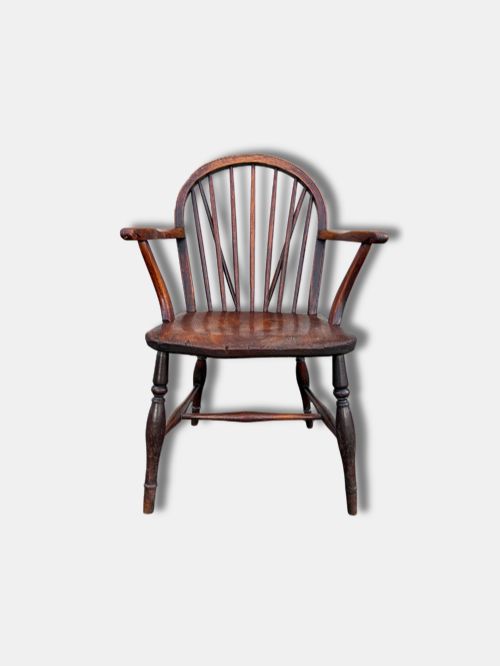
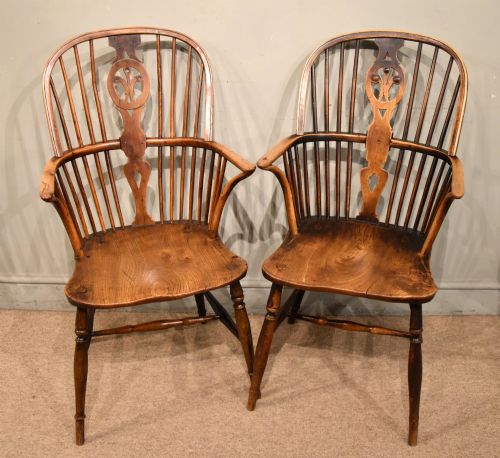
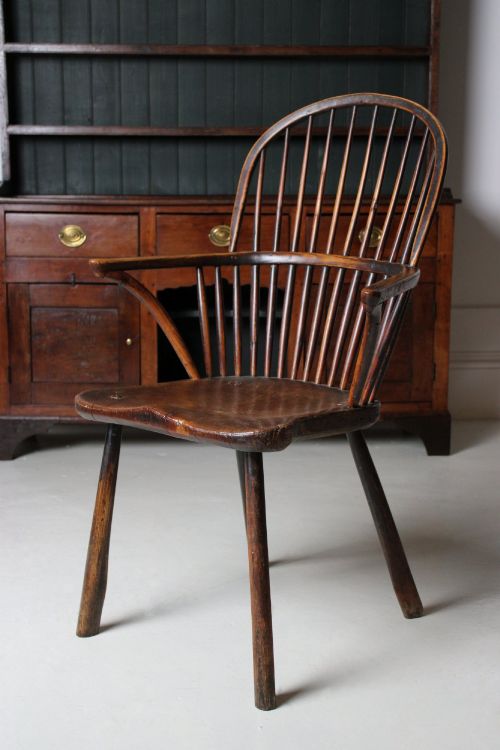
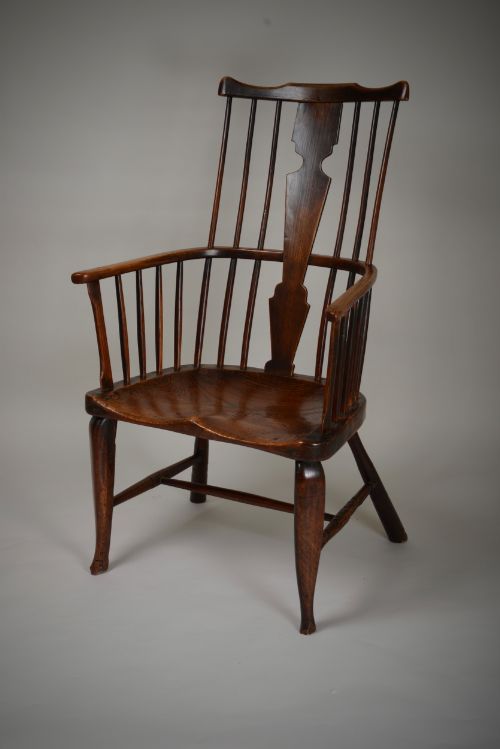
A rustic comb back seat is a traditional vernacular armchair or dining chair featuring a distinctive high back arrangement where the vertical spindles pierce through a bentwood arm bow and terminate in a raised top rail resembling a comb. These pieces originate primarily from the eighteenth and nineteenth centuries, spanning periods such as the Georgian, Regency, and Victorian eras.
The versions most commonly met on this page belong to the English country and Welsh vernacular traditions. They appear singly as armchairs or in small sets designed for country kitchen and farmhouse dining.
Makers utilised native timbers to construct these sturdy forms, resulting in heavy, utilitarian seating designed for daily domestic service rather than formal parlour display.
How they were made
Craftsmen built these seats using a combination of turned wood and solid plank construction, frequently pairing an elm or fruitwood seat with ash spindles and legs. The heavy saddle-shaped seat was typically carved from a single thick slab of elm to provide durability.
The characteristic back utilised steam-bent wood for the arm bows and top rails, into which individual tapering spindles were wedged and tenoned. Regional variations also incorporated pine, beech, yew wood, and dark stained hardwood depending on local timber availability.
Rustic Comb Back Seat Retail Price Guide 2026
Typical asking prices for rustic comb back seat among the pieces listed under this phrase on Sellingantiques today, from the lower quarter to the upper quarter. They describe what is for sale here now, not the wider market.
What varies in quality
Quality in a rustic comb back seat rests upon the fluency of the timber selection and the harmony of the regional proportions. Better examples display carefully matched native woods such as yew and ash, where the grain runs logically to reinforce the slender spindles and heavy arms.
The comfort and structural integrity of the saddle seat also distinguish finer craftsmanship, alongside the survival of crisp tool marks and original surface patination across the elm and fruitwood components.
The Rustic Comb Back Seat Glossary
- Comb back
- A Windsor chair variation where the vertical spindles extend upward past the arm bow into a separate horizontal top rail. This design provides robust upper back support.
- Vernacular
- Objects built by local craftsmen using traditional regional methods and native materials rather than adhering to formal academic design rules. These pieces reflect specific local requirements and handy resourcefulness.
- Saddle seat
- A thick wooden seat base scooped and shaped into a comfortable contoured dish. This heavy slab anchors the legs and lower spindles securely.
- Stick back
- A minimalist chair construction method where turned wooden rods form the back rest without a solid central splat. This technique allows for sturdy, lightweight framing.
- Windsor
- A chair type characterised by a solid wooden seat into which the legs and back spindles are directly inserted. The construction relies on wedged tenons for lasting strength.
Rustic Comb Back Seat: Frequently Asked Questions
What is a comb back chair?
A comb back chair is a traditional wooden seat featuring vertical spindles that rise through the arm rail to form a distinct upper comb. This construction offers robust back support through lightweight timber rods.
Such chairs emerged from regional country workshops during the eighteenth and nineteenth centuries as durable utility seating.
Where were stick chairs made?
Stick chairs and vernacular comb back seats were produced across rural Britain, with notable regional traditions developing in Wales, the West Country, and various English shires. Local makers utilised whatever native woods grew nearby, such as ash, elm, yew, and beech.
This regional independence gave rise to distinct local styles of arm bow and spindle arrangement.
Can I use these chairs daily?
These rustic seats were originally built for heavy daily service in country kitchens and farmhouses, making them inherently durable for modern living. Their solid timber construction handles regular sitting comfortably.
Placing them away from direct heat sources helps preserve the ancient elm and ash timbers over time.