



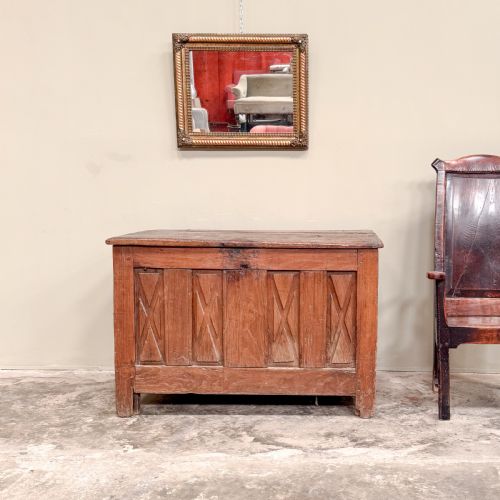
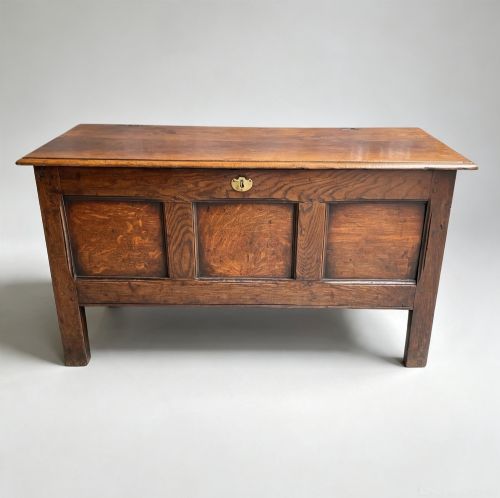
Rustic Carved Wooden Trunk
A rustic carved wooden trunk brings solid history to a room, offering robust storage shaped by centuries of practical joinery.
Rustic Carved Wooden Trunk
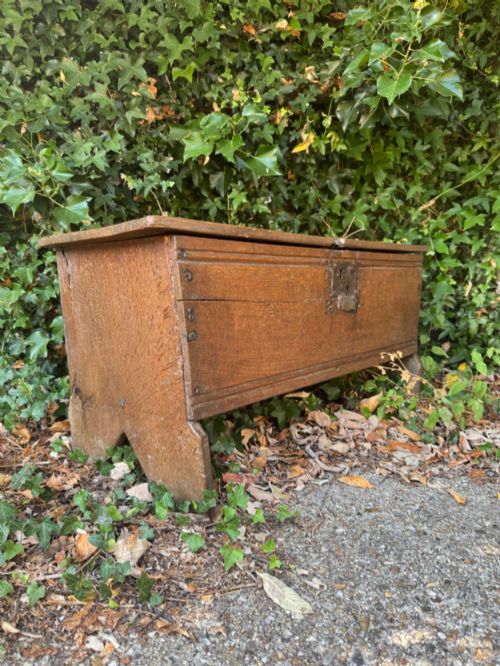
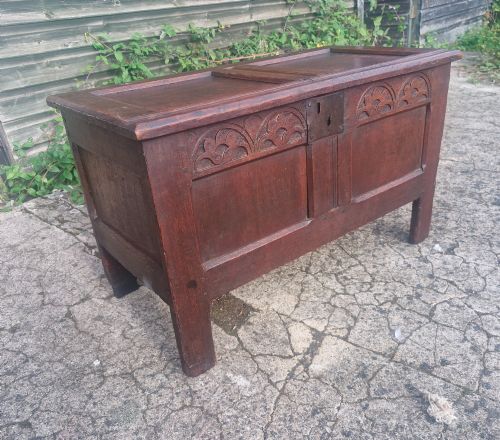
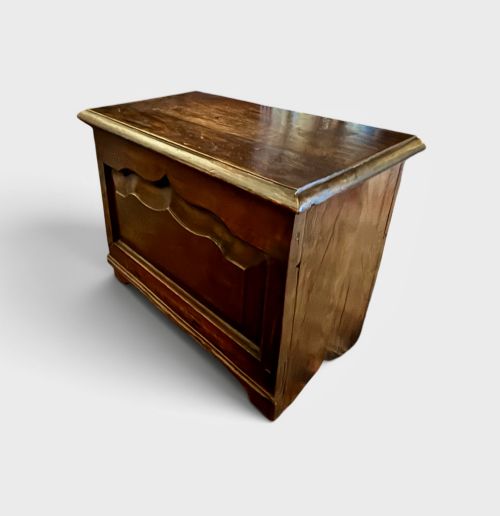
When you search for a rustic carved wooden trunk, you uncover heavy storage chests and coffers built for daily domestic use. These pieces range from seventeenth-century Welsh and European oak coffers to nineteenth-century dowry chests.
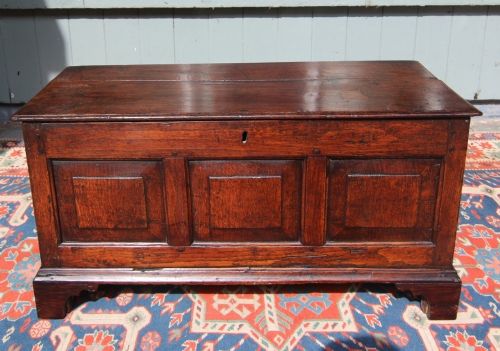
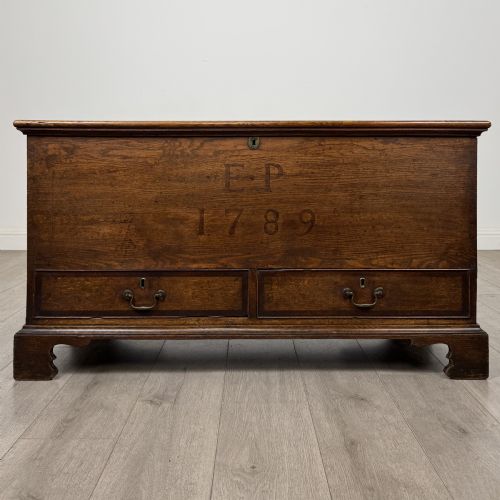
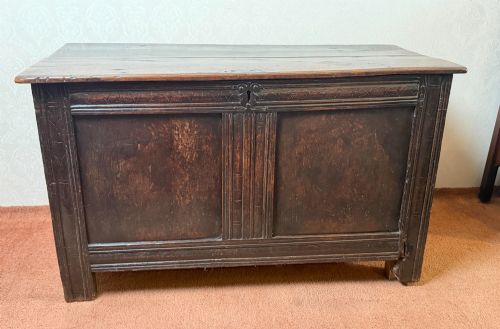
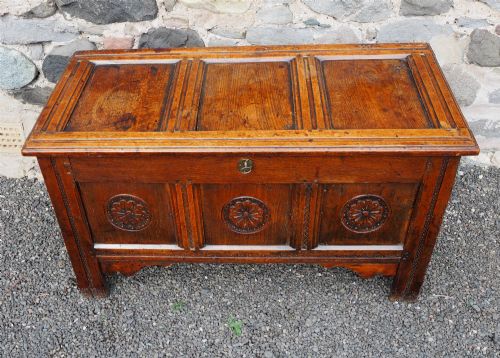
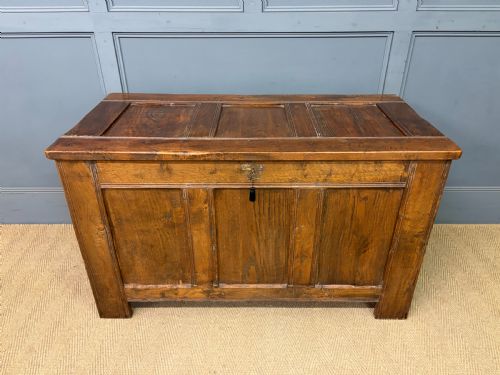
The version you are most likely to meet on this page is the oak coffer, often panelled and dated to the eighteenth century or earlier. Alongside these lie regional variations including pine mule chests and iron-banded storage pieces from abroad.
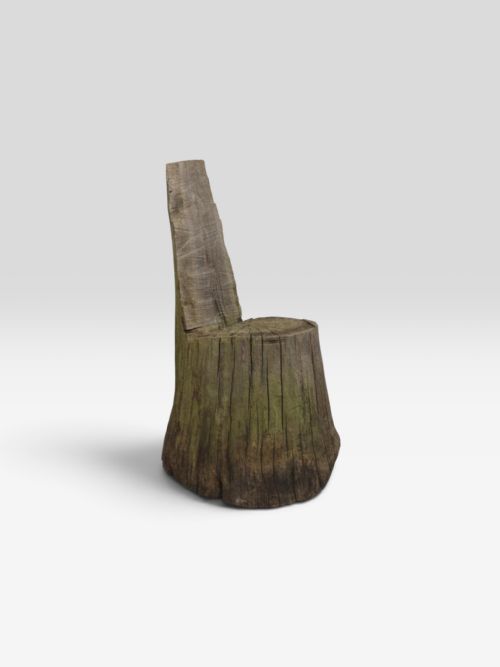
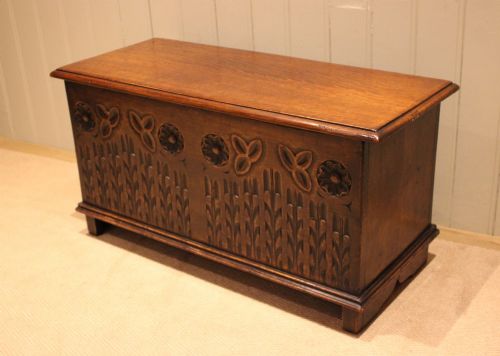
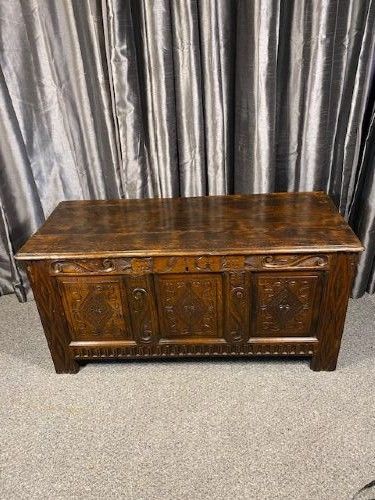
Makers shaped these trunks for holding household linens, grain, or dowries, relying on thick timber planks to endure heavy use. Their forms remain fundamentally utilitarian, softened by hand-carved panels, primitive mouldings, and iron hardware.
How they were made
Joiners built these trunks primarily from solid timber such as oak, pine, and teak, frequently utilising natural wood boards joined by pegged mortise and tenon frames. Iron and brass hardware, including heavy hinges and corner straps, reinforced the heavy lids and corners.
Carving was executed by hand using gouges and chisels directly onto the structural panels, displaying vernacular motifs and geometric patterns. Surfaces were occasionally finished with paint or left to mature with natural wax and oil.
Construction methods prioritised durability over speed, ensuring the chests could withstand the shifting moisture of domestic interiors over hundreds of years.
Rustic Carved Wooden Trunk Retail Price Guide 2026
Typical asking prices for rustic carved wooden trunk among the pieces listed under this phrase on Sellingantiques today, from the lower quarter to the upper quarter. They describe what is for sale here now, not the wider market.
Regional forms on offer include Welsh Gower coffers, Spanish boxes, and Indian dowry chests with iron bindings.
What varies in quality
The distinction between standard storage chests and finer examples rests on the depth and ambition of the hand-carving and the integrity of the timber. Dense oak boards with well-preserved panel construction command greater interest than plain utility boxes.
Jack Grimble
The Rustic Carved Wooden Trunk Glossary
- Coffer
- A heavy wooden chest traditionally used for storing valuables, documents, or garments. These sturdy boxes formed a central part of early domestic furniture before fitted wardrobes.
- Mule chest
- A storage chest featuring one or more drawers built into the base beneath the main compartment. This form bridges the gap between the traditional coffer and the modern chest of drawers.
- Dowry chest
- A large container made to hold the linens, household goods, and wealth a bride brought into a marriage. They often feature regional carving and robust iron banding.
- Mortise and tenon
- A traditional woodworking joint where a protruding tongue fits tightly into a matching cavity. This method secured heavy panel frames without relying on metal fasteners.
- Treen
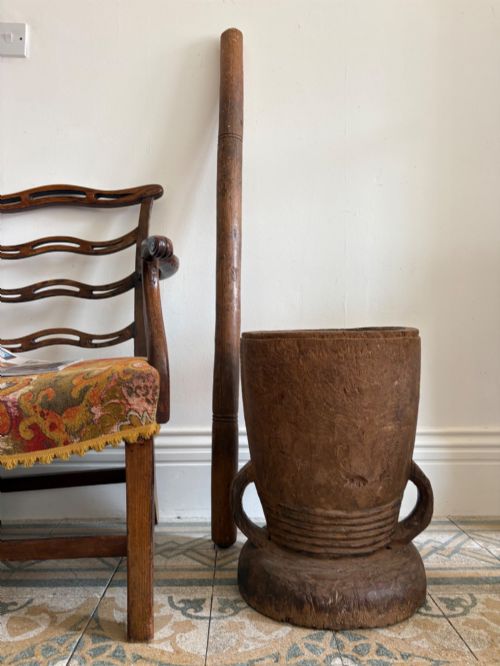
- Small handmade wooden household objects such as bowls, mortars, and pestles shaped by hand. These items display the same turned and carved vernacular skills as larger furniture.
Rustic Carved Wooden Trunk: Frequently Asked Questions
What were rustic wooden trunks used for?
These trunks served as secure domestic storage for valuable textiles, blankets, clothing, and household provisions. In many cultures, they functioned specifically as dowry chests holding a bride's worldly goods.
Over generations, their flat lids also allowed them to double as impromptu tables, benches, or step platforms within modest dwellings.
How do I date an old oak coffer?
Dating relies on examining the construction methods, tool marks, and style of the panel carving. Early seventeenth-century pieces usually feature pegged frame-and-panel construction with hand-split timber.
Later eighteenth-century examples often incorporate secondary woods, machine-sawn elements, or added drawer units at the base. Hardware styles and keyhole escutcheons also offer reliable clues to the period of manufacture.
Can I use a heavy trunk as a coffee table?
These sturdy chests adapt well as coffee tables, offering both a flat surface and internal storage for living room clutter. Their solid timber construction easily bears the weight of everyday items.
Ensure you measure the height of your seating against the lid to guarantee comfortable proportions for daily use.
What is the difference between a coffer and a chest?
While the terms are often used interchangeably, a coffer traditionally denotes a more substantial box featuring panelled construction and often finer carving. Chests can encompass simpler plank-built storage boxes or primitive dugout forms.
Both serve the fundamental purpose of secure lidded containment, but coffers more frequently indicate deliberate artistic effort by a joiner.