




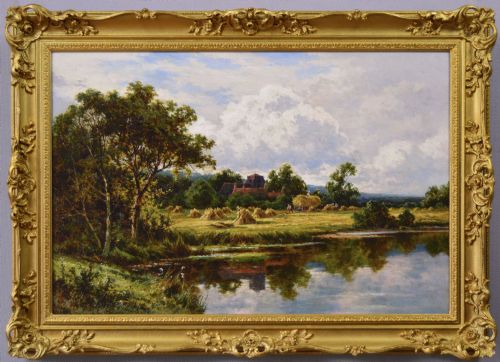


Rural River Scene Art
Rural river scene art captures quiet waters and pastoral banks, offering buyers a lasting connection to nineteenth and early twentieth-century countryside life.
Rural River Scene Art
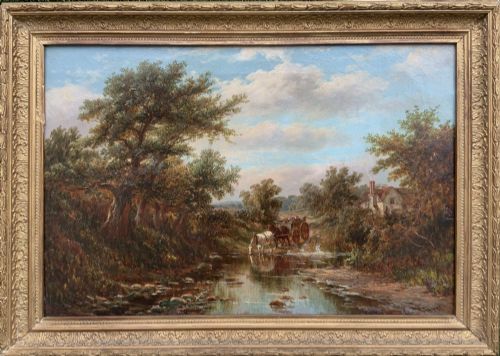
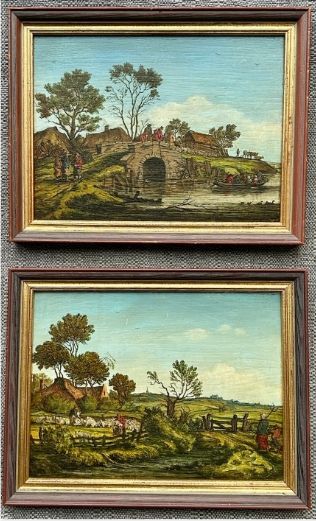
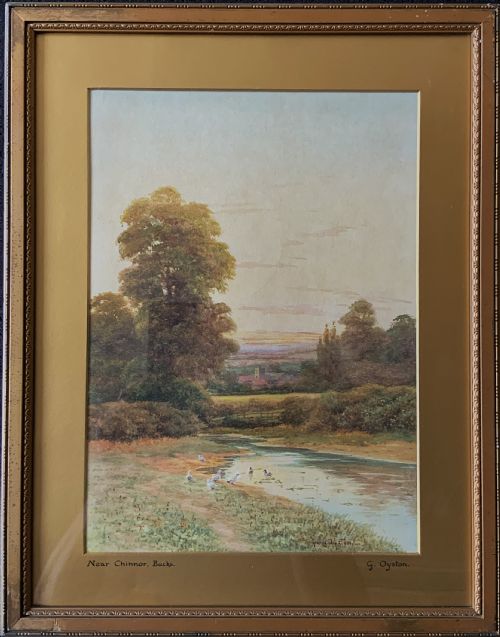
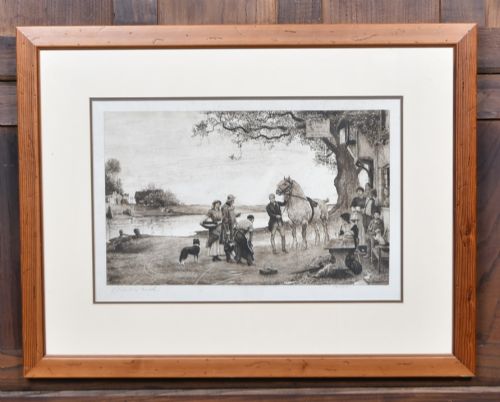
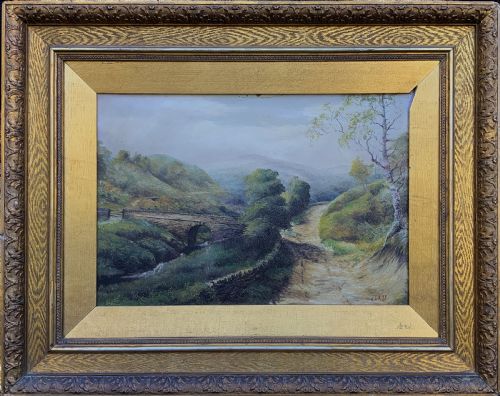
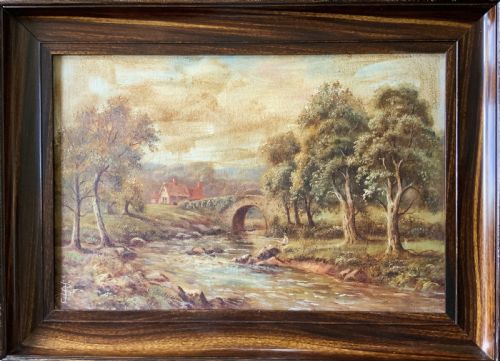
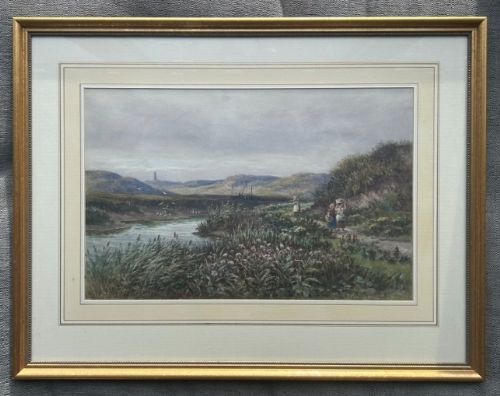
Rural river scene art comprises framed paintings and watercolours depicting pastoral waterways, figures fishing, and countryside cottages. These works capture nineteenth and early twentieth-century views across Britain and Europe, reflecting traditional landscape painting traditions.
Buyers commonly encounter oil on canvas works alongside delicate watercolours on paper. Subjects frequently feature daily country life, including children by streams, cattle near riverbanks, and horse-drawn carts crossing shallow fords.
The periods represented span the Victorian and Edwardian eras through to mid-century examples. Works range from intimate watercolour studies to large-scale framed oil paintings produced by regional British schools and continental artists.
How They Were Made
Artists applied oil paint to stretched canvas or prepared wood panels, building rich surface textures and deep tones. Watercolours utilised pigment washes on paper to achieve lighter, luminous atmospheric effects.
Gilt wood frames completed the presentation, enclosing the canvas or paper behind protective layers. Makers selected materials to suit the specific demands of studio oil painting versus plein air watercolour sketching.
Rural River Scene Art Retail Price Guide 2026
Typical asking prices for rural river scene art among the pieces listed under this phrase on Sellingantiques today, from the lower quarter to the upper quarter. They describe what is for sale here now, not the wider market.
Materials recorded across the inventory include canvas, oil paint, paper, wood, and gilt wood.
What Varies in Quality
The handling of natural light and atmosphere distinguishes accomplished compositions from simpler depictions. Skilled hands capture the subtle reflections on water and the specific quality of daylight across rural fields.
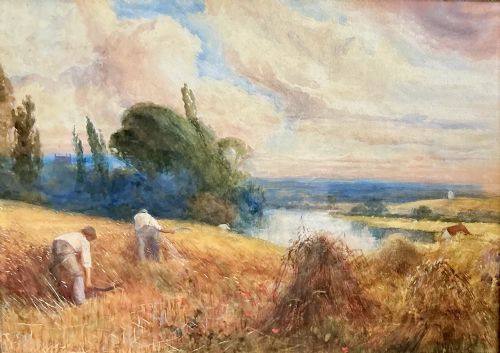
The integration of figures within the landscape reveals the artist's draftsmanship and structural control. Masterful works balance human activity, such as fishing or harvesting, harmoniously with the surrounding riverbanks and foliage.
George Graham·Robert W. Macbeth·George Oyston·Sydney Yates Johnson·Robert Winchester Fraser·William Langley·William Manners·Thomas James Lloyd·Gudrun Sibbons·Harry Pennell·William Sidney Cooper·Alois Arnegger·George Turner·Henry John Sylvester Stannard·Henry H Parker·William Stephen Coleman·Antoine Bouvard·Robert Gallon·Robert John Hammond·Charles McAuley·Maud Raphael Jones
The Rural River Scene Art Glossary
- Oil on canvas
- Pigment mixed with drying oil applied to a woven fabric support stretched over a wooden frame. This medium allowed artists to build rich textures and deep colour gradations.
- Watercolour painting
- Artworks created using water-soluble pigments on paper. This technique produces translucent washes and delicate atmospheric effects.
- Wood panel
- A rigid wooden support used instead of canvas for mounting paintings. These panels offer a smooth, stable surface frequently utilised in earlier landscape works.
- Gilt wood
- Wood coated with a thin layer of gold leaf or metallic gilt finish. Frames constructed from this material enhance the visual presence of the artwork.
- Plein air
- The practice of painting outdoors directly from nature. This approach enabled artists to capture transient effects of light and weather by the river.
Rural River Scene Art: Frequently Asked Questions
What periods do these river scenes cover?
The available works span the nineteenth century through the Edwardian era and into the mid-twentieth century. Artists recorded changing rural landscapes across these decades using traditional oil and watercolour techniques.
Victorian and Edwardian examples dominate the selection, reflecting a period of intense interest in pastoral life and natural scenery. Later mid-century pieces demonstrate the continuation of these traditional landscape subjects.
What subjects appear alongside the rivers?
Figures engaged in daily rural tasks frequently animate the riverbanks, including fishermen, washerwomen, and children gathering firewood. Livestock such as cattle and horses also feature prominently near fords and streams.
These human and animal elements provide a sense of scale and narrative to the topography. They reflect contemporary interest in recording authentic rural labour and leisure.
How do watercolours differ from oils here?
Waterworks on paper offer translucent colour washes and lighter, more immediate atmospheric effects. They were often executed swiftly to capture transient light conditions by the water.
Oil paintings on canvas or wood panels provide heavier texture and deeper saturation. These mediums allowed artists to work longer on complex compositions and rich tonal ranges.