

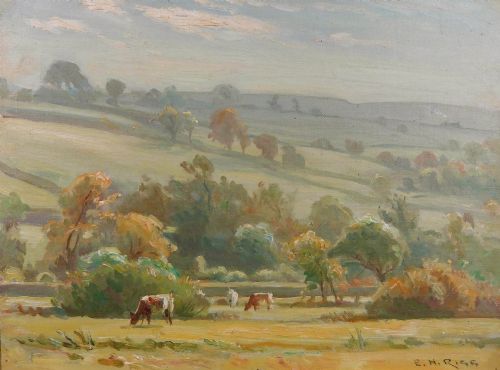


Rural Pastoral Art Canvas
Rural pastoral art canvas works capture quiet country scenes, rustic cottages and grazing livestock on woven supports to bring historical serenity into a room.
Rural Pastoral Art Canvas
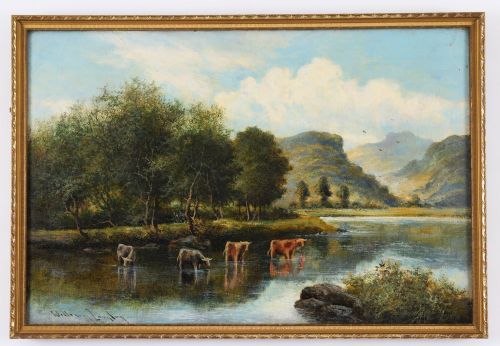
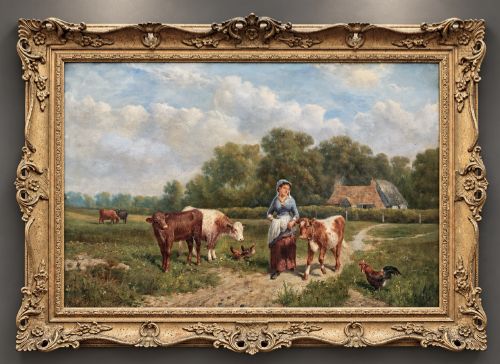
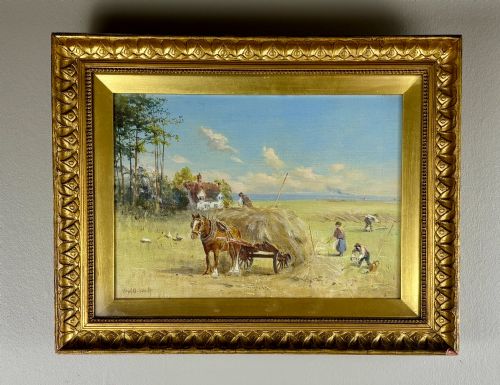
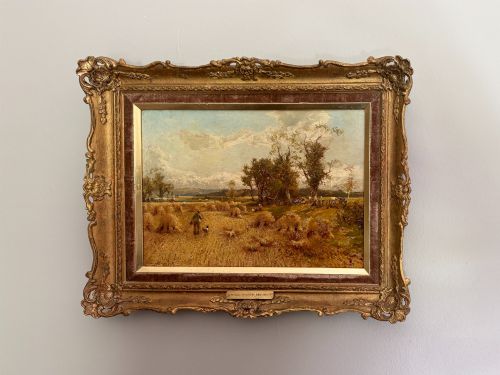
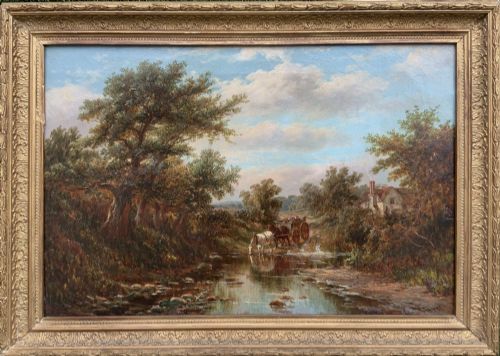
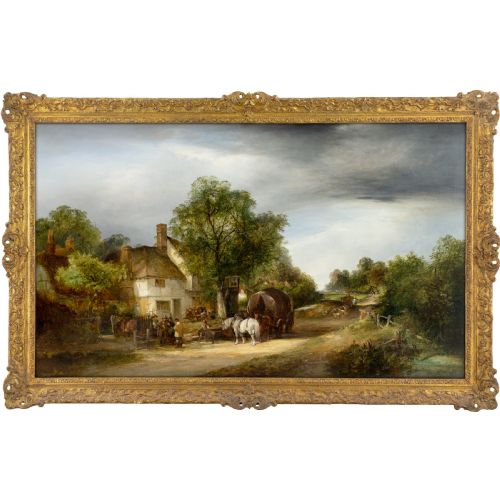
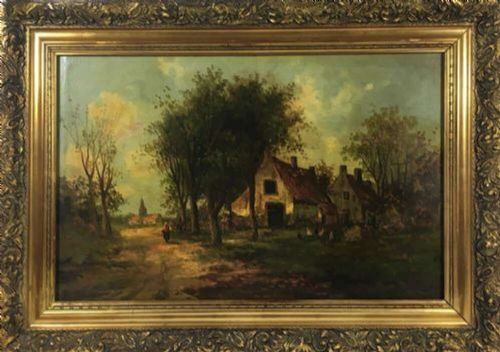
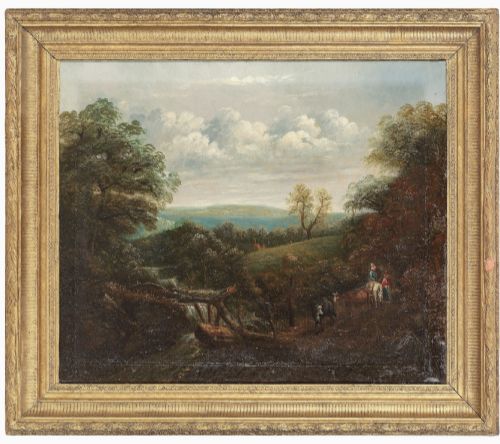
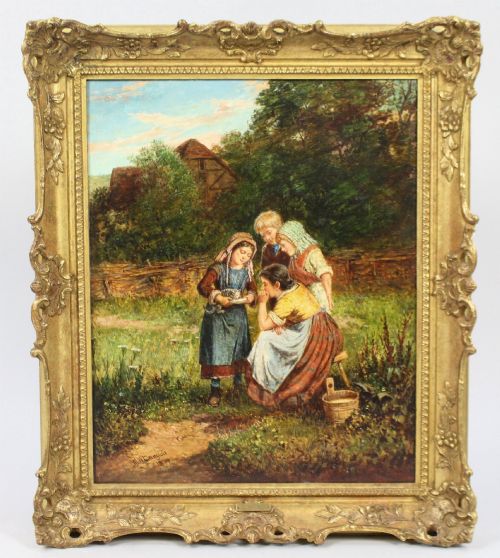
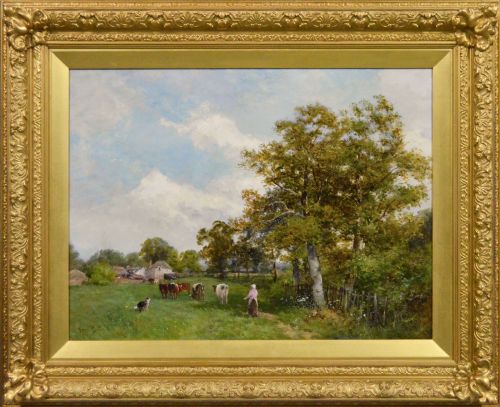
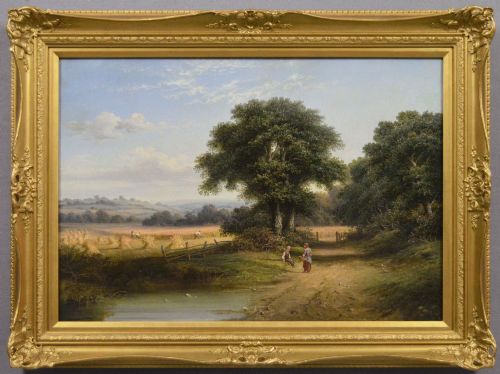
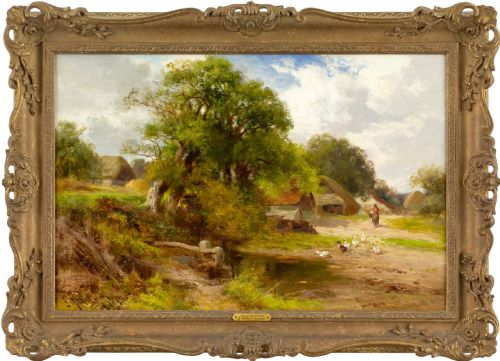
A rural pastoral art canvas depicts traditional country scenes, agricultural labour, river valleys and farmyards from the nineteenth and early twentieth centuries. These works record vanished agrarian routines, featuring figures harvesting crops, herding cattle or resting beneath willow trees.
The prevalent examples on this page belong to the Victorian and Edwardian eras, executed within British Impressionist, Norwich School and Barbizon traditions. They typically portray rural tranquillity, featuring thatched cottages, sheep grazing under apple blossom and quiet river banks.
Makers and painters represented include George Graham, David Bates, Walter Heath Williams, John Horace Hooper, Ernest Higgins Rigg, Owen Bowen, William Sydney Cooper, and Frederick James Knowles. Their subjects centre on daily country life, agricultural work and pastoral landscapes.
Materials and construction methods
These works are painted using oil paint applied directly onto stretched canvas supports, sometimes framed in giltwood or wooden surrounds. Gesso is utilised to prepare surfaces for painting.
Artists employed brushwork influenced by the Barbizon School and British Impressionism to capture natural light, shadow and atmospheric conditions across open fields and river landscapes.
Numerous canvases permanently preserve fleeting moments of Victorian geese, kittens and resting cart horses refusing to hurry.
Elements that determine quality
Quality rests on the handling of light, depth of perspective and the painter's ability to render animate subjects such as cattle, sheep and labouring figures with anatomical precision. Works by established regional artists display superior draftsmanship in composition compared to anonymous school pieces.
The physical preservation of the oil paint layer and the integrity of the original canvas support dictate condition, alongside the presence of period frames such as giltwood mouldings.
George Graham·David Bates·Walter Heath Williams·John Horace Hooper·Ernest Higgins Rigg·Owen Bowen·William Sydney Cooper·Frederick James Knowles
The Rural Pastoral Art Canvas Glossary
- Barbizon School
- A mid-nineteenth-century French art movement emphasising realism, landscape and pastoral scenes painted directly from nature. It heavily influenced later British rural painting.
- Canvas
- A heavy woven fabric used as a surface for oil painting, typically stretched tightly over a wooden frame. It provides a durable ground for pigment application.
- Giltwood
- Wood that has been coated with a thin layer of gold leaf or gilt, commonly found on traditional antique picture frames. It enhances the visual presentation of the artwork.
- Norwich School
- A regional group of artists inspired by local Norfolk landscapes and rural scenery during the nineteenth century. They produced naturalistic depictions of countryside life.
- Victorian Pastoral
- A nineteenth-century artistic style focusing on idealized rural life, agricultural labour and idyllic country landscapes. These scenes often romanticised farming communities.
Rural Pastoral Art Canvas: Frequently Asked Questions
What is rural pastoral art?
Rural pastoral art comprises paintings depicting traditional country life, agricultural labour, livestock, and natural landscapes. These works focus on rural tranquility and agrarian scenes.
The genre gained popularity during the nineteenth and early twentieth centuries, capturing a rapidly changing British and European countryside.
How were these oil paintings created?
Artists applied oil paint onto woven canvas supports stretched over wooden frames, often building texture with brushwork. Gesso served as a primer to prepare the surface.
Framing typically involved wooden or giltwood surrounds designed to complement the composition and protect the edges of the canvas.
How do I date a rural canvas?
Dating relies on stylistic clues, clothing worn by figures, agricultural methods shown, and the signatures of documented painters. Framing styles also offer chronological indicators.
Most pieces on this page originate from the Victorian, Edwardian, and mid-century periods, spanning the nineteenth and twentieth centuries.
Where should I hang these paintings?
These works suit traditional living spaces, studies, or dining rooms where natural light enhances the painted tones of rural landscapes and farmyards. Pair them with neutral walls to let the giltwood frames stand out.
Keep canvases away from direct sunlight and damp environments to preserve the oil paint and canvas support.