



Rural Harvest Art
Rural harvest art captures pastoral scenes of gathering crops through the brush of Victorian and Edwardian painters.
Rural Harvest Art
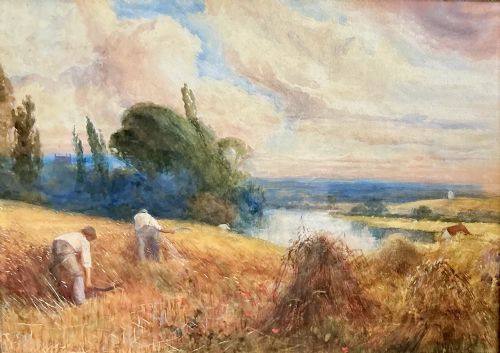
Rural harvest art encompasses paintings and watercolours depicting agricultural scenes, haymaking and farming landscapes created across the nineteenth and twentieth centuries. These works record traditional countryside labour through British Impressionism, Victorian Realism and traditional British styles.
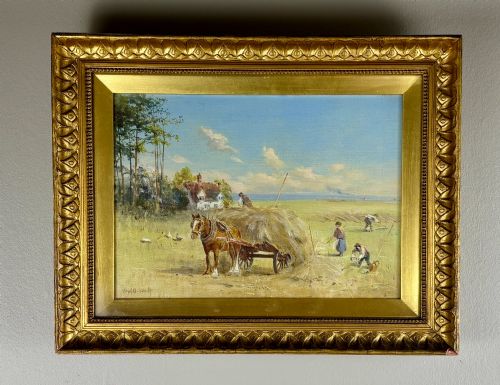
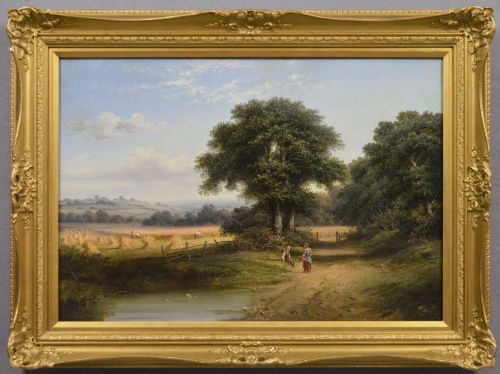
Buyers will most frequently encounter nineteenth-century oil paintings and early twentieth-century watercolours showing figures in harvest fields. Common subjects include hay carts, farmers gathering wheat and riverbank harvesting scenes set in locations such as the Vale of Evesham, the river Kennet and Yorkshire.
How these pieces were made
Artists painted primarily with oil paint on canvas or applied watercolour to paper, often using gold leaf on framing elements. The application ranges from detailed Victorian realism to looser British impressionist brushwork.
Support materials include prepared canvas stretched over wooden frames and heavy watercolour paper. Pigments were blended to capture natural light, particularly evening glows and sunset lighting over cornfields.
Rural Harvest Art Retail Price Guide 2026
Typical asking prices for rural harvest art among the pieces listed under this phrase on Sellingantiques today, from the lower quarter to the upper quarter. They describe what is for sale here now, not the wider market.
Several harvest scenes faithfully record hardworking farm dogs taking a well-earned rest beside the lunchtime picnic baskets.
What varies in quality
Quality rests upon the artist's ability to render light, atmosphere and human anatomy within the landscape. Works by established regional painters demonstrate superior command of tone and composition compared to anonymous naive school pieces.
The preservation of the pigment and the integrity of the canvas or paper surface dictate the visual strength of the piece. Stronger examples maintain vibrant colour harmonies and clear brushwork without excessive darkening or later overpainting.
Hugh Barry-Scott·William Manners·Percy Lancaster·Walter Heath Williams·Charles Henry Slater·Frederick Hines·James William Booth·Henry John Boddington·William Grant Murray·Helmut Reuter·Henry H Parker·Arthur Walker Redgate·Rowland Henry Hill·Herbert Royle·Frederick J Knowles·Joseph Paulman·Henry John Kinnaird·Frederick William Jackson·Walter Duncan·George Hamilton Constantine·George Cole·William Greaves·Joseph Thors·Alfred Augustus Glendening Snr·David Heward
The Rural Harvest Art Glossary
- Oil on canvas
- Pigment mixed with drying oil applied to a woven fabric stretched across a wooden frame. This medium allowed artists to build rich textures and deep colour layers.
- Watercolour
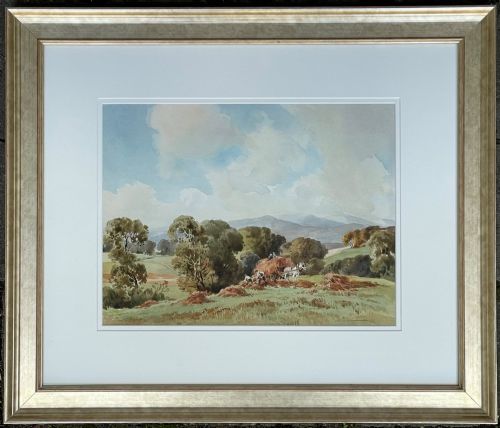
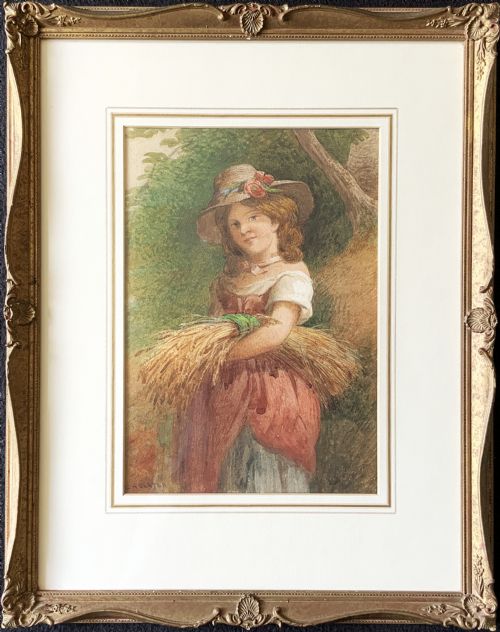
- Pigment suspended in a water-soluble vehicle applied to paper. It produces translucent washes that capture soft atmospheric effects in rural scenes.
- Victorian Realism
- A nineteenth-century artistic approach focusing on unidealised daily life and naturalistic detail. Painters using this style rendered agricultural workers and harvest landscapes with precise observation.
- British Impressionism
- A late nineteenth and early twentieth-century movement prioritising loose brushstrokes and the play of natural light. Practitioners recorded outdoor harvest scenes with vibrant, broken colour.
- Hayrick
- A large stacked pile of hay built in a field for storage. Artists frequently used this agricultural form as a focal point in rural composition.
Rural Harvest Art: Frequently Asked Questions
What periods do rural harvest art pieces cover?
The available selection spans from the mid nineteenth century through the Edwardian era and into the mid twentieth century. Most works date from the Victorian period up to the nineteen-fifties.
Creators worked across distinct regional styles, moving from nineteenth-century realism into British impressionist interpretations of agricultural life.
How do I distinguish oil paintings from watercolours?
Oil paintings utilise heavy pigments on canvas, creating a textured surface that can be viewed without glass protection. Watercolours are executed on paper under glass, featuring translucent washes and a smooth surface texture.
Watercolour works often display lighter, airier atmospheric effects, whilst oils offer richer colour depth and impasto brushwork.
What subjects appear most often in harvest art?
Common subjects include farmworkers gathering hay, horse-drawn carts in cornfields and figures resting by riverbanks during harvest time. Landscapes often feature specific British locales such as Hampshire, Sussex and the Grampians.
Artists frequently set these agricultural scenes at dusk or sunset to emphasise dramatic lighting across the fields.
How should I care for antique harvest paintings?
Keep oil paintings and watercolours away from direct sunlight and sources of extreme heat or humidity. Consistent indoor climates prevent canvas warping and paper degradation.
Display oil paintings without glass to let the canvas breathe, whilst watercolours require framing behind conservation-grade glass for protection against moisture.