




Rural English Pastoral Wall Art
Rural english pastoral wall art brings nineteenth and early twentieth century countryside scenes into your interior through oil and watercolour.
Rural English Pastoral Wall Art
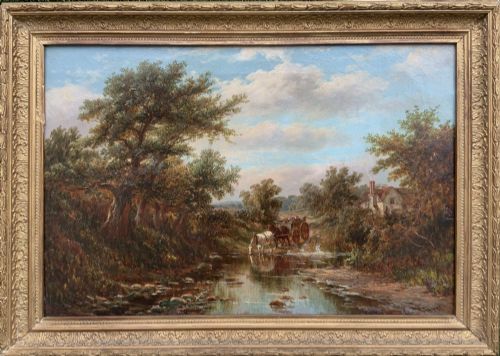
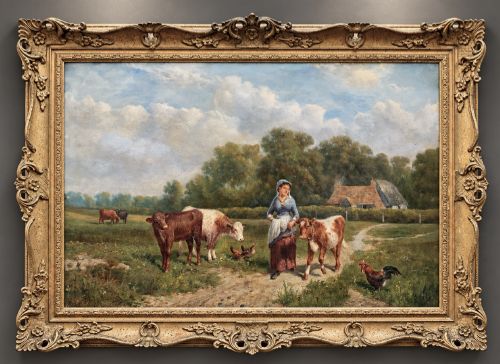
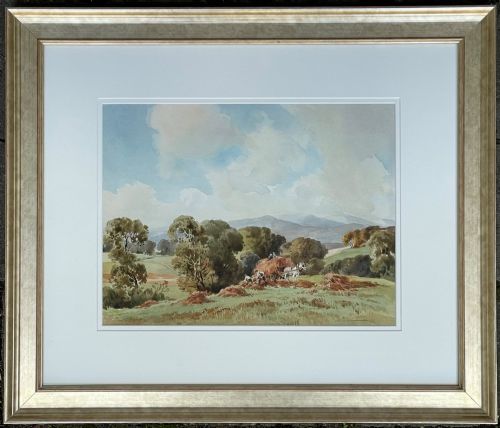
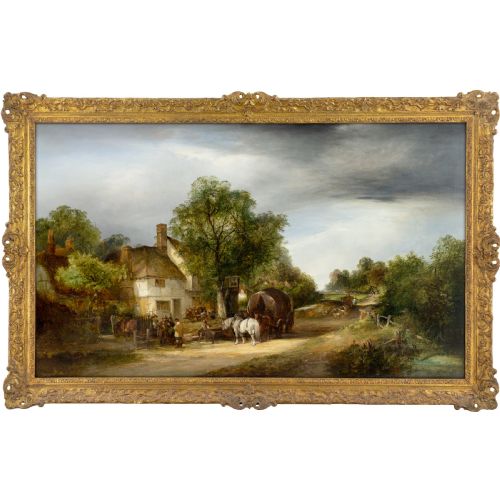
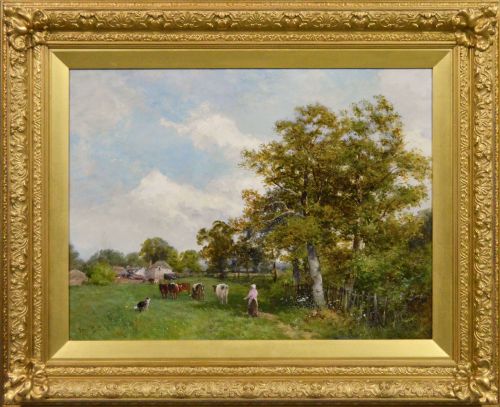
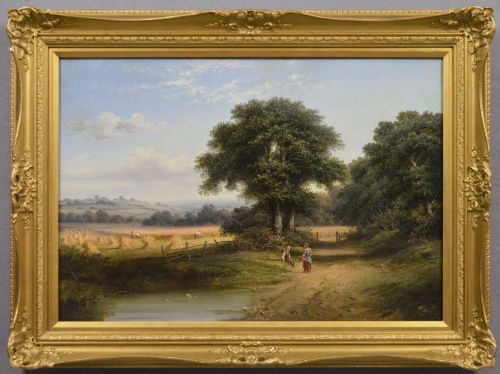
Rural english pastoral wall art captures the traditional countryside, farmyards, harvest fields, and river landscapes of Britain across the nineteenth and early twentieth centuries.
The pieces on this page are predominantly oil paintings and watercolours, created by named British artists working within schools such as the Norwich School and British Impressionism.
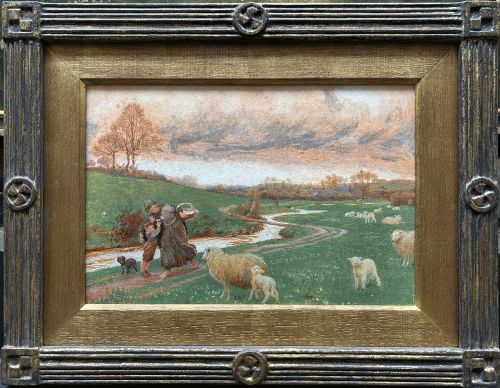
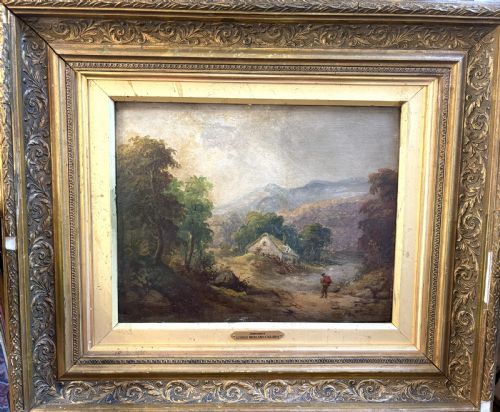
Subjects range from figures herding cows and driving sheep to thatched cottages and labourers resting beneath oak trees.
Methods and Materials
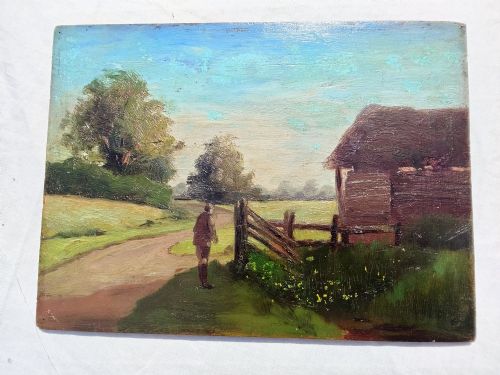
Makers utilised oil paint on canvas or wooden board, alongside watercolour applied to paper, mounted within wooden and giltwood frames.
Techniques combine traditional brushwork with regional school influences, ranging from detailed Victorian realism to lighter Impressionist applications.
Rural English Pastoral Wall Art Retail Price Guide 2026
Typical asking prices for rural english pastoral wall art among the pieces listed under this phrase on Sellingantiques today, from the lower quarter to the upper quarter. They describe what is for sale here now, not the wider market.
Listings feature works executed in oil on canvas, oil on wooden board, and watercolour on paper across the nineteenth and twentieth centuries.
Assessing Quality
Quality rests upon the handling of light, atmosphere, and natural detail within the landscape, distinguishing accomplished academic artists from provincial practitioners.
The distinction lies in the fidelity of the composition, the strength of provenance through named makers, and the preservation of the original canvas, board, and frame.
Percy Lancaster·David Bates·Walter Heath Williams·Henry Charles Fox·William Sydney Cooper·James Orrock·John Linnell·Ernest Higgins Rigg·Herbert Royle·William Manners·Henry H Parker·Harry Sylvester Stannard·Thomas Rose Miles·Frederick William Jackson·Arthur Walker Redgate·Alfred Vickers Senior·Thomas Nicholson Tyndale·George Cole
The Rural English Pastoral Wall Art Glossary
- Oil on Canvas
- Pigment mixed with drying oil applied to a stretched woven fabric support. This medium allowed artists to build rich surface textures and deep colour tones.
- Watercolour
- Pigments suspended in a water-soluble vehicle applied to paper. It delivers a translucent quality suited to capturing shifting atmospheric light.
- Giltwood
- Wood carved and coated with a thin layer of gold leaf or metallic gilt. It provided traditional decorative framing for nineteenth-century fine art.
- Norwich School
- A regional movement of artists depicting the Norfolk landscape and rural life. It represents the first provincial art movement established outside London.
- Victorian Realism
- An artistic approach focusing on everyday subjects and natural scenes depicted with precise observation. This style documented rural labour and agrarian life truthfully.
Rural English Pastoral Wall Art: Frequently Asked Questions
What subjects appear in these paintings?
These works depict traditional British countryside scenes, including harvest fields, river landscapes, thatched cottages, and farmyard animals such as shire horses and sheep.
Human activity is frequently integrated into the scenery, showing farmworkers, shepherds, and figures travelling along rural paths.
How do I date these artworks?
Dating relies on stylistic clues, framing methods, artist biographical records, and occasional inscriptions or signatures left on the canvas or paper.
Most pieces span the nineteenth century through to the early twentieth century, reflecting Victorian, Edwardian, and regional school traditions.
How should I hang and display them?
Display these paintings on walls with stable humidity away from direct sunlight to preserve the integrity of oil pigments and watercolours on paper.
Matching the original wooden or giltwood frame to your interior space enhances the historical character of the artwork.
What is the difference between oil and watercolour?
Oil paintings utilise pigmented oil on canvas or board, offering heavy texture, deep colour saturation, and durable surfaces that traditionally required framing behind glass less frequently.
Watercolours employ water-soluble pigments on paper, creating luminous, delicate compositions that require protective glass framing.