

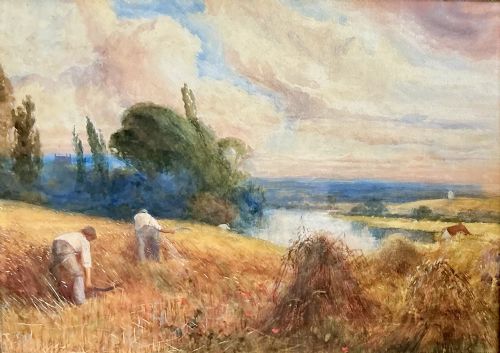


Rural Countryside Scene Artwork
Rural countryside scene artwork captures the pastoral life of fields, rivers and farmyards through the brush of past centuries.
Rural Countryside Scene Artwork
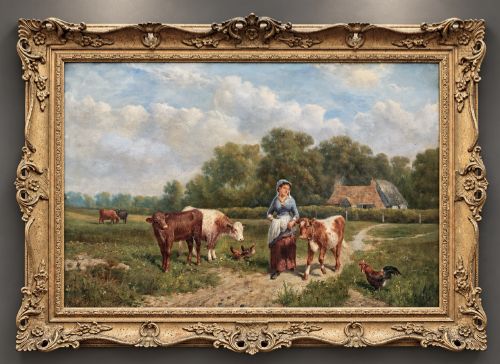
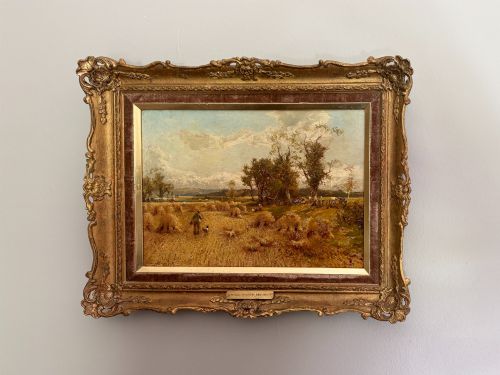
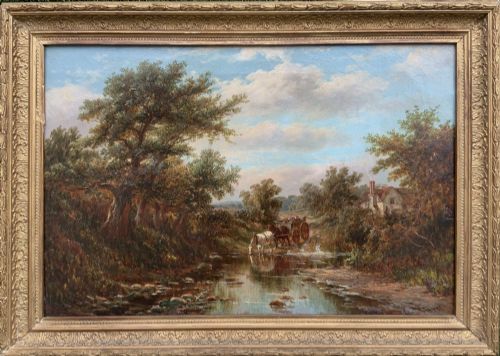
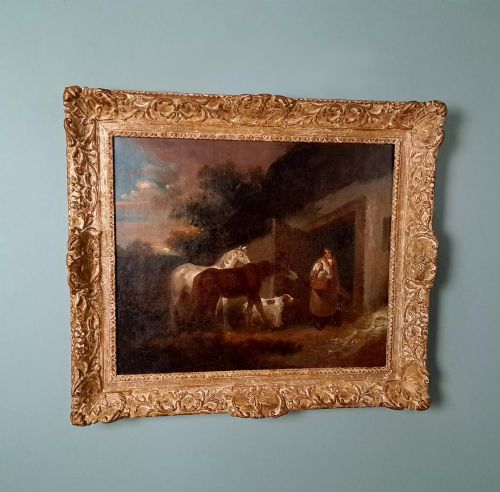
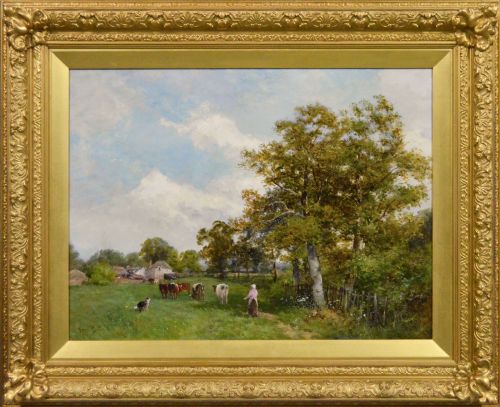
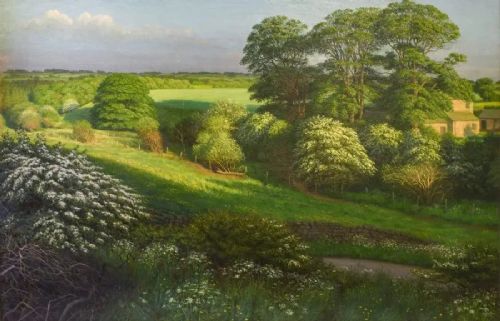
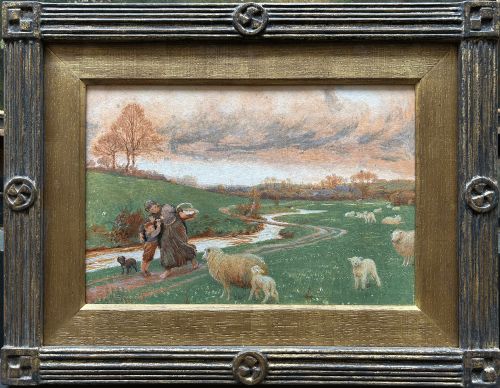
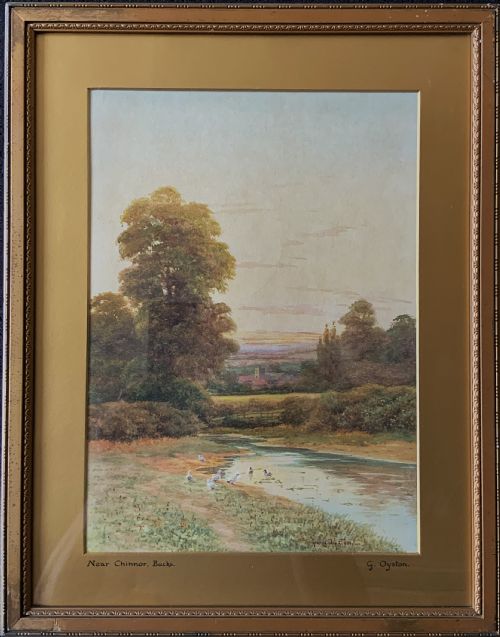
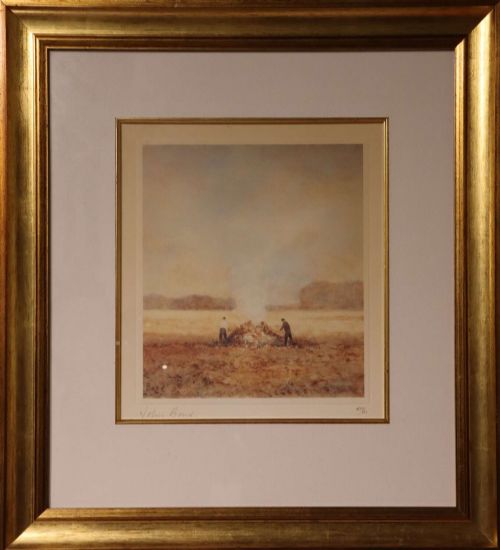
Rural countryside scene artwork spans Victorian pastoral visions through to mid-twentieth-century interpretations of agricultural life. These pieces primarily depict working farms, river valleys, thatched cottages and figures labouring in fields.
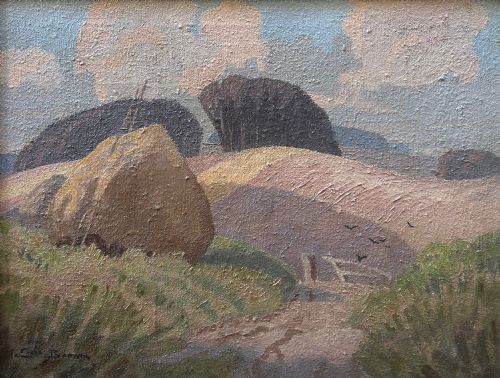
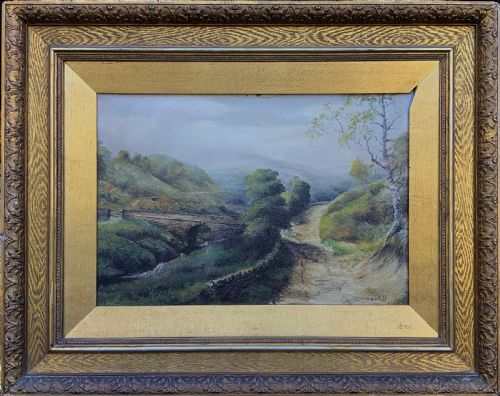
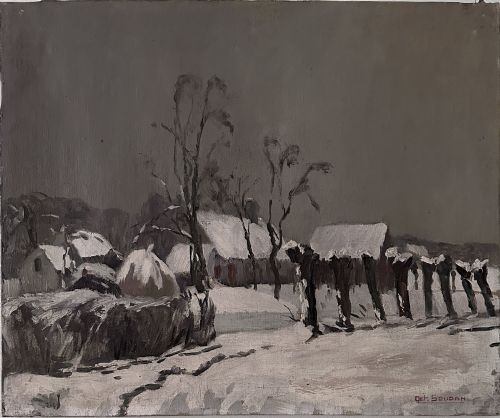
The most common examples on this page are oil paintings on canvas or wooden board alongside delicate watercolour paintings on paper. These works document the changing British landscape across the nineteenth and twentieth centuries.
Subjects frequently centre on heavy horses at work, sheep grazing, haymaking and village settlements in Yorkshire, Wales and the home counties. Each work offers a window into traditional rural routines.
How They Were Made
Painters utilised oil paint applied to stretched canvas, wooden board or panels to build durable compositions with rich texture and depth. Watercolour pigment on paper allowed artists to capture light and atmosphere with transparent washes.
Traditional framing in ebonised or moulded wood often complements the surface, protecting the edges of the canvas or paper support. Pigments were brushed by hand, recording the specific light of nineteenth and twentieth-century rural England.
Several canvases faithfully record the stubborn patience of shire horses pausing mid-furrow.
What Varies in Quality
Quality rests upon the artist's handling of light, shadow and spatial depth within the rural setting. Stronger pieces reveal confident brushwork and accurate anatomical rendering of livestock and figures at labour.
Provenance and clear attribution to recorded British painters elevate a work above anonymous examples from the English School. The preservation of the original pigment and the integrity of the canvas surface also determine distinction.
William Joseph Shayer Senior·David Bates·Raymond Booth·Frederick Walker·Eric Brown·George Oyston·John Bond·Frederick Hines·Herbert Royle·James William Booth·M. C. Hider·Robert John Hammond·William Greaves·Charles Vickers·Henry Bailey·John Linnell·Robert Finley McIntyre·Robert Winchester Fraser·Florence Hess·Lorenzo Headley·William Joseph Boyes·Helmut Reuter·William Langley·William Manners·Harry Sylvester Stannard
The Rural Countryside Scene Artwork Glossary
- Oil on Canvas
- Pigment mixed with drying oil applied to a woven fabric support stretched over a wooden frame. This medium allows for thick impasto application and subtle blending.
- Watercolour
- Painting method where fine pigment is suspended in a water-soluble binder applied to paper. It yields luminous washes suited to open-air pastoral sketches.
- Pastoral
- Artistic style concerning the rural life of shepherds, farmers and agricultural landscapes. It romanticises simple country routines.
- English School
- Designation for works created by artists trained or working within England. It groups together diverse painters sharing regional subject matter.
- Impasto
- Paint laid thickly on a surface so that brush or palette knife strokes stand visibly out. This technique adds tactile dimension to foliage and earth.
Rural Countryside Scene Artwork: Frequently Asked Questions
What periods do these rural paintings cover?
The works span from the nineteenth century through the Victorian era into the mid-twentieth century.
Most pieces date between the eighteen-eighties and nineteen-twenties, reflecting traditional farming life.
Are these works painted on canvas or paper?
Artists used multiple supports depending on their medium and whether they worked outdoors or in a studio.
Canvas and wooden board carry oil paintings, whilst paper holds watercolour pigments.
How should I care for these paintings?
Keep works away from direct sunlight and damp environments to protect the canvas and pigments.
Glazed watercolours require particular protection from moisture behind the paper.
What subjects appear most frequently in these scenes?
Common subjects include haymaking, farmsteads, cottages by streams and heavy horses ploughing fields.
Figures herding cattle or resting near oak trees also recur across the pastoral works.