

Rural Country Scene Painting
Rural country scene painting captures the quiet rhythms of farmland and village life through the eyes of nineteenth and twentieth-century artists.
Rural Country Scene Painting
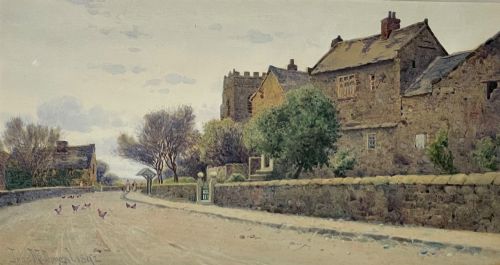
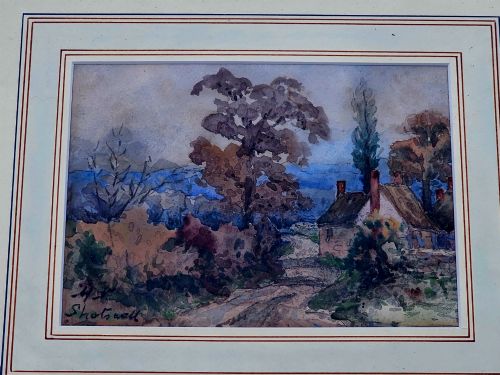
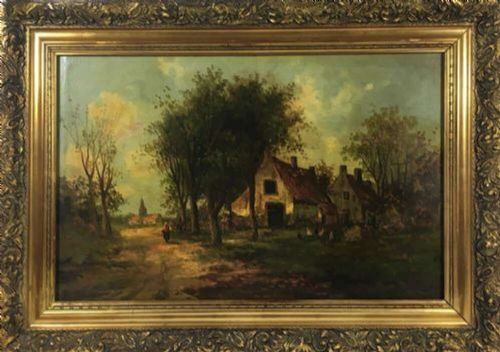
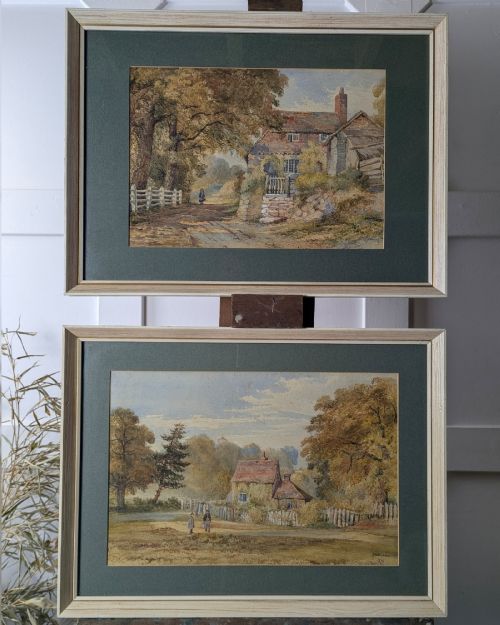
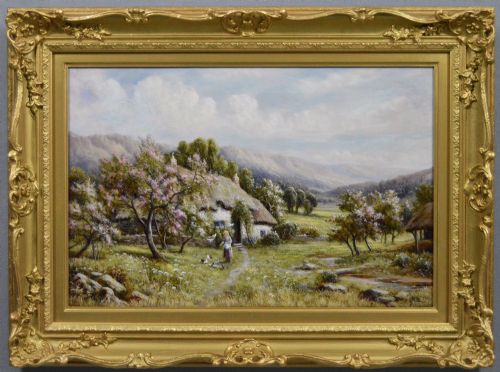
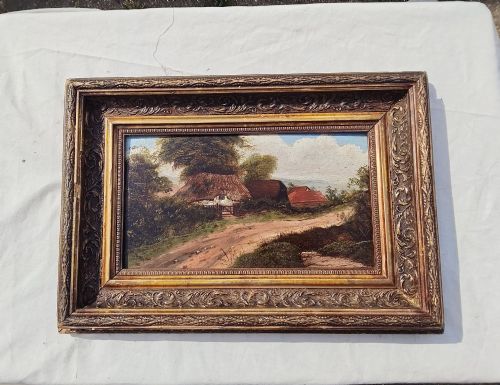
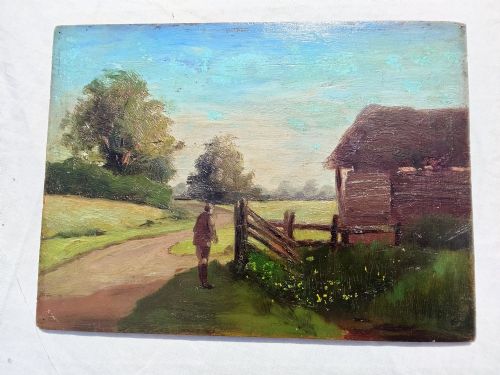
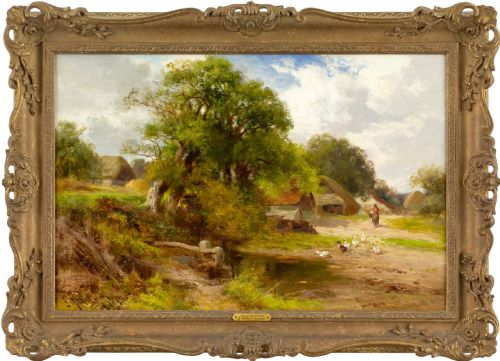
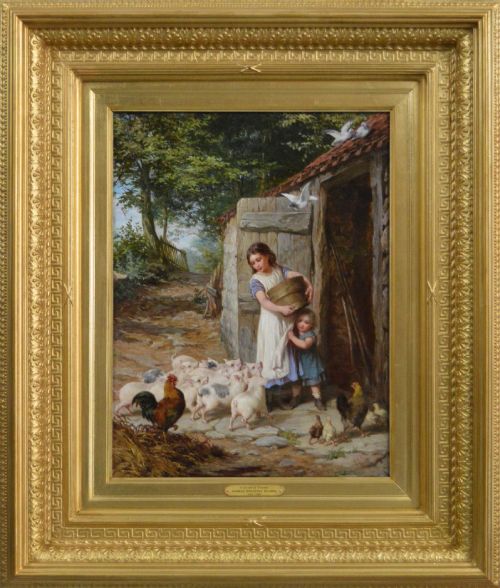
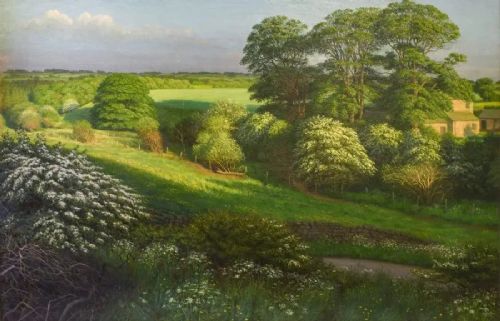
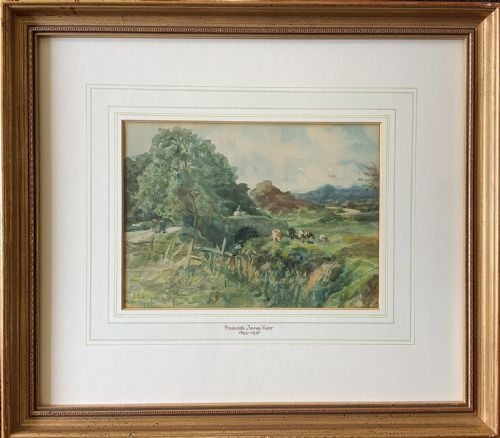
A rural country scene painting depicts landscapes, agricultural work, cottages and pastoral settings across the nineteenth and twentieth centuries. These works range from detailed Victorian watercolours of village life to broader Impressionist oils of fields and livestock.
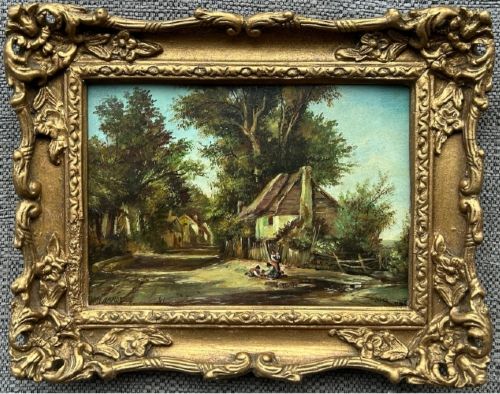
The material on this page leans heavily towards oil on canvas, wood panel and card, alongside watercolours on paper. Many pieces arrive housed in their original giltwood frames which complement the domestic scale of the rural subjects.
Makers and schools represented include the English School, British Impressionism and individual nineteenth-century painters working across pastoral and genre subjects.
How They Were Made
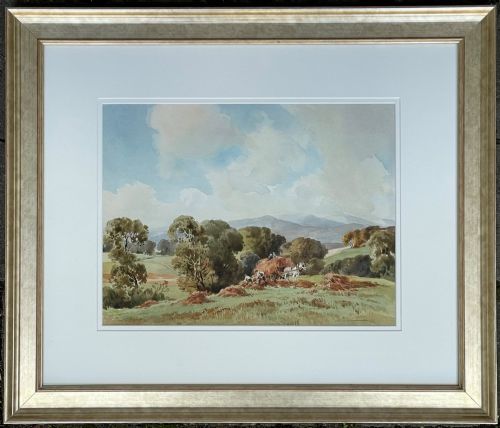
Artists typically worked with oil paint on stretched canvas, wooden board or card, building up layers of pigment to capture shifting daylight on fields and cottages. Watercolour on paper was equally common for lighter, more translucent depictions of streams, haymaking and village lanes.
Many works incorporate traditional giltwood frames that were specifically selected to house the canvas or watercolour. The support materials often show the natural ageing of nineteenth and early twentieth-century preparation methods, including canvas weaves and paper textures.
Listings span multiple mediums including oil on canvas, wooden board, card and watercolour on paper, originating largely from nineteenth and early twentieth-century British schools.
What Varies in Quality
Quality rests on the confidence of the brushwork and the artist's command of light and atmosphere within the landscape. Stronger examples display a clear sense of depth and accurate anatomical rendering in figures, livestock and horses.
Condition plays a role, with untouched surfaces and period framing retaining more integrity than works undergoing extensive restoration. The distinction between a studio piece and a signed original by a listed practitioner marks the upper tier of the selection.
Percy Lancaster·William Howard Hardy·A. Marie Parsons·John McDougal·Robert A. Nottingham·Robert John Hammond·John Horace Hooper·George Augustus Holmes·Raymond Booth·Frederick Walker·Frederick James Kerr·Edgar Hunt·Miles Birkett Foster·Herman S Melville·Charles Edward Wilson·Sydney Yates Johnson·Thomas Sidney Cooper·Ernest Higgins Rigg·Owen Bowen·Henry John Yeend King·Ernest Pile Bucknall·Samuel Joseph Clark·M. C. Hider·James Hardy Junior·Frederick James Knowles
The Rural Country Scene Painting Glossary
- Oil on Canvas
- A painting medium where pigments are suspended in drying oils and applied to a woven fabric support. This combination allows for rich colour blending and textured brushwork.
- Watercolour
- A painting method where fine pigment powders are bound in a water-soluble vehicle, usually applied to paper. It yields transparent washes that capture bright daylight and soft atmospheric conditions.
- Giltwood
- Wood carved and coated with a thin layer of gold leaf, commonly used for traditional picture frames. It provides a warm metallic border that enhances the tones of the artwork within.
- Genre Painting
- Artworks depicting scenes from everyday life, such as farm work, cottage interiors or domestic animals. These pieces focus on ordinary people engaged in routine tasks.
- English School
- A classification grouping artists trained or working within British traditions of landscape and portraiture. It spans multiple centuries of regional and stylistic development.
Rural Country Scene Painting: Frequently Asked Questions
Where were these paintings typically displayed?
These pastoral artworks originally hung in nineteenth and early twentieth-century domestic interiors, bringing views of open fields and cottage life into town houses.
Today, they suit living rooms, studies and hallways where their traditional framing and calm subject matter create a settled atmosphere.
How do I identify a watercolour from an oil painting?
Watercolours are painted on paper under glass, showing delicate translucent washes and the texture of the sheet beneath. Oils are executed on canvas, wood or card with heavier, opaque pigment layers that often show visible brush texture.
Examining the surface closely under good light reveals whether the support is woven fabric, rigid board or paper.
What subjects appear most frequently in these scenes?
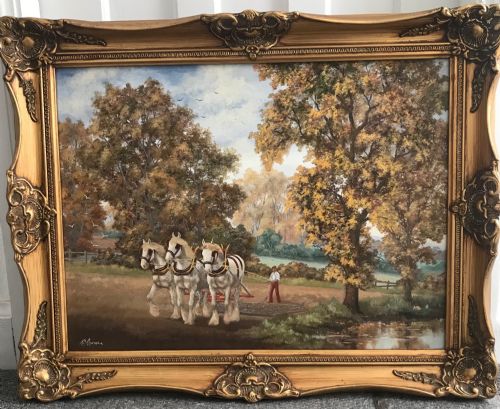
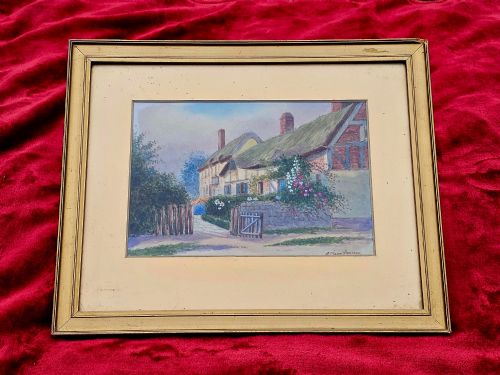
Common subjects include agricultural work, harvest landscapes, horse ploughing, cattle grazing by rivers and thatched cottages in English villages. Artists frequently recorded the daily activities of farm labourers and rural animals.
These compositions reflect a deep nineteenth-century interest in traditional countryside trades and pastoral tranquility.
How can I tell the Victorian pieces apart from later works?
Victorian examples often feature tightly detailed brushwork, sentimental narratives and dramatic lighting characteristic of nineteenth-century academic training. Later Edwardian and twentieth-century works lean towards freer brushstrokes and lighter Impressionist palettes.
Comparing the handling of sky and foliage usually indicates whether a painting belongs to the mid-nineteenth century or the decades following.