


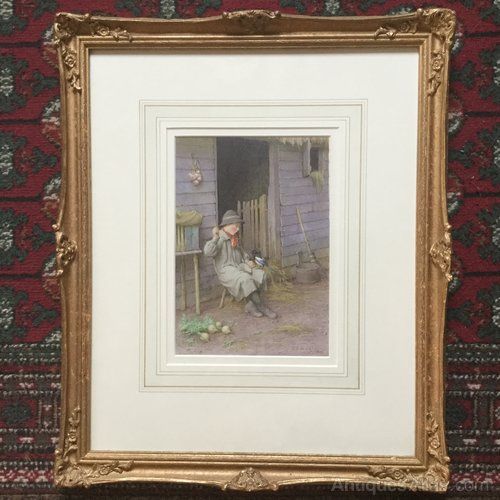


Rural Cottage Scene
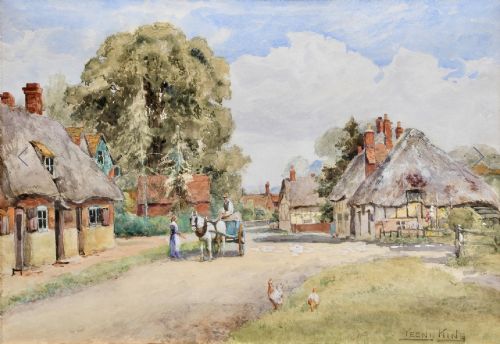
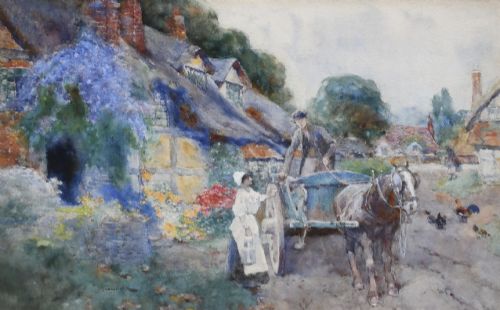
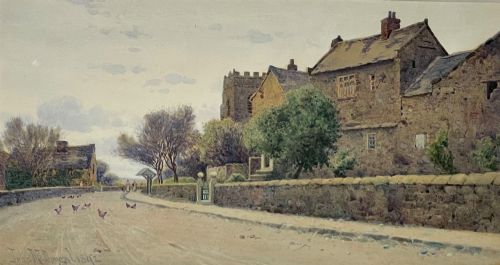
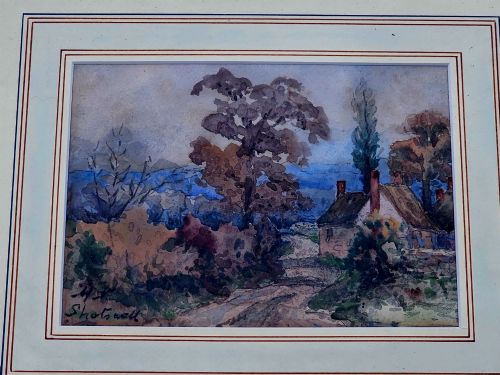
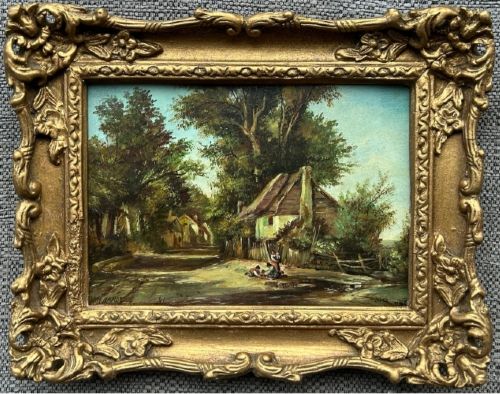
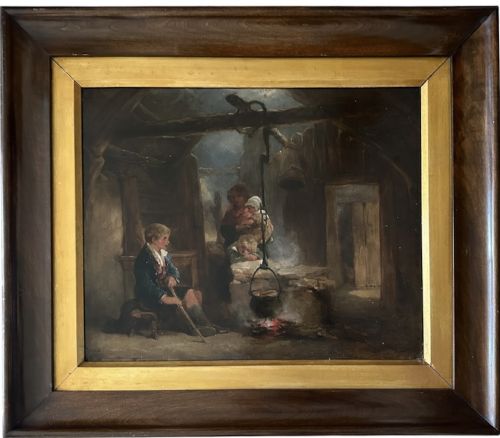
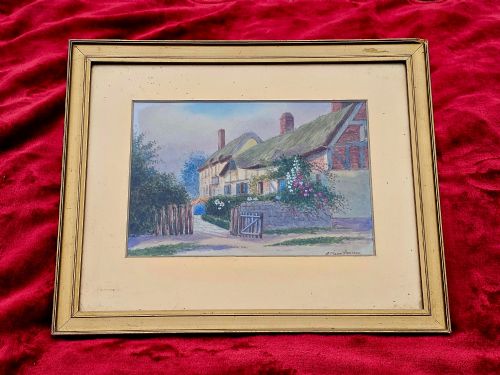
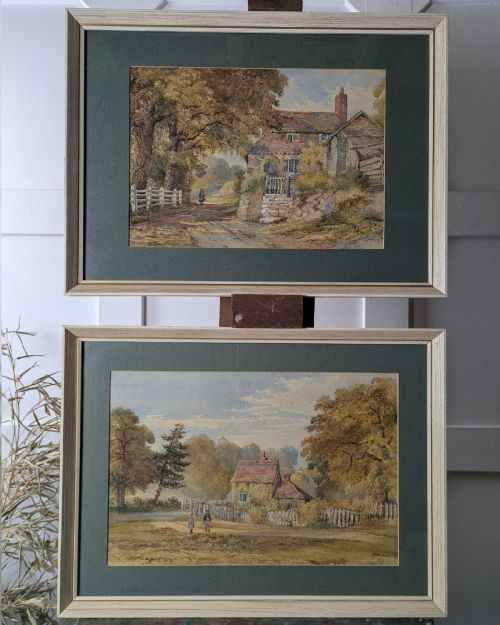
Rural cottage scene paintings capture the quiet charm of the British countryside through 19th-century and early 20th-century watercolours and oils.
Rural Cottage Scene
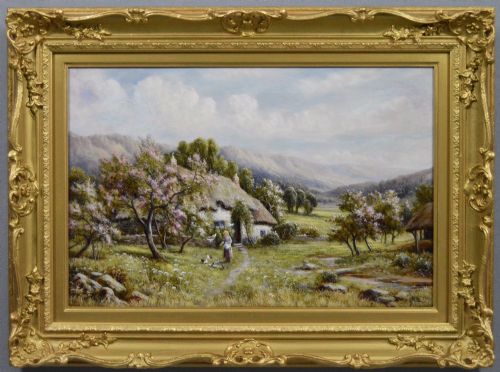
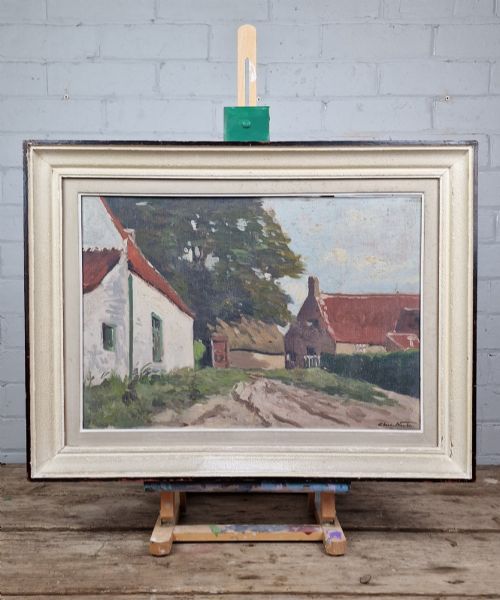
When you search for a rural cottage scene, you encounter framed paintings and watercolours depicting pastoral life, rustic dwellings, and agricultural landscapes across Britain. These works date primarily from the Victorian period through to the mid-20th century, capturing an idealized vision of country living.
The most common formats on this page are framed watercolours and oil paintings on canvas, board, or card. Many pieces feature specific named locations, such as Sussex, Somerset, or Scottish crofts, alongside anonymous English and Scottish school compositions.
Subjects frequently incorporate figures outside thatched cottages, farmyards, and river landscapes with livestock. These vary from intimate watercolours by named Victorian artists to broader Impressionist and post-Impressionist interpretations.
How they were made
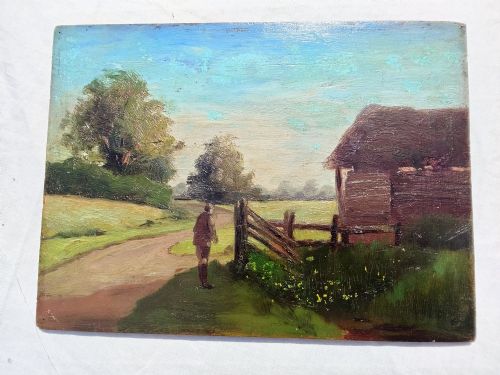
Artists created these rural cottage scene works using traditional mediums including oil paint, watercolour, and occasionally lithography on paper, canvas, wooden board, card, or panel. Watercolour pigments were applied in washes to textured paper, while oils provided rich layers on canvas and board.
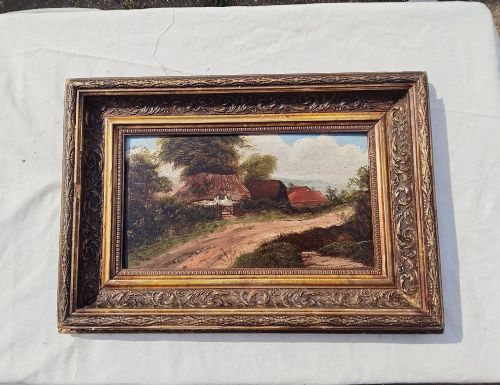
Many of these works are housed in their original or period-appropriate gilt wood and wood frames under glass. The physical construction relies on standard framing techniques of the 19th and early 20th centuries to protect the delicate paper or paint surfaces.
Rural Cottage Scene Retail Price Guide 2026
Typical asking prices for rural cottage scene among the pieces listed under this phrase on Sellingantiques today, from the lower quarter to the upper quarter. They describe what is for sale here now, not the wider market.
Media represented across the inventory include paper, canvas, glass, and gilt wood, spanning British and Belgian artistic traditions.
What varies in quality
The distinction between standard works and superior pieces in a rural cottage scene rests on the artist's handling of light, brushwork confidence, and compositional depth. Finer examples display a sophisticated understanding of atmospheric perspective and tonal balance rather than rigid adherence to topography.
Material preservation also sets works apart, with well-maintained surfaces retaining vibrant pigments and minimal fading. Original framing matching the period of the artwork adds to the integrity of the piece.
George Whitton Johnstone·William Howard Hardy·A. Marie Parsons·John McDougal·Robert A. Nottingham·Robert John Hammond·Charles Houben·Charles Edward Wilson·James Hardy Junior·Frederick James Knowles·William Greaves·Charles Vickers·Robert Finley McIntyre·Lorenzo Headley·Helmut Reuter·Harry Sylvester Stannard·Henry Charles Fox·Will Anderson·Robert Hollands Walker·Thomas James Lloyd·Robert Gemmell Hutchinson·B. Kaufmann·Harry Pennell·Joseph Kirkpatrick·Ernest Cox
The Rural Cottage Scene Glossary
- Watercolour
- A painting method in which the paints are made of pigments suspended in a water-based solution. This technique was widely utilised by British artists for landscapes and rural views.
- Oil on board
- A painting executed with oil-based pigments upon a rigid wooden or cardboard substrate. It provides a stable surface that requires less tension than stretched canvas.
- Impressionism
- An art movement focusing on accurate depiction of light and its shifting qualities. In British painting, this translated into looser brushstrokes and outdoor plein-air scenes.
- Gilt wood
- Wood that has been treated with a thin layer of gold leaf or metallic gilt finish. These frames are frequently found enclosing 19th-century paintings.
- Lithography
- A planographic printing method used to produce reproductions of original artworks. Artists sometimes utilised this technique to distribute their compositions more widely.
Rural Cottage Scene: Frequently Asked Questions
What periods do these paintings come from?
The listings span from the early 19th century through the Victorian and Edwardian eras up to the 1950s. Most pieces originate from the late 19th and early 20th centuries.
During this time, British landscape painting flourished as artists turned away from industrial scenes to record traditional rural life and architecture.
How should I care for a watercolour?
Watercolours require protection from direct sunlight to prevent the pigments and paper from fading over time. Keeping them in stable indoor humidity conditions preserves the paper support.
Displaying them away from moisture-prone areas ensures the frame and painting remain in good condition.
Are these works signed by the artists?
Many pieces feature visible signatures, monograms, or attribution to specific historical artists and schools. Some works are attributed to the English or Scottish school when the signature is indistinct.
Documentation on the reverse often provides additional clues regarding the specific location or provenance of the artwork.
What framing is typically used?
Framing commonly consists of period wooden mouldings, frequently finished with gilt detailing. These frames complement the aesthetic of the 19th-century and early 20th-century periods.
Retaining the original frame helps maintain the historical context of the artwork.