
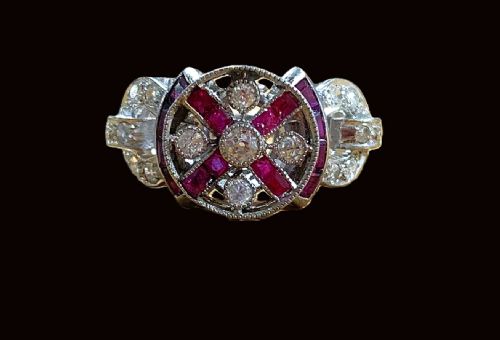
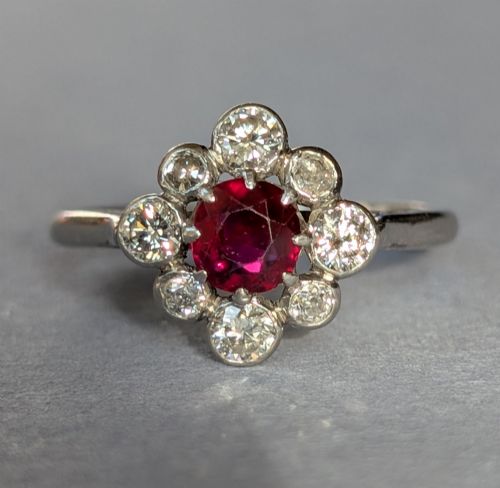
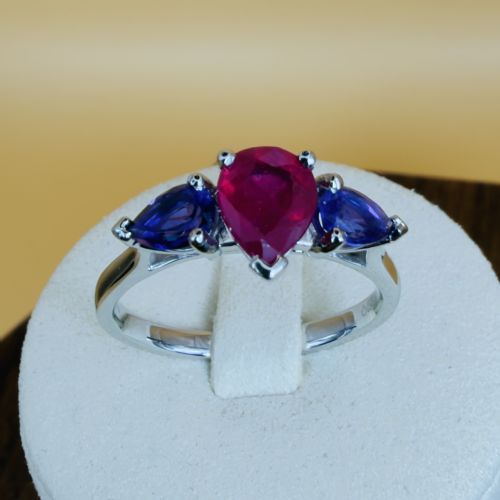
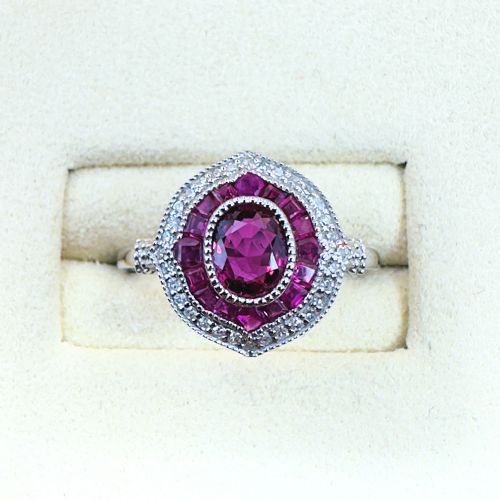
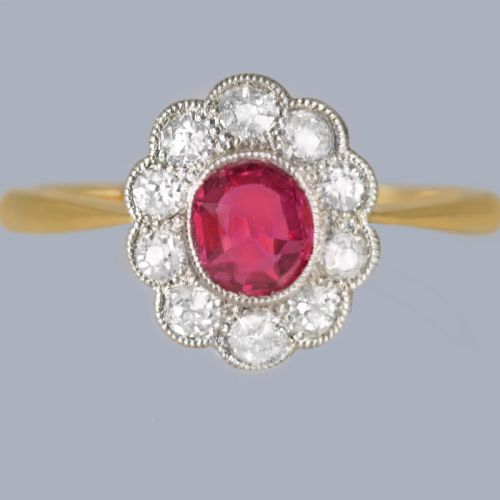


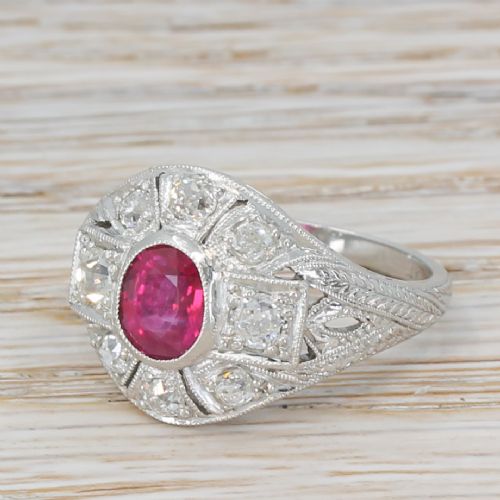
Ruby Platinum Cluster Ring
A ruby platinum cluster ring combines the intense red of corundum with the bright white metal of the twentieth century.
Ruby Platinum Cluster Ring
When you examine a ruby platinum cluster ring, you look at a central red stone surrounded by smaller diamonds, set entirely in platinum or mounted on gold. These pieces appear most frequently from the Art Deco period, alongside examples from the Edwardian era and mid-century years.
The dominant form is the cluster ring, which arranges surrounding diamonds in geometric patterns or target shapes around the ruby. Elongated and panel designs also recur across the decades, showing the versatility of the cluster format.
How they were made
Goldsmiths utilised platinum for its strength, allowing intricate settings to hold rubies and diamonds securely without heavy metal bulk. Stones are shaped in various cuts, including old cut, pear cut, oval, and emerald cuts.
Combination mounts using 18ct gold alongside platinum also appear, pairing yellow gold bands with white metal top settings. Gemmological reports sometimes accompany pieces to verify the origin and natural state of the rubies.
Some stones carry Burmese origins from Mogok, proving that ancient dirt can travel across continents just to sit on a finger.
What varies in quality
Quality rests upon the provenance of the ruby, with Burmese and Mogok origins commanding particular attention among collectors. The match between the colour saturation of the central ruby and the clarity of the surrounding diamonds dictates the visual impact.
The precision of the platinum work defines the calibre of the ring, particularly in how finely the metal holds the cluster arrangement. Well-executed geometric and target designs maintain structural crispness and balanced proportions across the finger.
The Ruby Platinum Cluster Ring Glossary
- Cluster ring
- A ring design featuring a central gemstone encircled by a border of smaller stones, typically diamonds. This arrangement maximises light reflection and perceived size.
- Platinum
- A dense, ductile, and malleable white precious metal utilised in fine jewellery for its durability and resistance to tarnish. It permits delicate claw and bezel settings.
- Old cut
- A diamond facet style popular before modern brilliant cutting, characterised by a smaller table, higher crown, and open culet. These cuts catch candle or ambient light distinctly.
- Target ring
- A specific type of cluster ring featuring concentric rings of contrasting gemstones or diamonds around a central stone, creating a bullseye pattern. The style is strongly associated with the Art Deco period.
- Checkerboard
- A gemstone cutting style where square or rectangular facets are arranged in a grid pattern across the crown. This enhances light play across the table surface.
Ruby Platinum Cluster Ring: Frequently Asked Questions
How do I date a ruby platinum cluster ring?
Dating relies upon stylistic markers such as geometric symmetry, millegrain edging, and mounting techniques typical of the 1920s and 1930s. Hallmarks and secondary metal choices like 18ct gold also provide chronological clues.
Later mid-century pieces from the 1940s and 1950s often adopt bolder lines or different stone proportions compared to earlier Edwardian and Art Deco examples.
Are these rubies treated?
Many natural rubies from periods like the Art Deco era carry specific geological origins noted in reports, such as Burmese or Mogok stones. Natural stones show distinct inclusion patterns under magnification.
Checking accompanying gemmological documentation clarifies whether a ruby retains its untreated state or has undergone standard historical enhancements.
Can I wear mine every day?
Platinum offers high durability and secure settings for daily wear, though care should still be taken with antique claw work. Rubies rate high on the hardness scale, making them resilient against routine scratching.
Removing rings during heavy manual tasks or swimming protects both the central ruby and the surrounding diamond cluster from unnecessary impact.
What is an elongated cluster?
An elongated cluster stretches along the length of the finger rather than sitting in a traditional round or square shape. This layout often incorporates navette or rectangular outlines.
The style creates a distinctive finger-flattering profile while maintaining the dense stone arrangement characteristic of standard clusters.