

Ruby Gemstone Jewellery
Ruby gemstone jewellery brings together vibrant crimson stones and precious metals across Victorian, Edwardian and mid-century designs.
Ruby Gemstone Jewellery
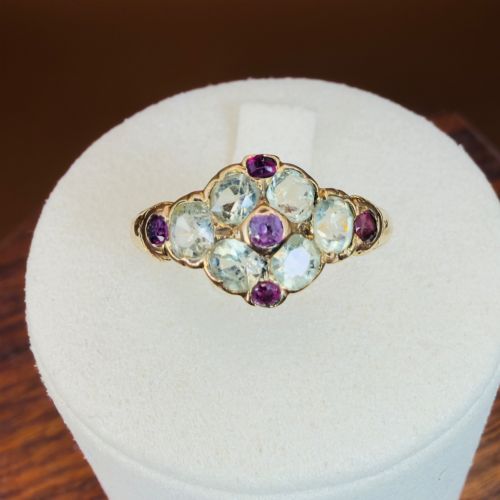
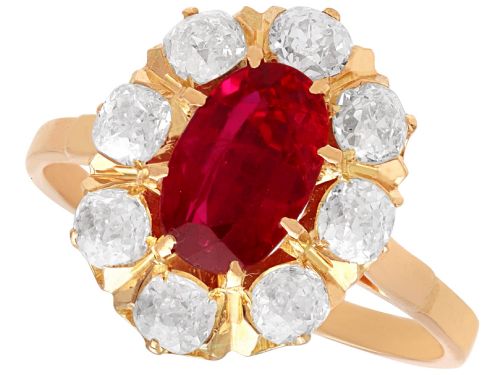
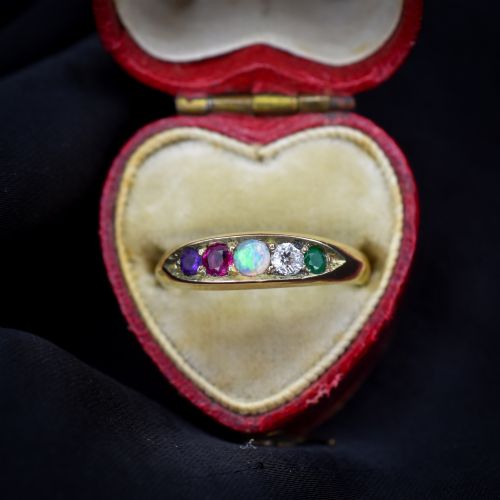
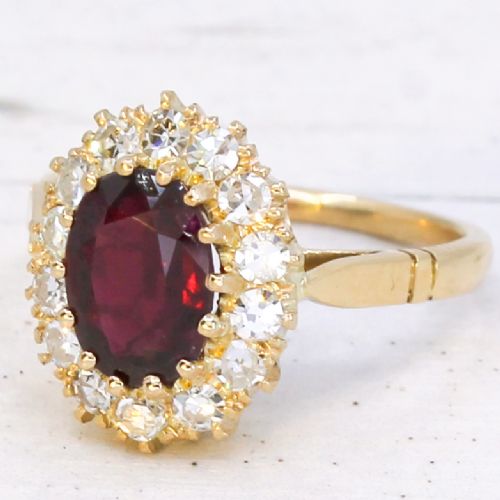
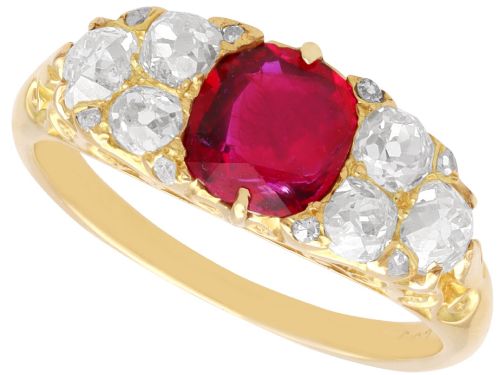
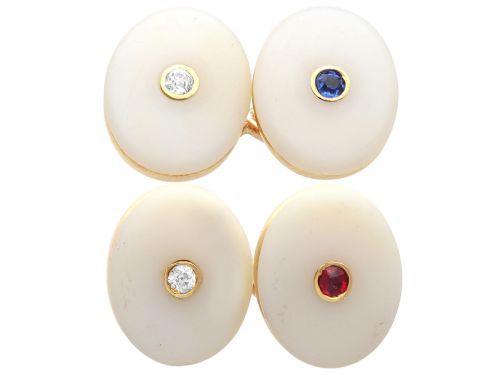
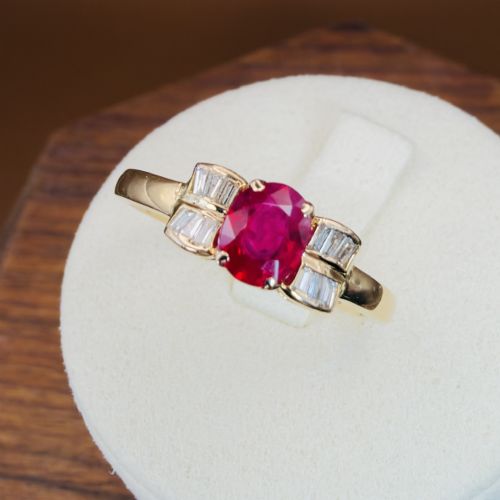
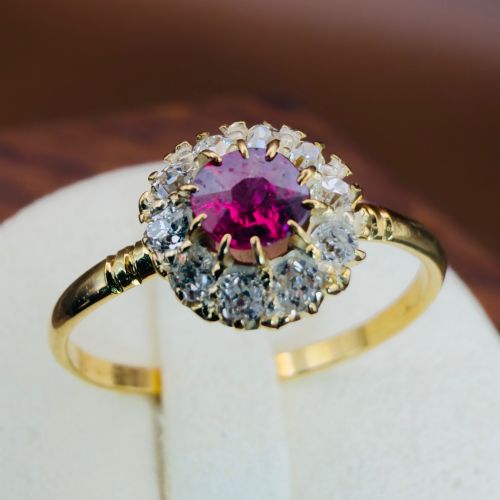
Ruby gemstone jewellery encompasses rings, brooches, bangles, pendants and necklaces spanning the late nineteenth century through to the mid-twentieth century. The selection leans heavily towards finger rings, particularly cluster, trilogy and five-stone configurations featuring diamonds alongside the central red stones.
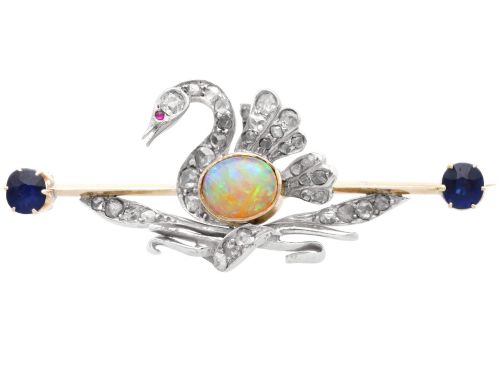
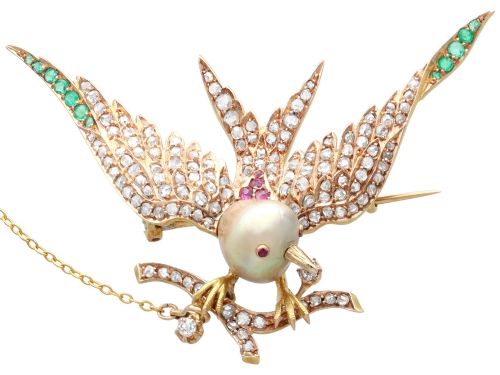
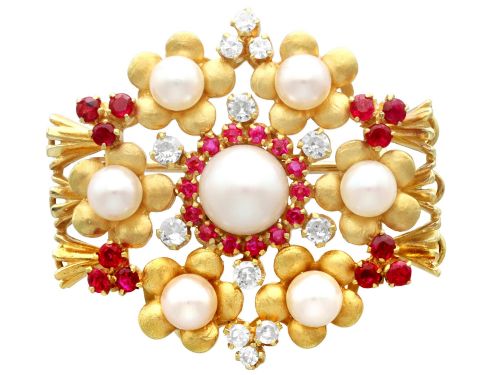
Makers utilised a wide array of precious metals including 15ct and 18ct yellow gold, platinum, and white gold to set these gems. Alongside ruby and diamond combinations, pieces frequently incorporate pearls, opals, emeralds and sapphires, particularly within Victorian and Edwardian brooches and dress rings.
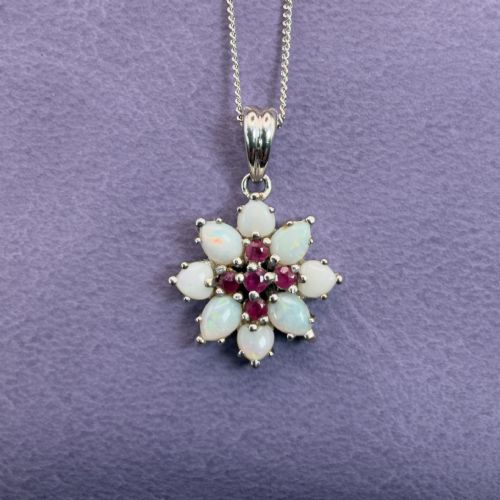
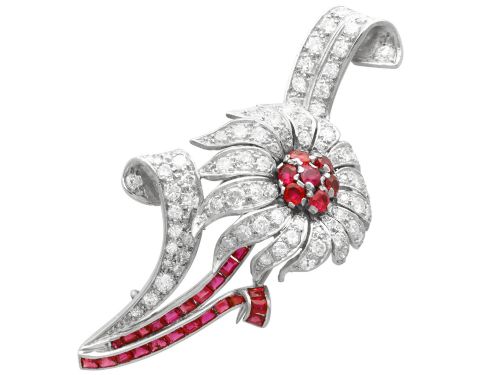
The objects on this page range from late Victorian starburst gypsy rings and Edwardian band rings to Art Deco platinum mounts and 1950s floral cluster brooches. Buyers encounter distinct chronological shifts, moving from the rich multi-gem bird and swan brooches of the 1890s to clean geometric lines of the 1920s and 1930s.
How they were made
Goldsmiths constructed settings predominantly in 15ct and 18ct yellow gold during the Victorian and Edwardian eras, transitioning to platinum and white gold as modernist Art Deco styles gained prominence. Stones were secured using traditional claw, bezel and star settings designed to maximise light entry while protecting the gems.
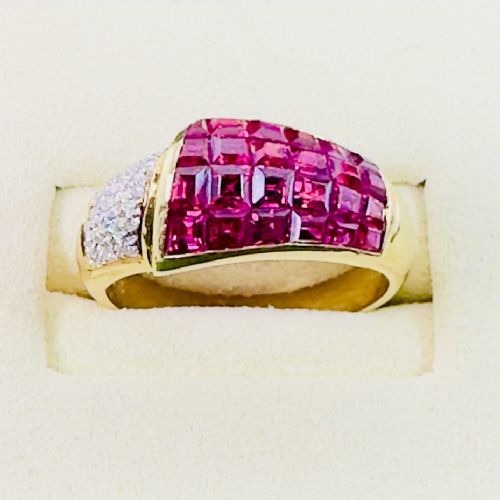
Gemstones such as rubies and diamonds were shaped into old cut, princess, oval and baguette profiles by hand, reflecting the technical standards of each period. Jewellers paired rubies with supporting diamonds, pearls and opals, integrating them into complex floral, navette and geometric motifs.
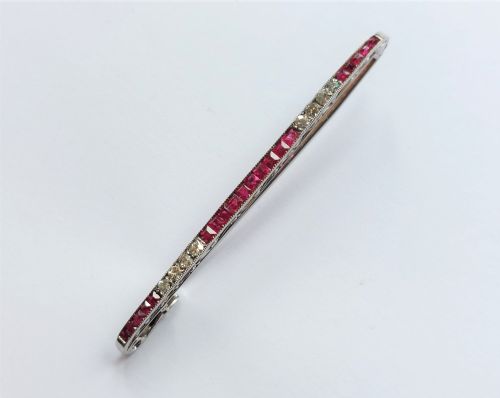
Object forms span across finger rings, bar brooches, floral pendants, and commemorative bangles from multiple centuries.
What varies in quality
The standard of ruby gemstone jewellery rests upon the depth of colour and origin of the rubies, with unheated Burmese stones commanding distinct attention alongside documented carat weights. The integration of supporting diamonds, particularly old mine cuts and older brilliant cuts, heavily influences the overall character of a piece.
Craftsmanship is evident in the structural integrity of the metalwork, from heavy 18ct gold bands and sturdy platinum mounts to delicate granulation and wirework on Victorian brooches. Pieces that retain their original stones, clear hallmarks and secure settings represent the higher end of surviving examples.
The Ruby Gemstone Jewellery Glossary
- Cluster ring
- A ring featuring a central gemstone surrounded by a border of smaller stones, typically diamonds framing a ruby.
- Old cut diamond
- A diamond cut by hand before modern standards, characterised by a smaller table, higher crown and open culet.
- Navette
- A boat-shaped gemstone setting or ring face that tapers to points at both ends.
- Gypsy ring
- A ring style where stones are flush-set directly into the thick band, popular during the Victorian period.
- Trilogy
- A ring or pendant set with three stones, often interpreted to represent the past, present and future.
Ruby Gemstone Jewellery: Frequently Asked Questions
How do I care for antique ruby rings?
Rubies are a durable gemstone ranking high on the hardness scale, making them suitable for regular wear when set securely in gold or platinum.
Clean the metal and stones gently with warm soapy water and a soft brush, avoiding harsh chemical dips that might harm accompanying pearls or opals.
Are unheated rubies more desirable?
Unheated rubies have not undergone thermal enhancement to improve their natural colour and clarity, making them scarcer in the antique market.
These stones often display organic characteristics and certified geographical origins, such as Burma, which appeal directly to collectors.
How can I date my ruby brooch?
Dating relies on stylistic clues such as the clasp mechanism, the choice of metal, and the cut of the accompanying diamonds and gemstones.
British hallmarking stamps found on the reverse can also provide precise assay office marks and date letters for the specific year of manufacture.