


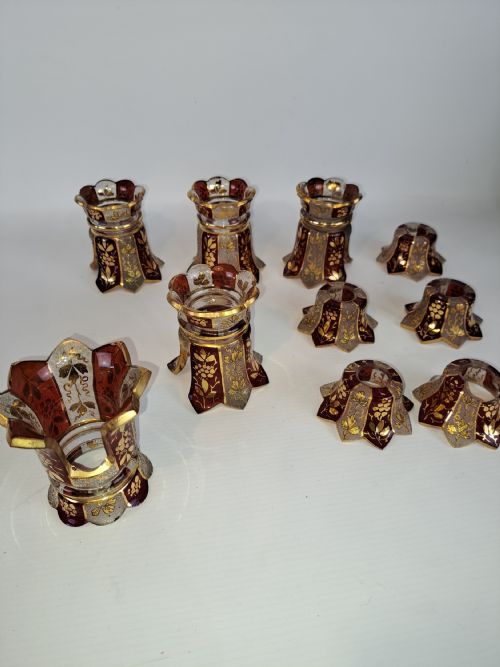


Ruby Flashing Glass
Ruby flashing glass brings rich colour to decanters, vases and lighting components through a thin crimson layer fused to clear crystal.
Ruby Flashing Glass
When you search for ruby flashing glass, you encounter objects formed by bonding a deep red glass layer over a clear or frosted crystal body before cutting or etching through the surface. The pieces listed here span the eighteenth, nineteenth, and early twentieth centuries, encompassing English and Bohemian origins.
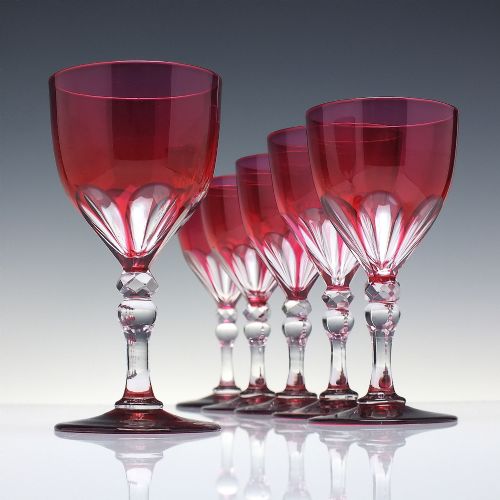
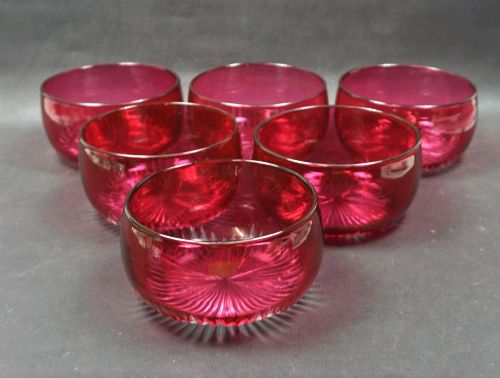
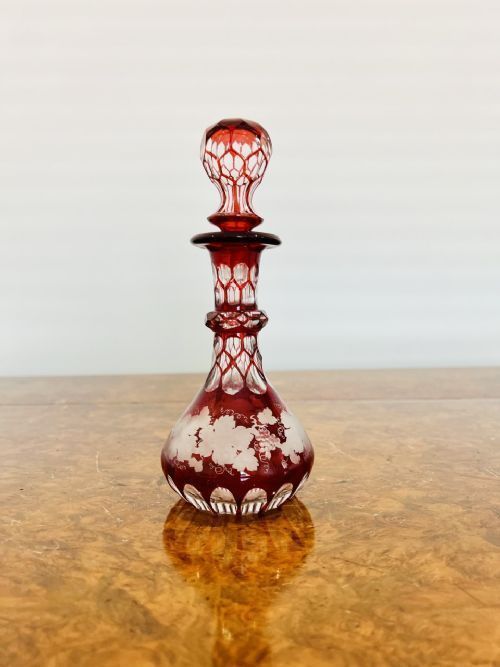
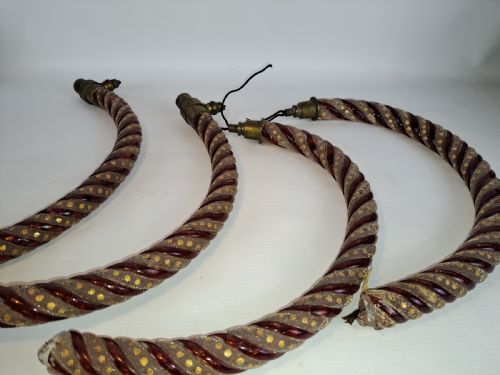
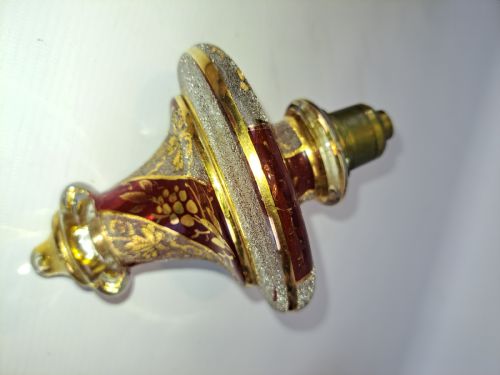
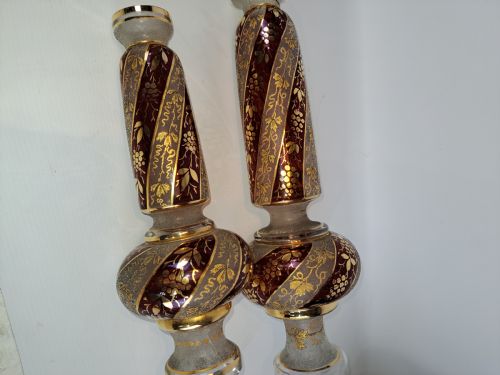
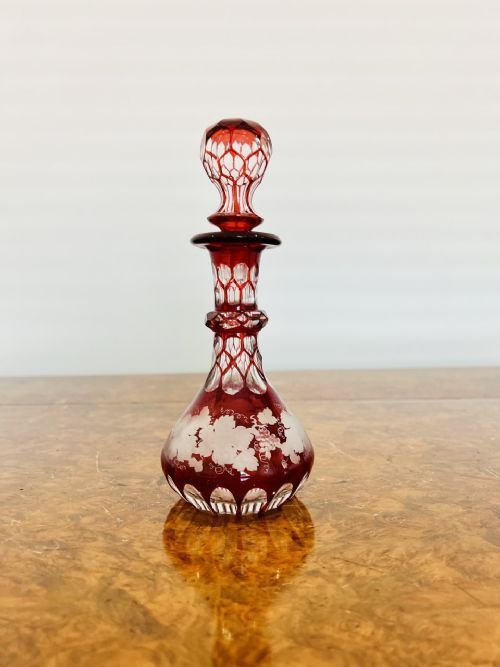
Tableware and glassware make up a large portion of the selection, including decanters, finger bowls, spirit perfume bottles, champagne coupes, tumblers, and vases. You also find specialised architectural and decorative items such as chandelier components, hanging bells, finials, capitals, stems, and arms.
Victorian and Edwardian examples sit alongside earlier eighteenth-century Bohemian work, showing how makers applied red overlay to create sharp contrasts between the crimson surface and clear crystal beneath.
Materials and working methods
Craftsmen utilised lead crystal and ruby glass as the primary base materials, frequently applying gold leaf and enamel to enrich the surface decoration. The flashing technique involved fusing a thin skin of red glass onto a colourless or frosted body while molten.
Makers then cut, engraved, or etched through the outer red layer down to the clear crystal underneath to expose patterns of fruit, vines, and birds. Gilding was added by hand and fired to create metallic contrast against the deep crimson background.
Ruby Flashing Glass Retail Price Guide 2026
Typical asking prices for ruby flashing glass among the pieces listed under this phrase on Sellingantiques today, from the lower quarter to the upper quarter. They describe what is for sale here now, not the wider market.
Some nineteenth-century chandeliers relied on ruby glass bells that likely chimed softly whenever a draft stirred the room.
Distinctions in quality
The precision and depth of the wheel-cut or etched motifs separate standard production from finer examples. Crisp separation between the red overlay and the clear glass beneath indicates superior craftsmanship.
The application of the gold leaf and the subtlety of the engraving on surfaces such as decanter bodies or vase panels determine the refinement of the piece. Consistency in the saturation of the ruby colour across complex shapes like chandelier arms also marks higher output.
The Ruby Flashing Glass Glossary
- Ruby glass
- A type of decorative glass coloured by the addition of gold compounds to the molten batch. It yields the intense crimson tone characteristic of these pieces.
- Flashing
- A technique where a thin layer of coloured glass is applied over a clear or contrasting body. This dual-layer construction allows craftsmen to cut away sections to reveal the colour underneath.
- Overlay
- A manufacturing method involving a full second layer of glass cased over the primary body. It differs from simple flashing by providing a thicker stratum for deep wheel-cutting.
- Chandelier components
- Architectural glass elements including arms, stems, bowls, and capitals. These parts were produced in matched sets to build large lighting fixtures.
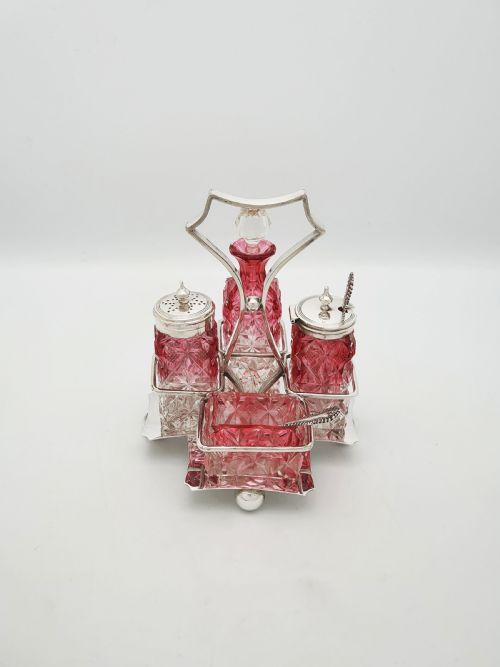
- Cruet set
- A matched collection of small bottles or containers held in a frame for condiments or oils. They often feature cut ruby glass paired with silver plate.
Ruby Flashing Glass: Frequently Asked Questions
What is ruby flashing glass?
Ruby flashing glass is a composite material created by fusing a thin skin of red glass over a clear or frosted crystal base. This dual-layer structure allows artisans to cut or etch patterns through the red surface to reveal the clear crystal underneath.
Items made this way include decanters, vases, and lighting parts dating primarily from the Victorian and Edwardian eras, as well as earlier Bohemian workshops.
How do I clean ruby flashed glass?
Clean these items gently using warm water and mild washing-up liquid with a soft cloth. Avoid abrasive sponges or harsh chemical cleaners that can damage surface gilding and enamel details.
Take special care with decanters and cruet sets, drying them thoroughly to protect any remaining gold leaf or engraved motifs.
Are these pieces English or Bohemian?
The selection includes both English and Bohemian work, particularly from the nineteenth century. English pieces frequently comprise table glassware like decanters, finger bowls, and champagne coupes with vine engravings.
Bohemian production often encompasses decorative vases, panelled vessels, and specialised architectural chandelier components featuring heavy etching and gilding.
How can I tell cut glass from overlay?
Cut glass typically consists of a single solid material carved with facets and patterns. Overlay and flashed glass feature a distinct outer layer of colour applied over a clear or frosted body, visible where the glass has been carved through to the base layer.